Mister Tea
A tea house in Hong Kong serving rock oolong.
Issue
01
Tea
- Written by
- Heidar Bernhardsson
- Interview by
- Clara Cheung
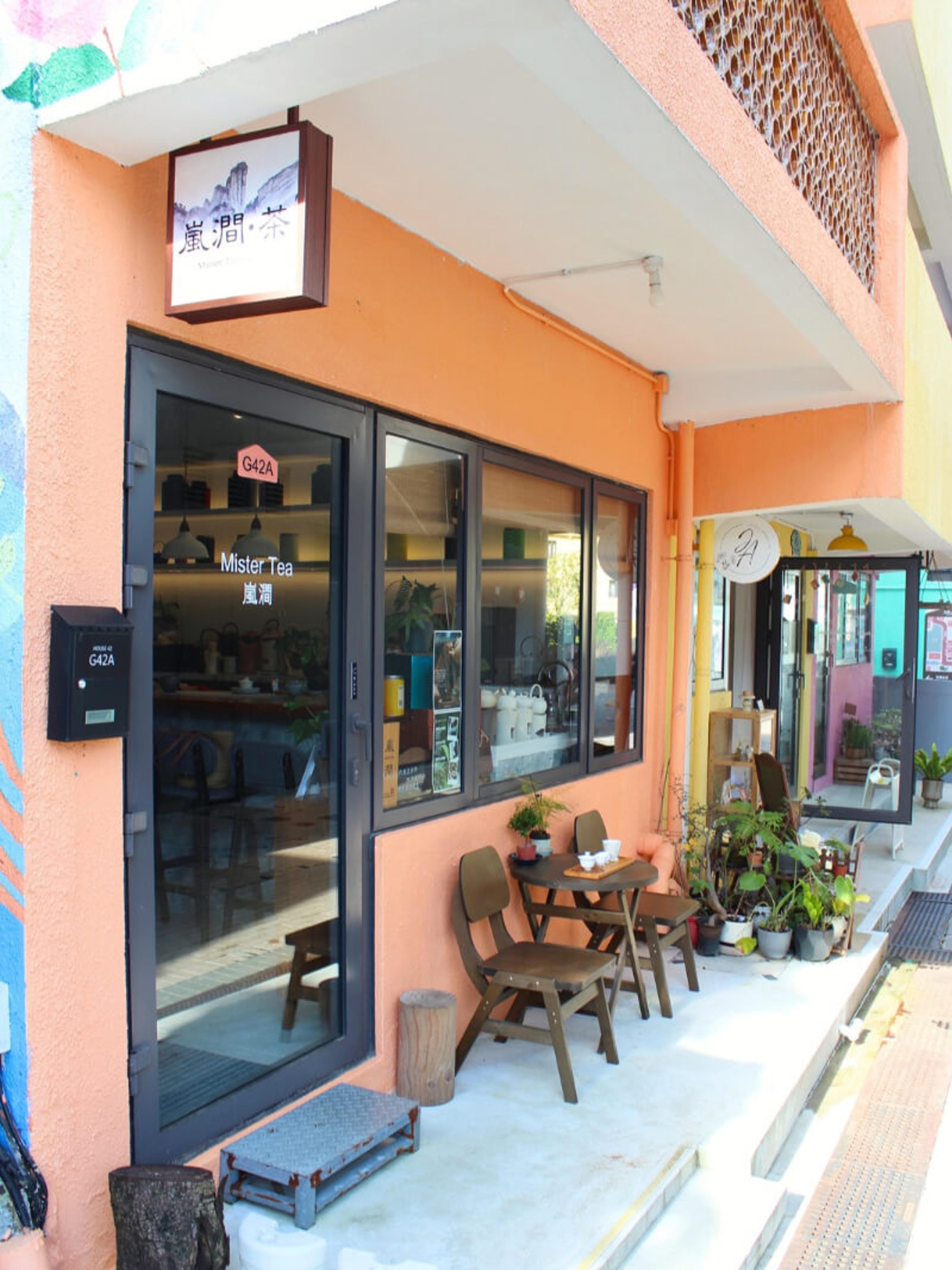
Mister Tea’s four-year-old son took one look at me and asked me something in English. When I answered in Cantonese, he looked confused and asked, “Why!?” Later he announced, “I want to drink tea.” It was the first time we’d seen a four-year-old drink rock oolong.
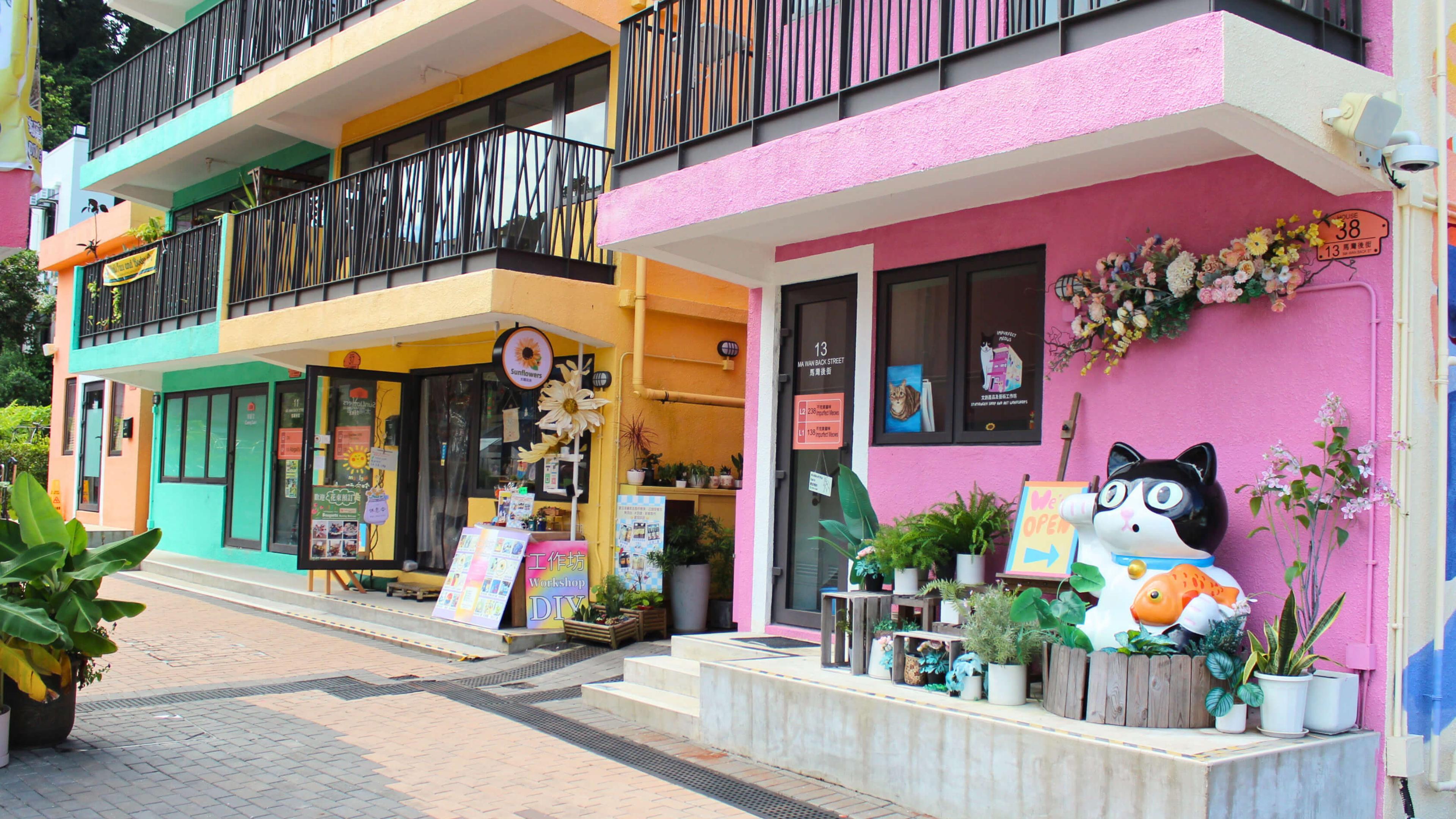
Mister Tea House sits in Ma Wan 1868, an old fishing village on the island of Ma Wan that reopened in March 20251 after standing empty for years. Its houses are painted bright colors and covered in murals. Ma Wan is closed to private cars, and the village itself is pedestrian only; even the shopkeepers take the bus, then walk. Mister Tea sees that as a plus. “Drinking tea doesn’t need a busy place,” he said.
- ( 1 )Ma Wan 1868, Discover Hong Kong https://www.discoverhongkong.com/uk/place-to-go/culture/ma-wan-1868.html ↩
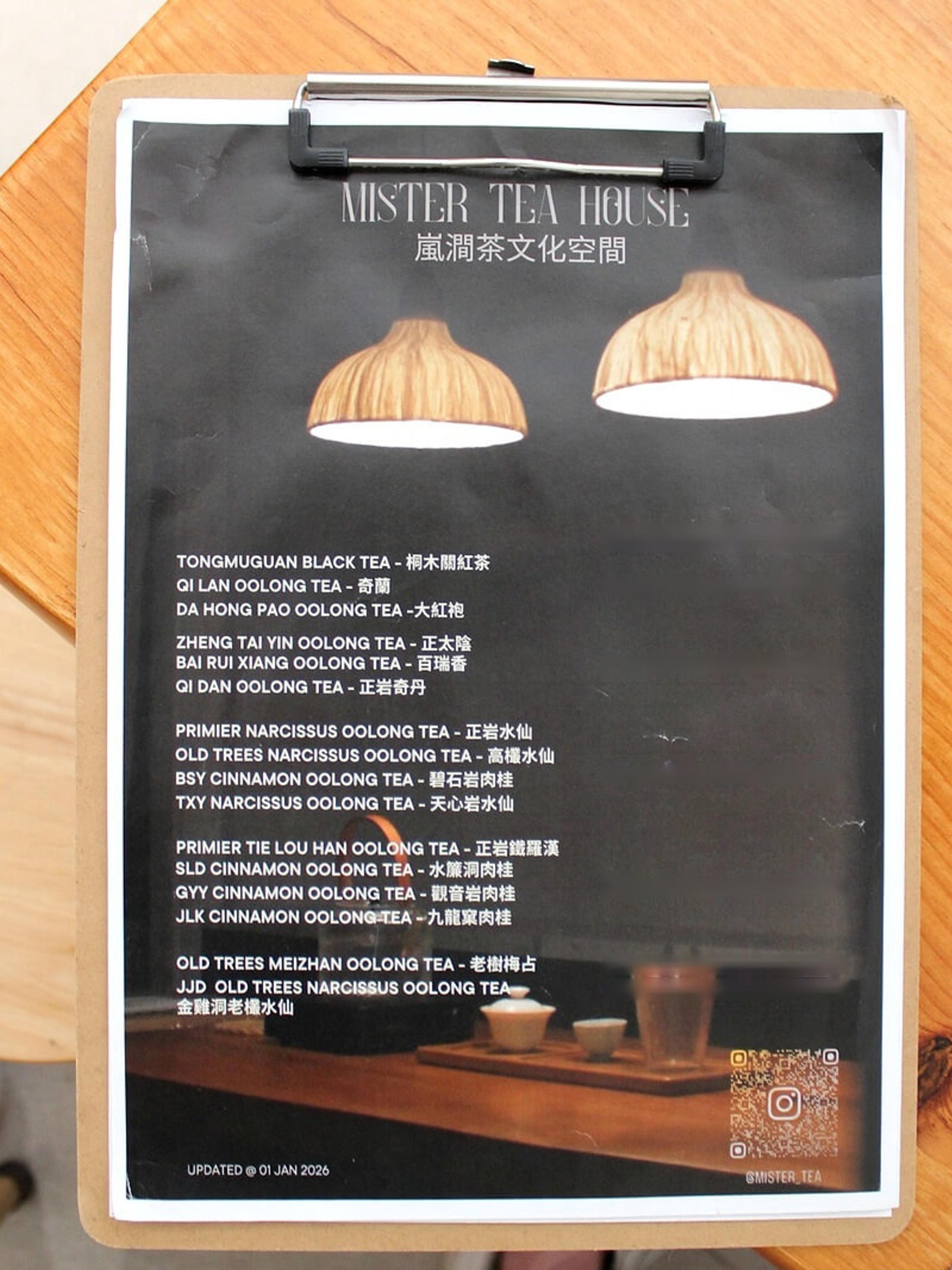
We sat down and looked at the menu: over a dozen rock oolongs, all made by his family in the Wuyi Mountains. They’ve been producing rock oolong for 30 years, around 1.5 tons a year, most of it sold wholesale. Mister Tea gets first pick for the shop.
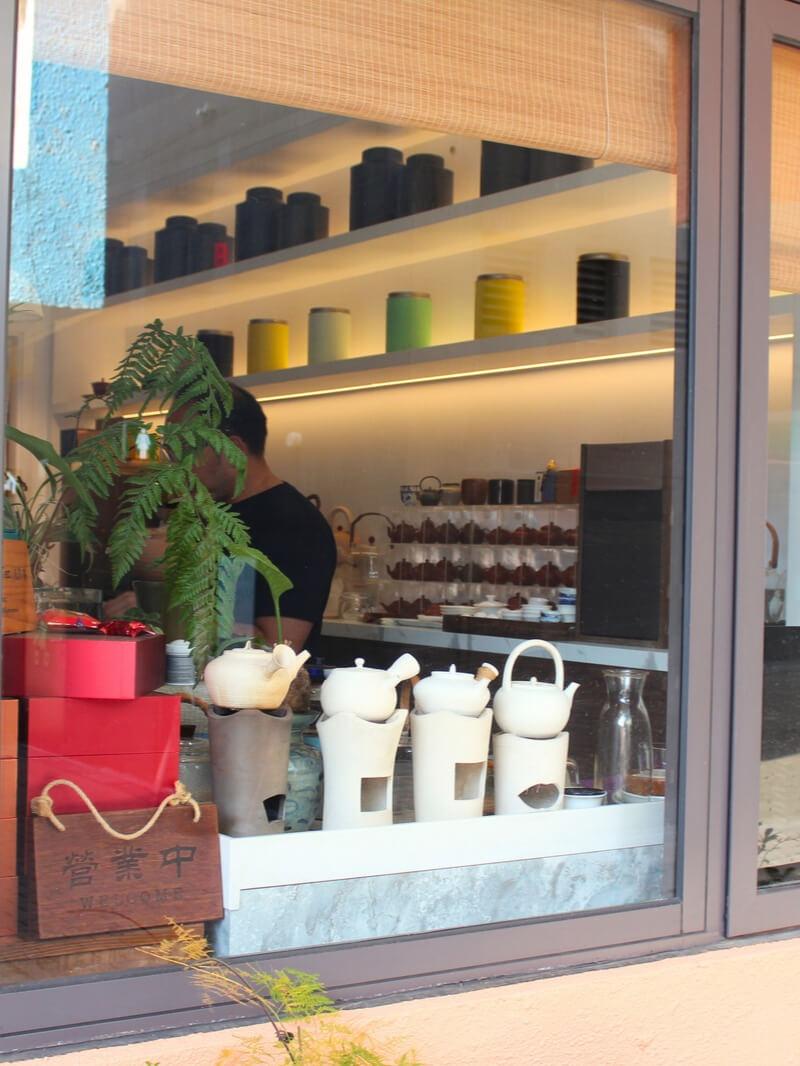
Unlike his son, he had no interest in tea originally. After he graduated, he went back to Fujian to visit family, and they gave him a pack of tea, saying it was the most famous tea from there. Back in Hong Kong he tried to find it and, to his surprise, couldn’t. Years later, that led him to open his own shop.
“Drinking tea doesn’t need a busy place.”
He recommended we try Zheng Tai Yin, one of the Wuyi Mountains’ “famous bushes” (mingcong). These are rare now. When rock oolong started becoming popular, it was Shuixian and Rougui that sold; most people didn’t know the mingcong. Now people want them back, but new land can’t be cleared2, and according to him, a new bush can only be planted when an old one dies. Zheng Tai Yin is something you’ll rarely see for sale. “Rock tea is a complex system,” he told us. “Even just Shuixian and Rougui are hard to understand.”
- ( 2 )Wuyishan National Park aims to grow sustainable tea sector, China Daily https://www.chinadaily.com.cn/a/202308/10/WS64d42faaa31035260b81b42a_2.html ↩
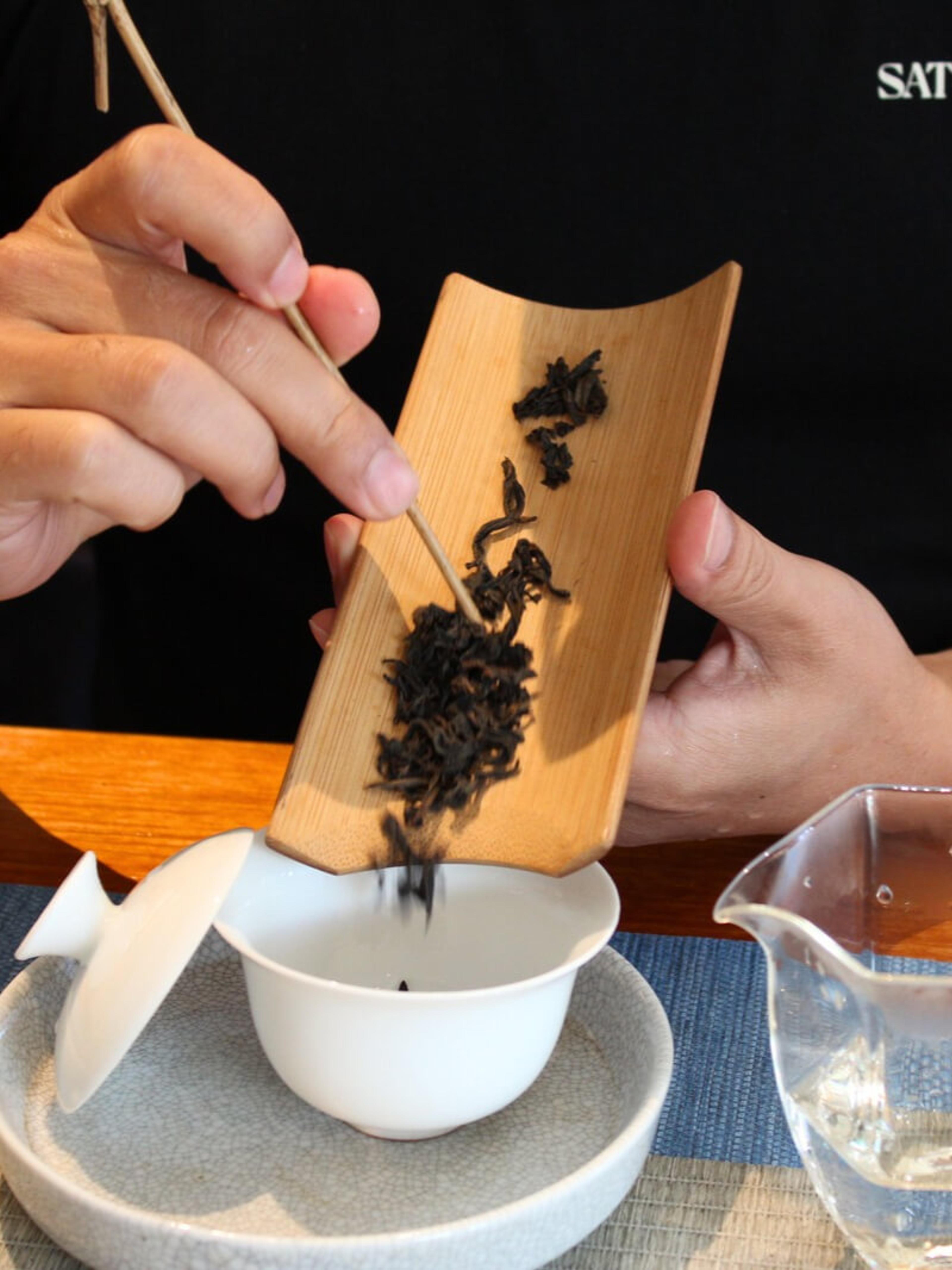
He asked us what type of tea we like. We’ve always preferred light-to-medium roast rock oolongs, so he suggested we start with a lightly roasted Shuixian. Light to him, that is; to most people it’s a medium roast. It wasn’t smoky at all. He explained how cleanly crafted it was, and that a light roast is the easier one to get right. The higher the roast, the harder it gets.
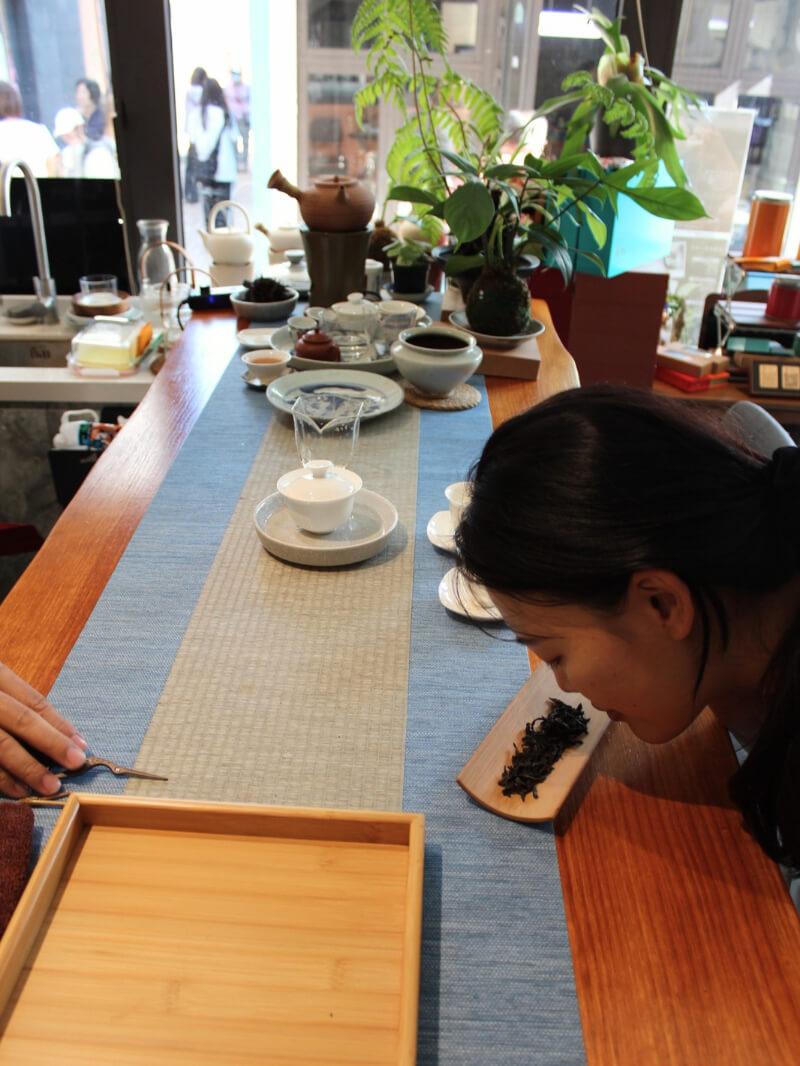
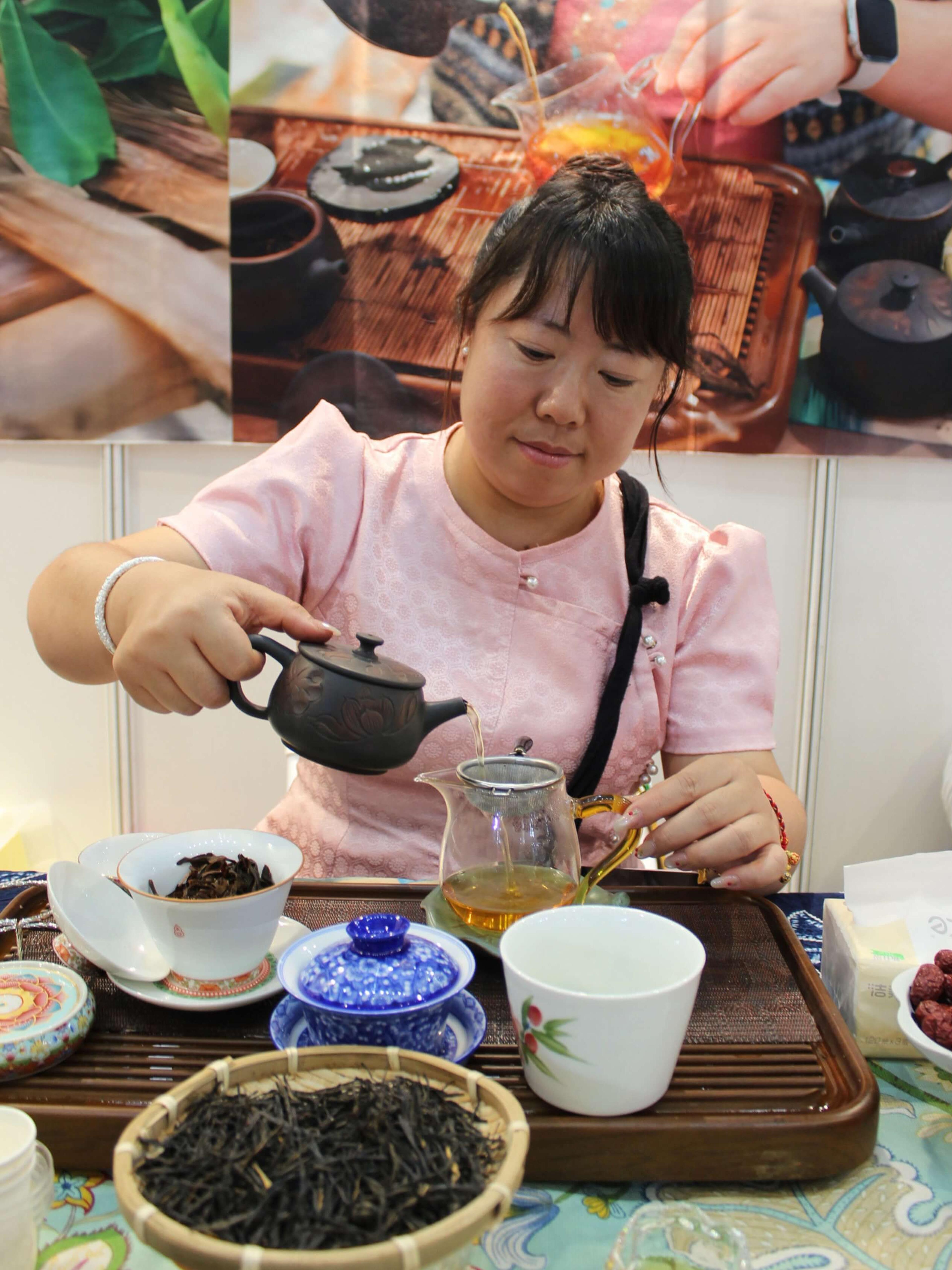
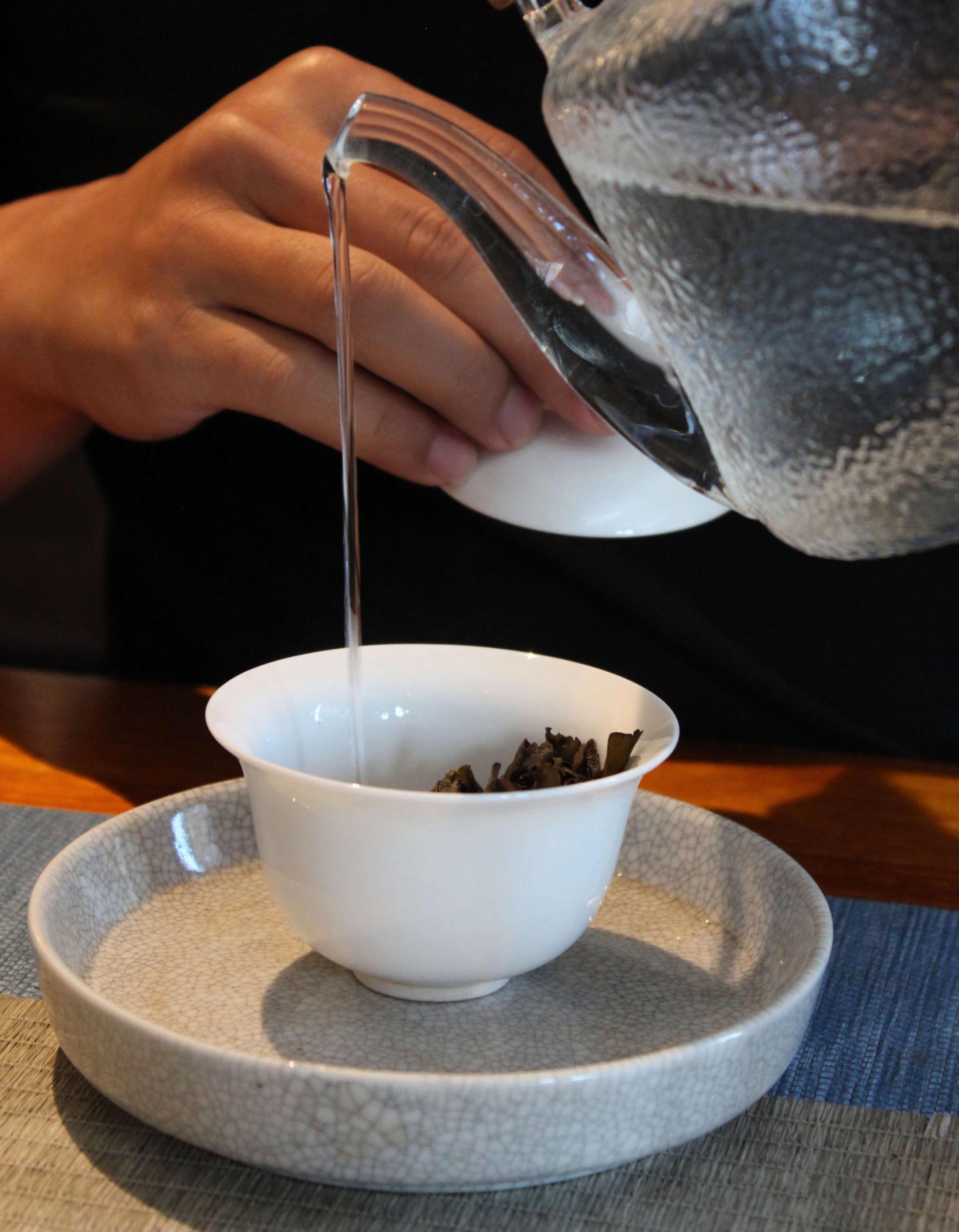
He expertly brewed the Shuixian for us, and it was hard to tell whether the tea was good or he was just brewing it well. Probably both. As we went through the infusions, we asked about something we’d always seen but never fully understood: why people sniff the gaiwan lid when brewing rock oolong. He explained there are two uses. One is simply to enjoy and assess the fragrance. The other is how makers check their tea: if it isn’t made well, anything bad will show up on the lid. Some people have mastered it to the point where they can tell whether a tea is from the core area of the Wuyi Mountains (zhengyan) or elsewhere. The key is to breathe in with your stomach. “What you’re learning now,” he said, “people outside won’t tell you.”
“Rock tea is a complex system. Even just Shuixian and Rougui are hard to understand.”
Another tradition is to save the first infusion and drink it last, and we didn’t know why either. He said not everyone does it, and he generally doesn’t with customers. The first infusion isn’t the best, but at the end, when the tea has little taste left, drinking it is a way to recall what you tasted earlier. It also tells you whether the tea was made well. By now the Shuixian was on its last legs, so we stopped and drank the first infusion we’d set aside. The fragrance really hits you, since it’s what fades most over multiple infusions.
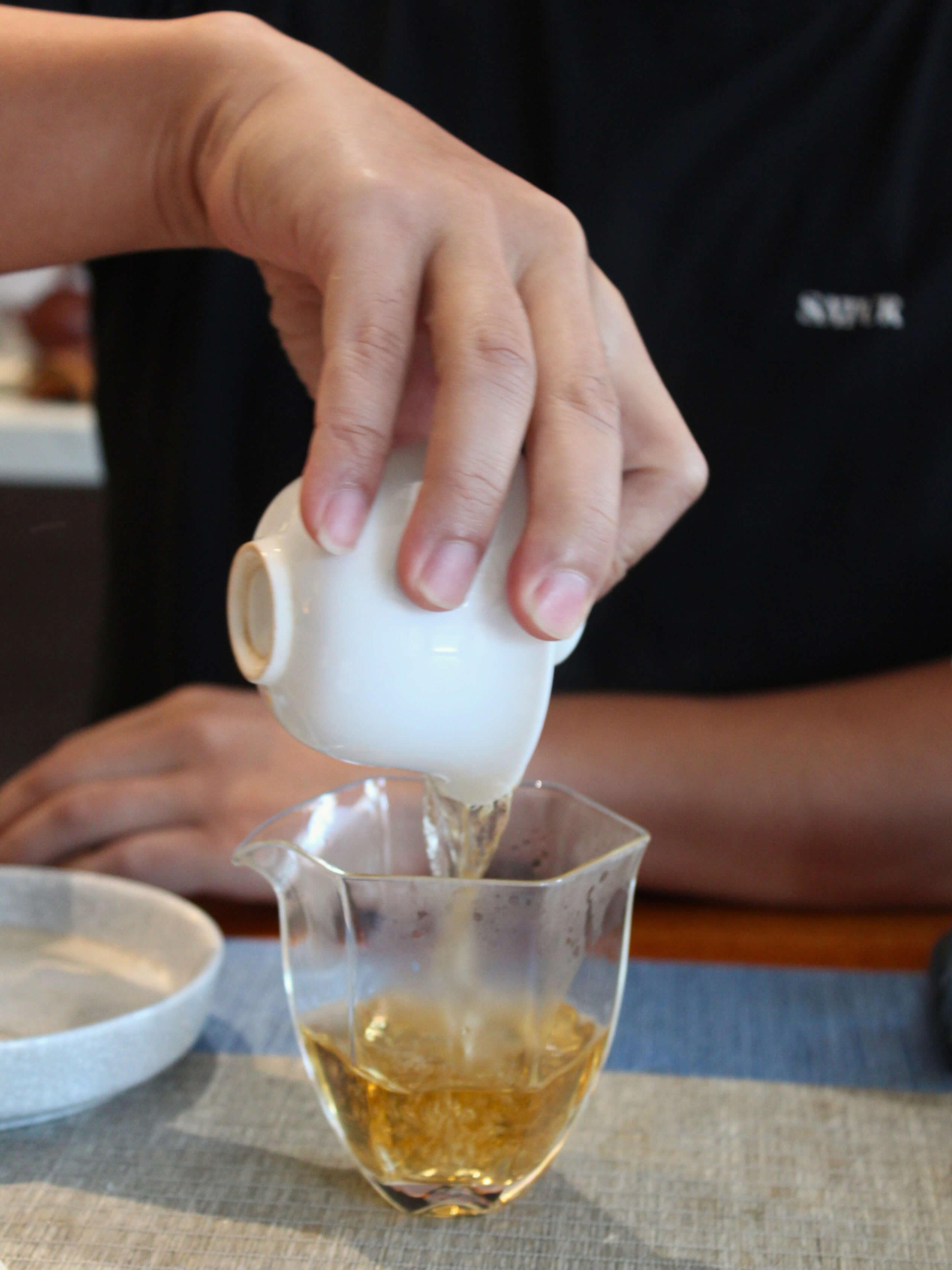
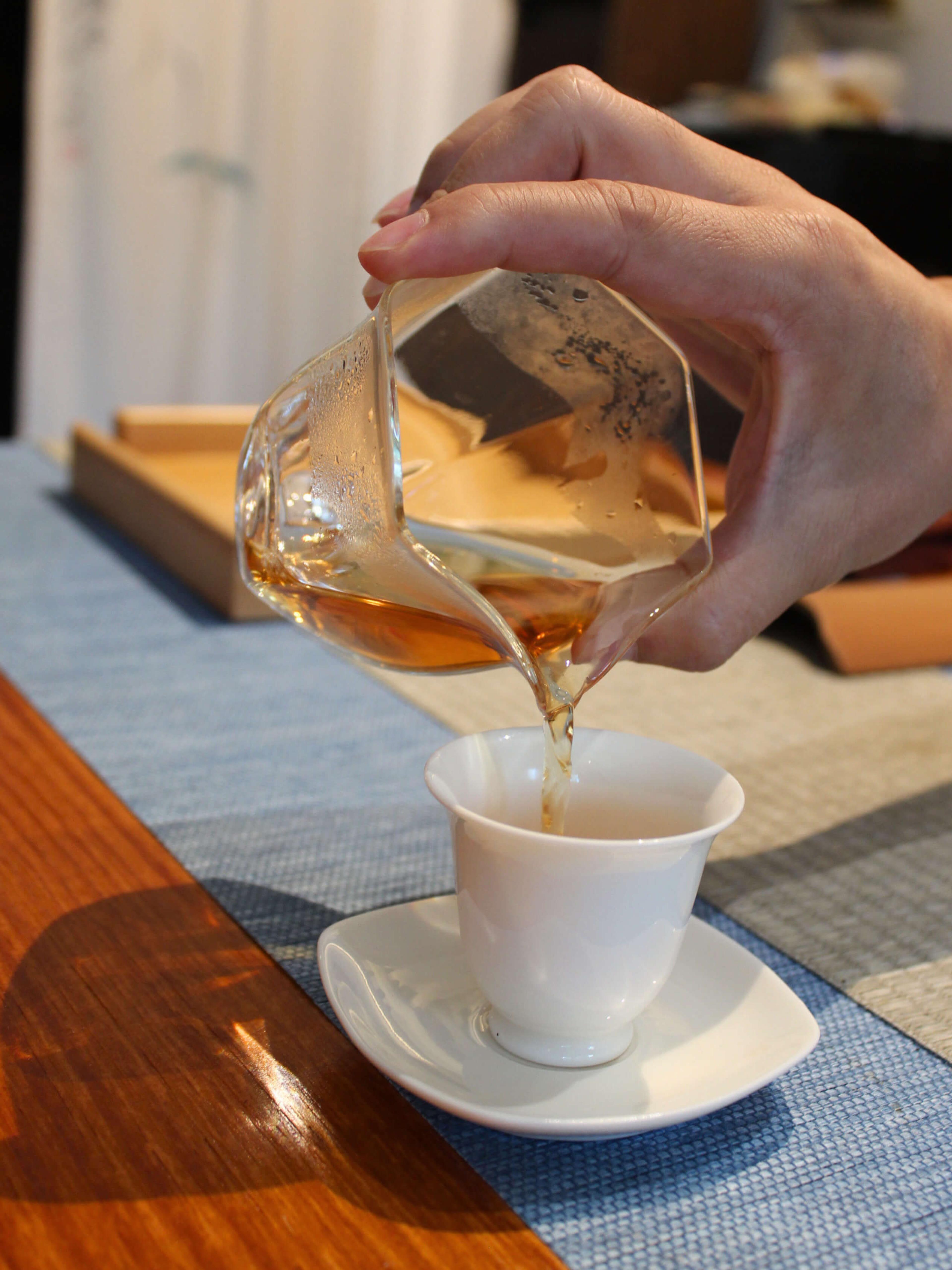
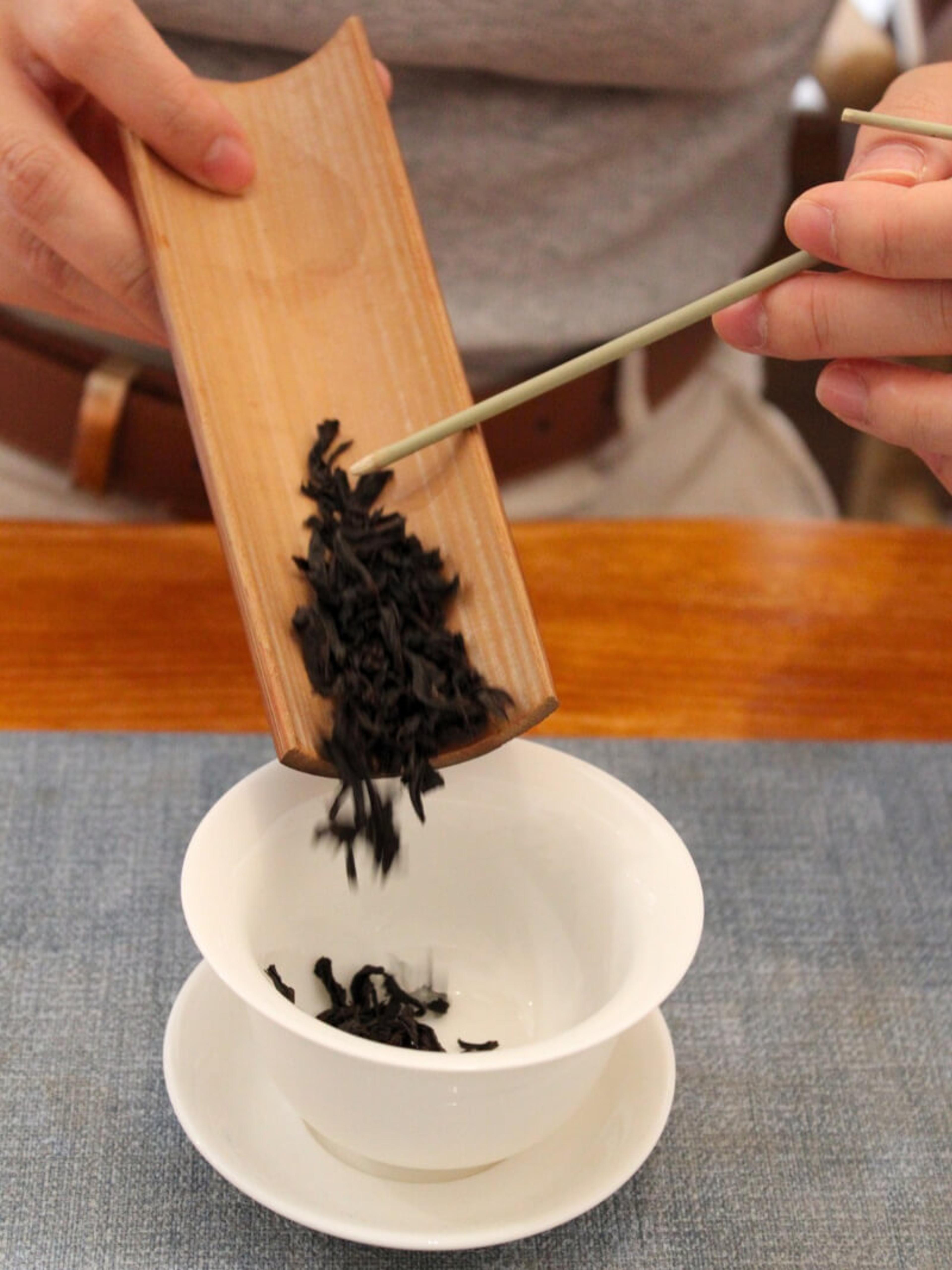
Then it was time for the Zheng Tai Yin. He handed the reins over to us, a challenge to brew it ourselves. It’s a medium-high roast, but aged nine years, so the harsh smokiness has completely gone. It’s from his early days, and his family hasn’t made it for the past few years: the quality of the bushes declined, which he puts down to the environment. You won’t find this tea anywhere else in Hong Kong, he told us, not even in five-star hotels.
The dry leaves were dark brown, almost black, and smelled of dried sour plum, chenpi and licorice, with something like bourbon or rum underneath. Once wet, the aroma turned more fruity and sour, with cinnamon and a hint of almond. The first infusion was thick, almost oily: licorice, something medicinal, woody notes and a gentle smokiness. Then a cool, mineral, almost menthol finish in the throat, part of what tea people call yan yun, the “rock rhyme.” Mister Tea had told us about that cooling feeling, and that it only comes through when your mind is calm. The second infusion was even better.
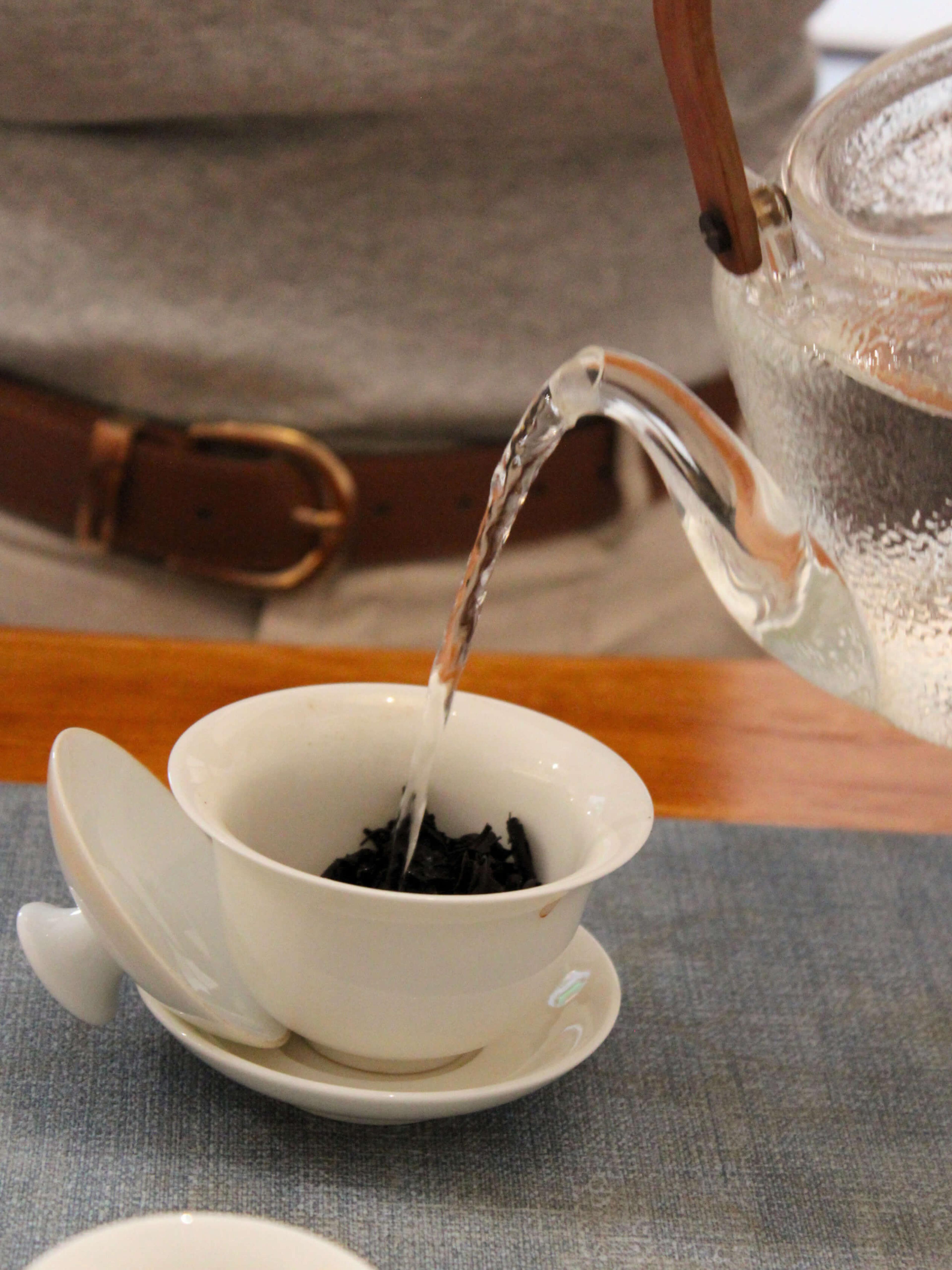
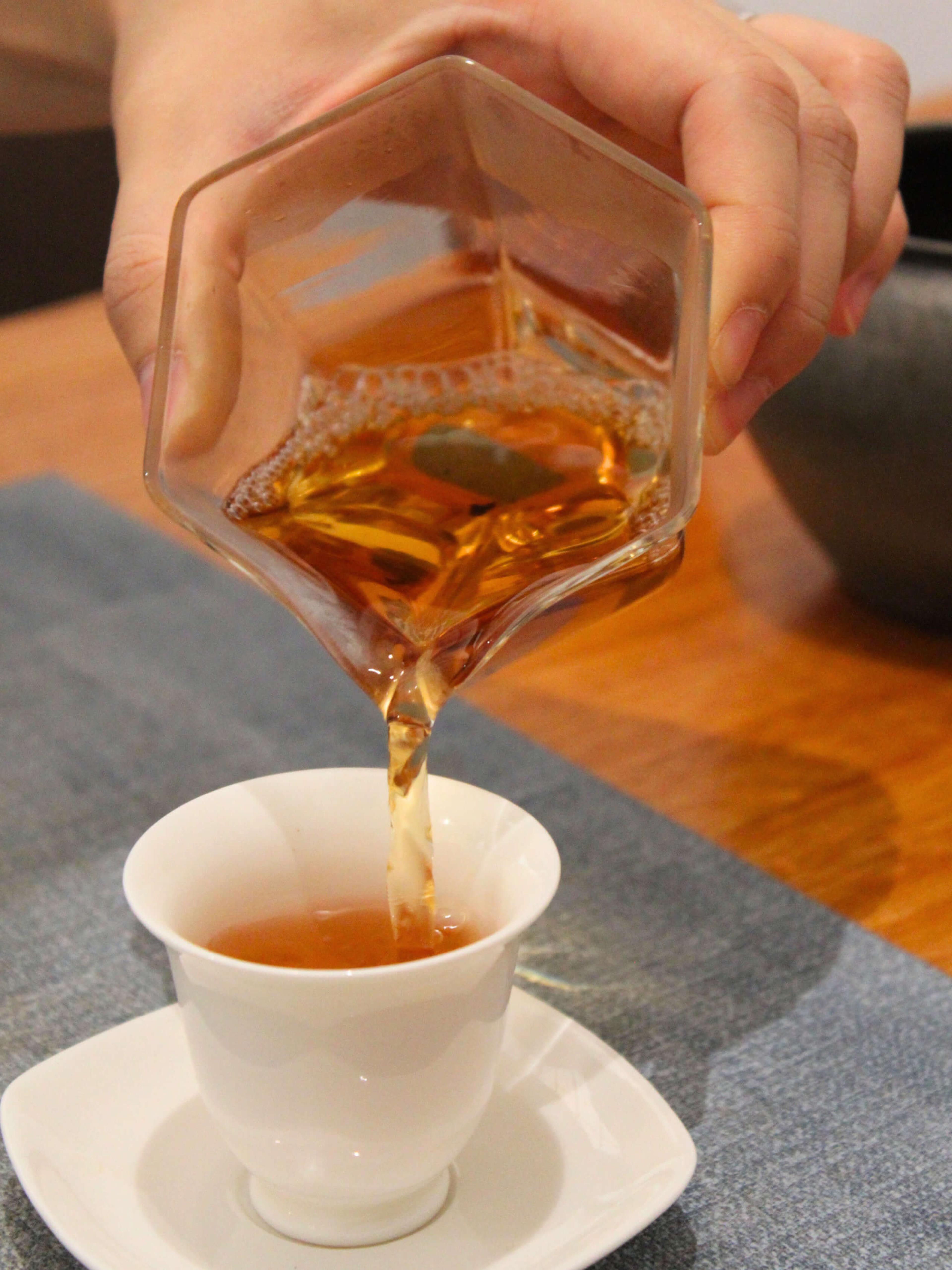
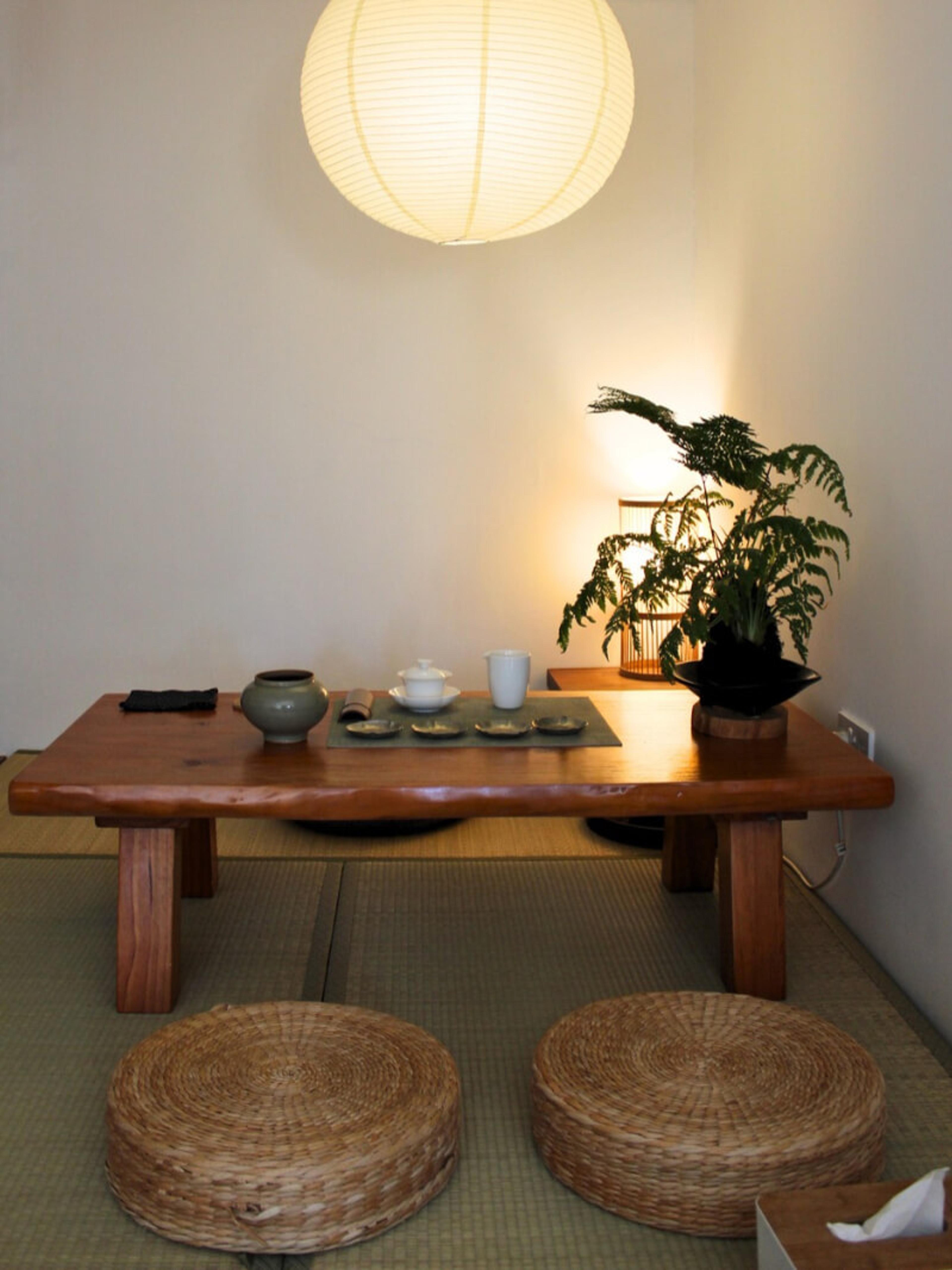
In general, rock oolongs benefit from resting. Drunk just after roasting, the smoky notes can be harsh and unpleasant. His family rests many of their teas for about four years before selling them. That only works for heavier roasts, though; a light roast, he said, won’t keep. And the aging has to be done properly, with humidity kept between 50 and 60 percent. That’s hard in Hong Kong, where it’s well above that most of the year3, so it takes a lot of dehumidifying.
Roasting is where the mastery lies. It’s traditionally done over charcoal, such as longan or lychee, though many producers, he said, now use cheaper charcoal or electric roasters to save on costs. His family only roasts medium to high; they never followed the trend toward lighter roasts. Even so, there are parts of the process he doesn’t fully understand, despite watching the masters at work and them telling him as much as they can. A lot of roasters, he said, simply don’t have the experience.
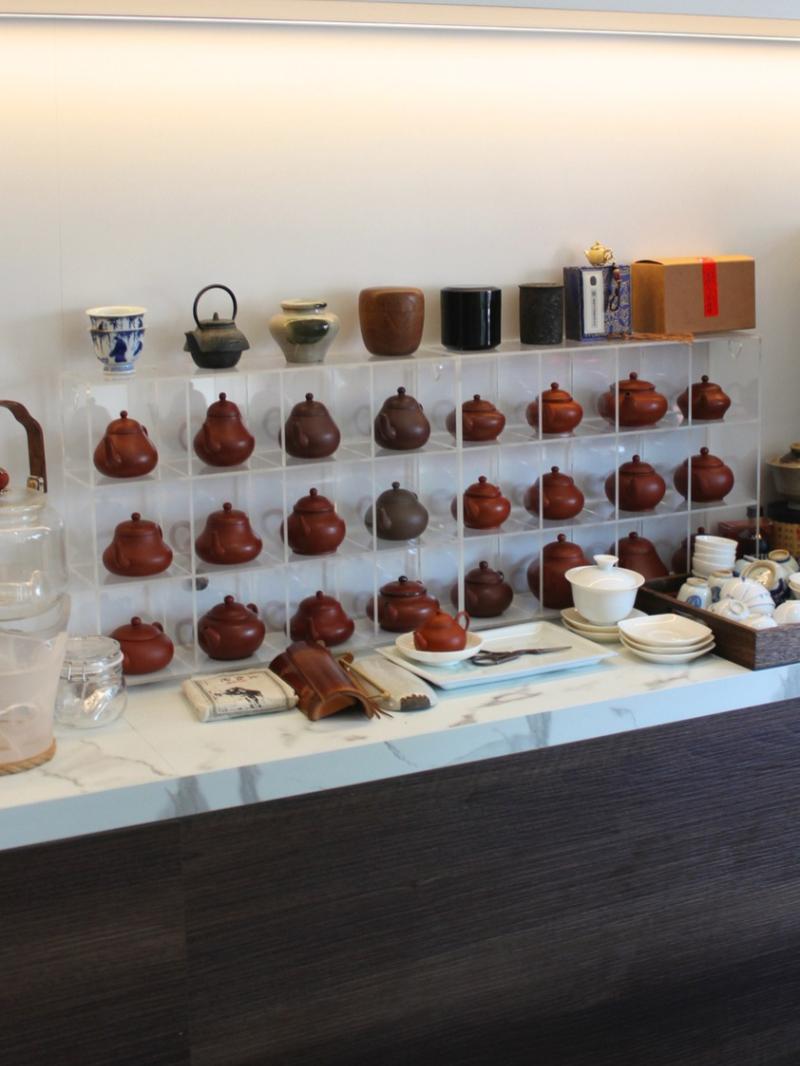
A light roast is forgiving. A high roast can be genuinely pleasant, an interesting and nuanced cup, but it exposes the maker: it relies on the tea being well crafted and properly rested. The heavy roasts we’d disliked before weren’t bad because of the roast. They just weren’t made well.
- ( 3 )Monthly Meteorological Normals for Hong Kong (1981–2010), Hong Kong Observatory https://www.hko.gov.hk/en/cis/normal/1981_2010/normals.htm ↩
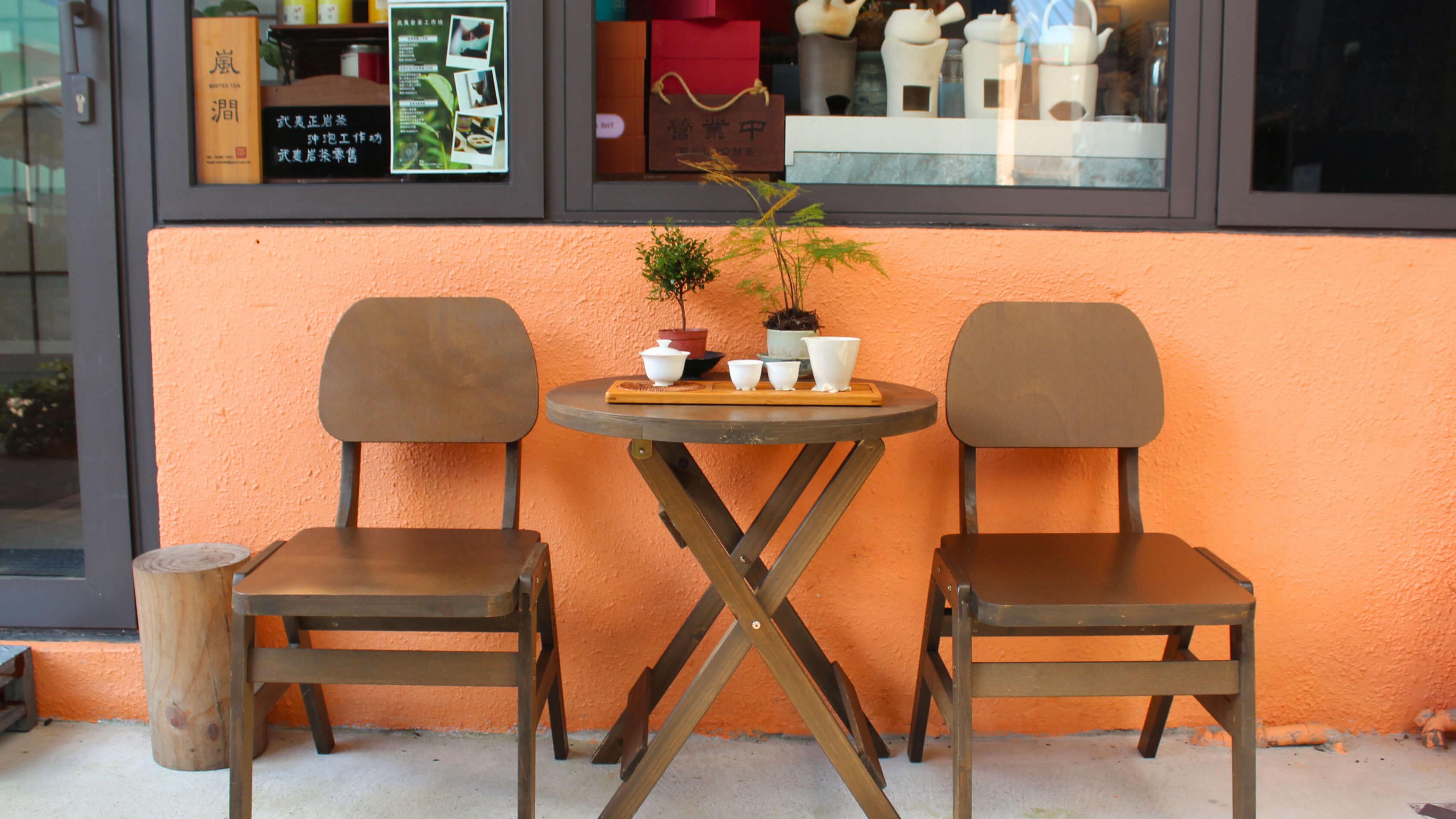
If you like rock oolong or are interested in tea, we highly recommend a visit to Mister Tea House. It’s open mostly on weekends, and it’s worth booking ahead (+852 6095 1922, or @mister_tea on Instagram). You can sit down for a guided tasting, which the menu calls a workshop, priced per tea, or buy his teas by weight. Ma Wan 1868 is a lovely day out too, whether you’re a local or a tourist. We paid for one tea; he generously gave us another, and we gave him one of ours in return.
We came in preferring light roasts. We left understanding that a high roast, done well, is really good.