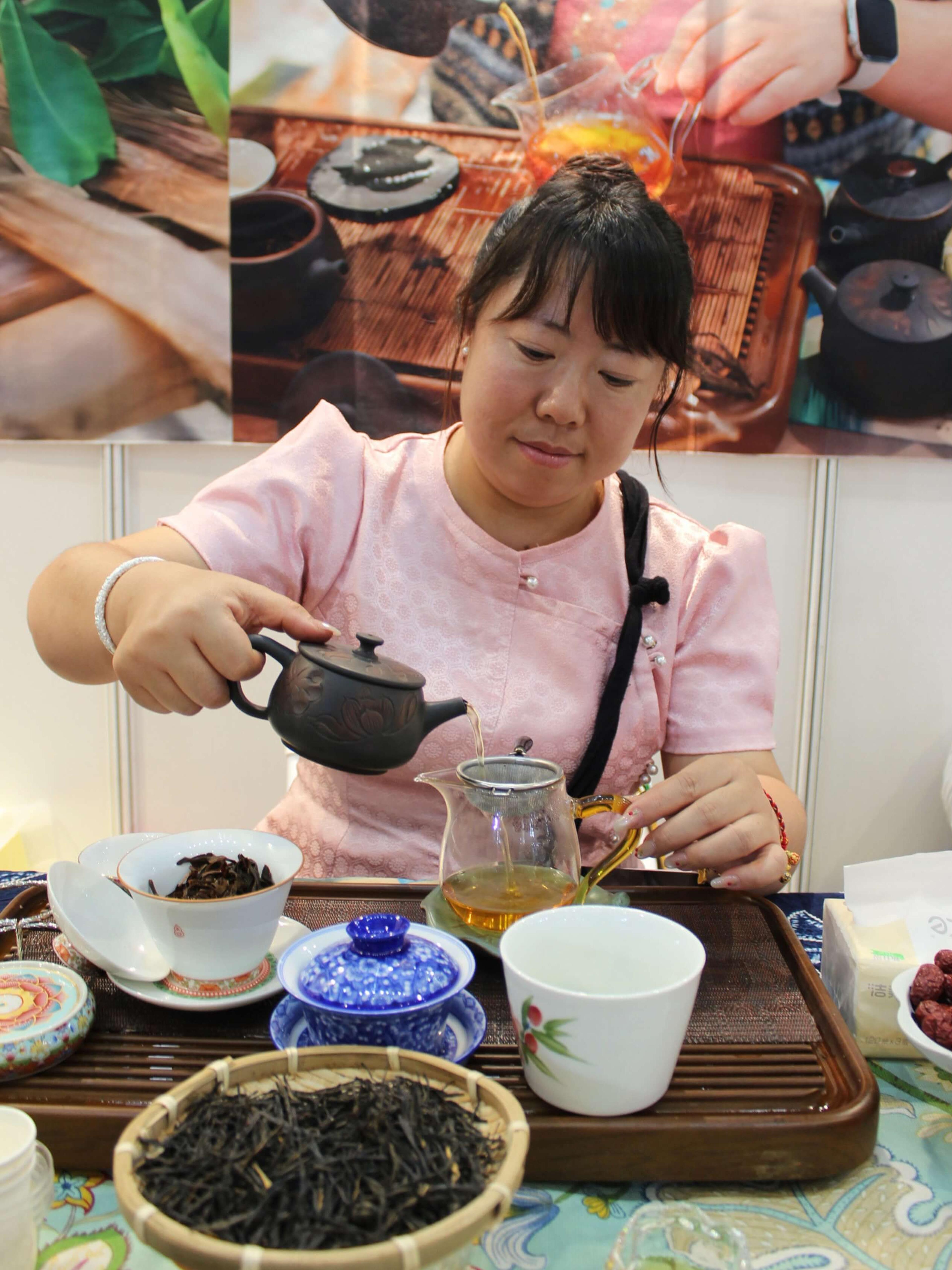
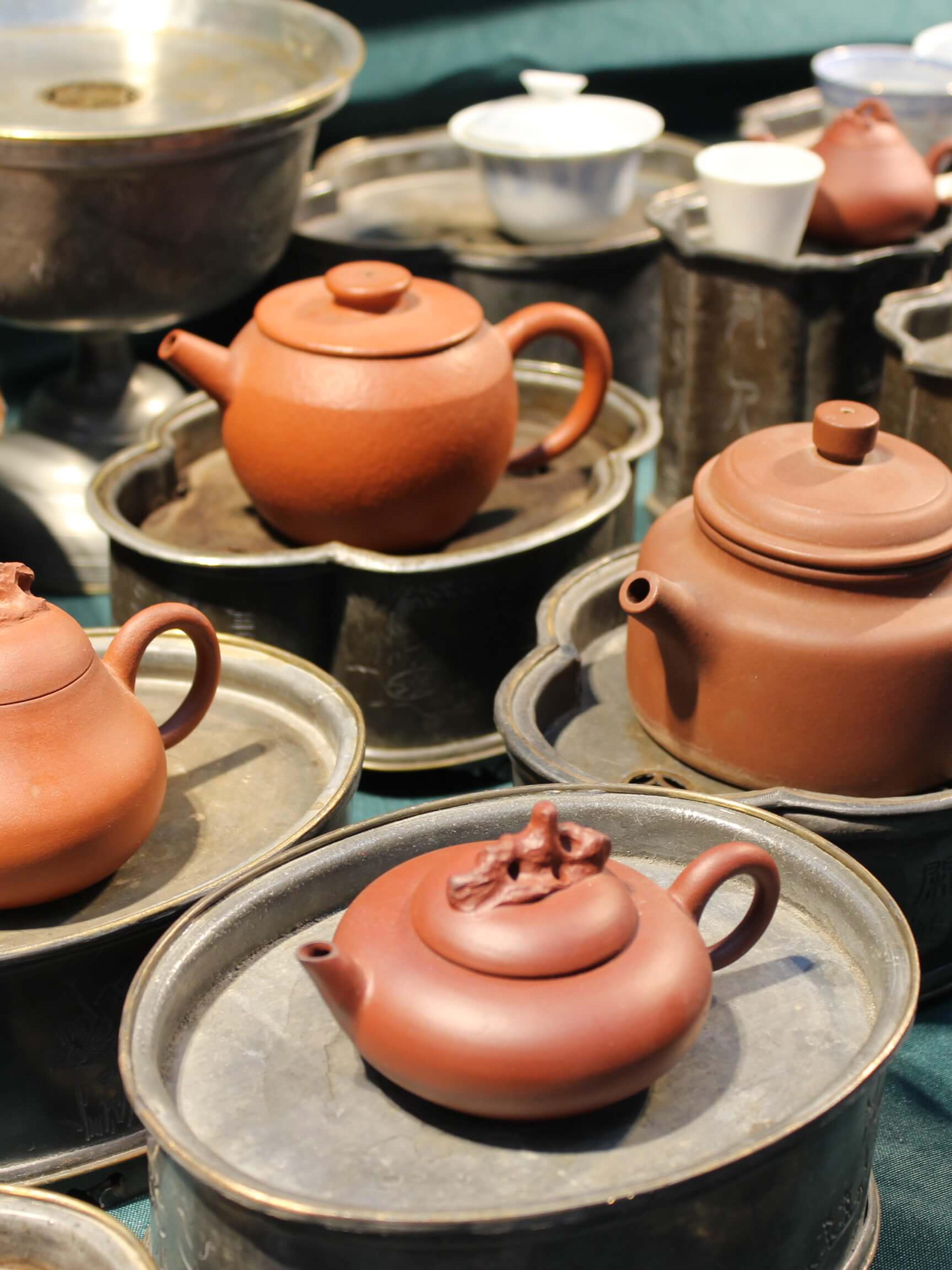
Above Potou
Growing and making tea in Potou Village, Yunnan.
Issue
01
Tea
- Written by
- Heidar Bernhardsson
- Interview by
- Clara Cheung

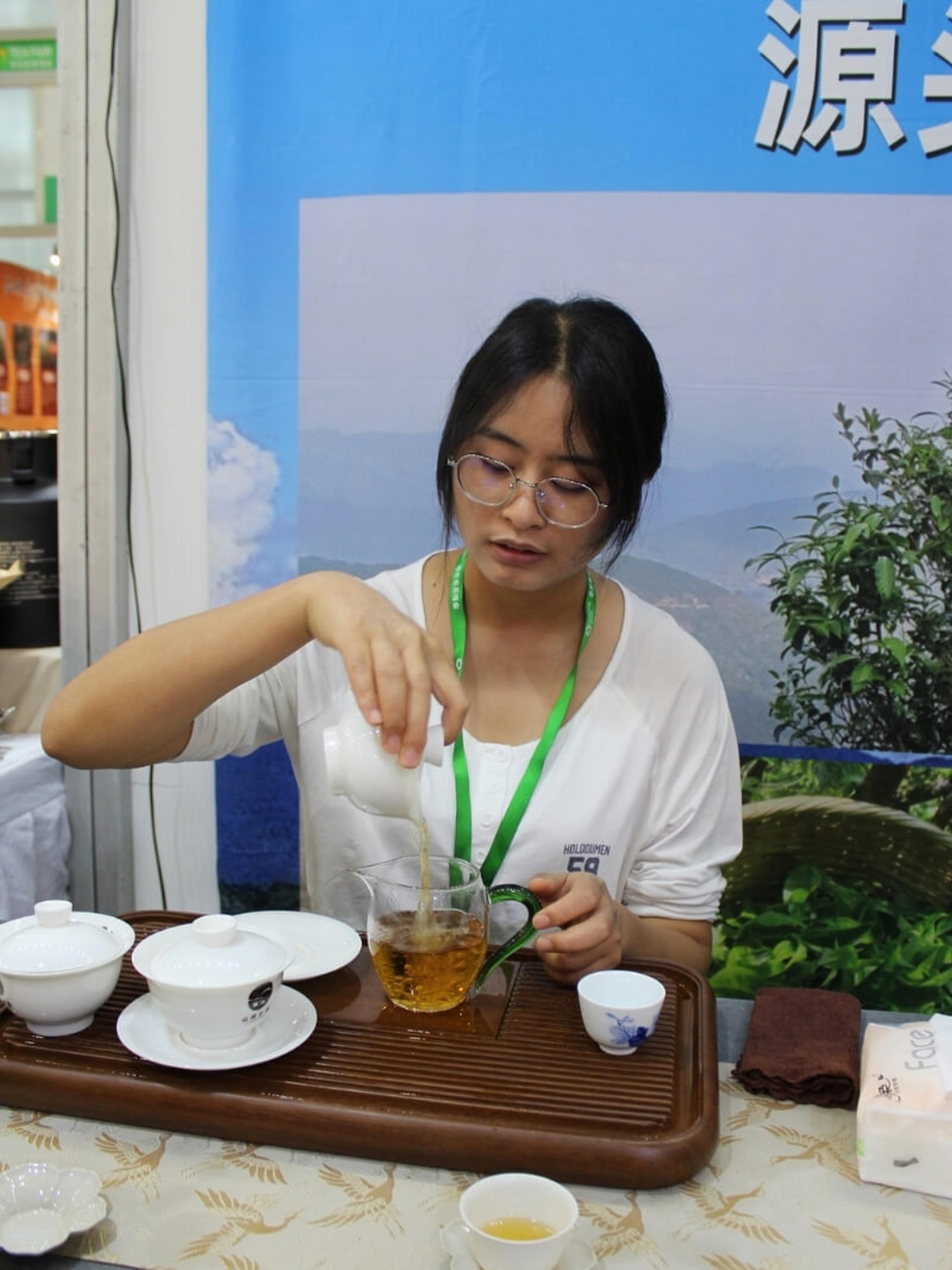
You can’t wear flip-flops in the mountains. You get jabbed by sticks and you can injure yourself running into things on the forest floor. Li Furong was speaking from experience, having had a toe injury earlier in the year. Despite being just 26, Furong has been working with tea for many years. In 2022, after working over five years in a company in the tea industry, she started a business harvesting and producing tea with her partner and his sister. By 2025, she was working on it full time, focusing more on the sales and marketing side. As with any small business, the three of them do a little bit of everything depending on what is needed. When she has time, she joins in with the picking on their mountain plot, which she now has proper hiking shoes for. Their company mainly does wholesale, but tea fairs are an opportunity to sell directly to consumers, so they come to Shenzhen when there’s one on. We sat down for tea with them at their booth.
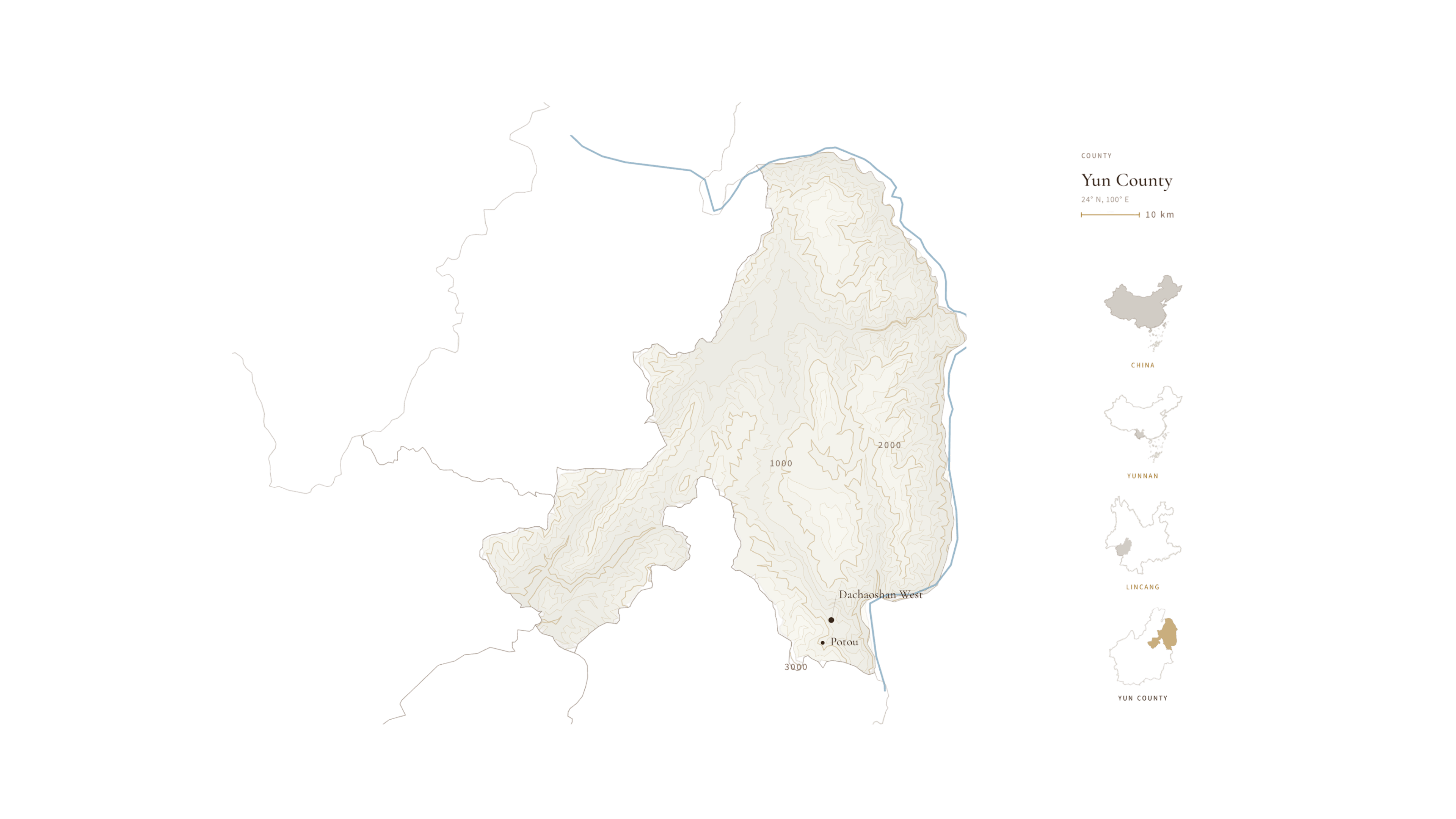
They are all from a small village in Yunnan called Potou, in the township of Dachaoshan, in southeast Yun County. It’s around an hour-and-a-half drive northeast of Lincang City. The county’s eastern boundary is the Lancang River, which becomes the Mekong once it leaves China. Potou sits near Changputang, where there’s a tea tree reckoned to be close to a thousand years old.1 Each household in the village owns a plot in the mountain. On Furong’s family plot the trees are several hundred years old, with one at least 300 years old. Tea trees grow wild here, and many more were planted over the years. Groves of old trees are recorded across six villages of the township, Potou among them, running to around 500 mu, which is a little over 30 hectares.2
- ( 1 )云县大朝山古茶树群落 大朝山普洱茶口感特点 — 古茶居 (Guchaju) https://m.guchaju.com/cha/8.html ↩
- ( 2 )云县大朝山西镇菖蒲塘古树茶走俏全国市场 — 古茶居 (Guchaju) https://m.guchaju.com/cha/10.html ↩
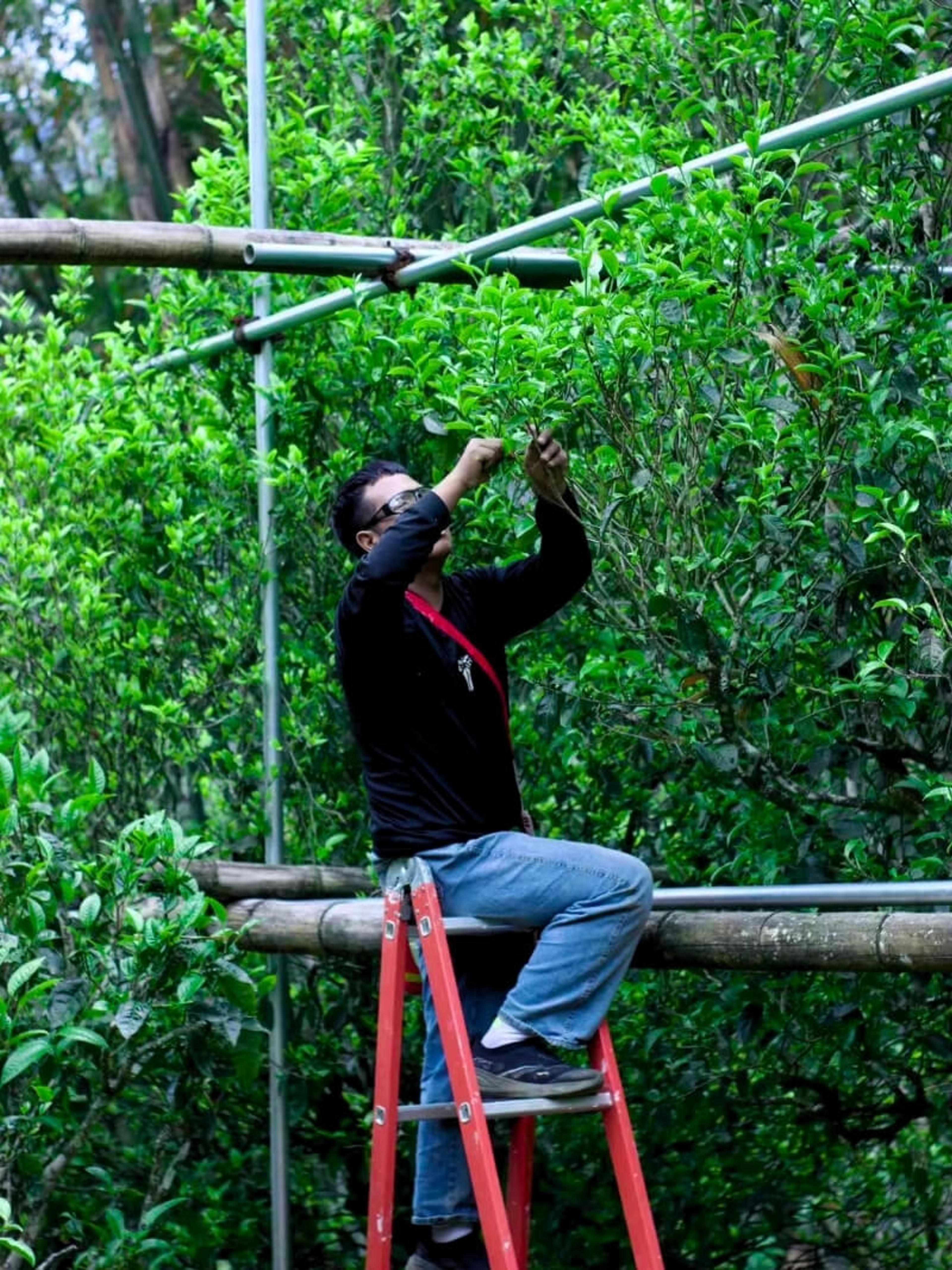
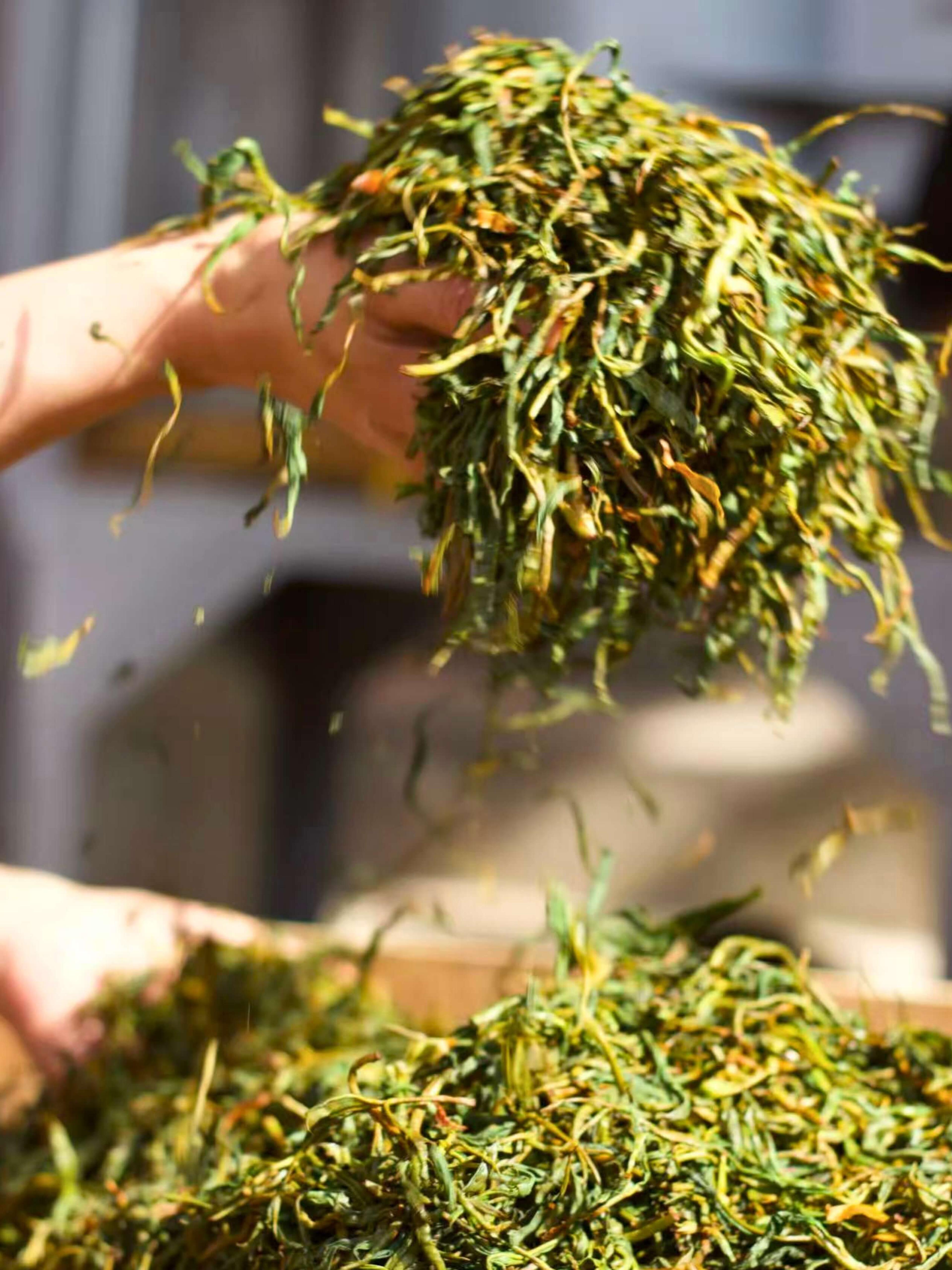
Tea trees grow everywhere around Potou. In the mountains, and on their doorstep. The doorstep plants don't make very good tea, she says, the growing environment isn't good enough. They pick leaf from around 1,500 to 2,000 meters elevation, which is where the conditions for tea are ideal. When the trees are old, they grow quite tall, several meters is normal, with trunks too thick to get your arms around. To pick the leaf, they need to climb the trees, which they make easier by building frames around them. Picking requires careful timing; sometimes she goes back to a tree a few days later to make sure it's ready. What they pick is the growing tip, the new shoot with its unopened bud and the first few leaves below it, snapped off whole. On an old tree several shoots push from the same spot. She explains you don't take the shoot all the way down, one or two leaves stay on the branch, or the tree scorches. They pick in spring and again in autumn, and the spring leaf is the best of it. It all happens at once, so everyone works: the three of them, her partner's father, and some pickers they hire.
“Trunks too thick to get your arms around.”
The mountain is wild, but it’s still managed, and she tells us she doesn’t like truly wild leaf for making puer. Her own father, who has been making tea for over ten years, once rented a wild tree for 2,000 yuan to make puer, and it was all sweetness, no aroma, thin flavor. She had told him not to do it, but he was curious about it and wanted to try. Not all the leaf they use comes off their own plot, either. They rent old trees, and they buy leaf in as well.
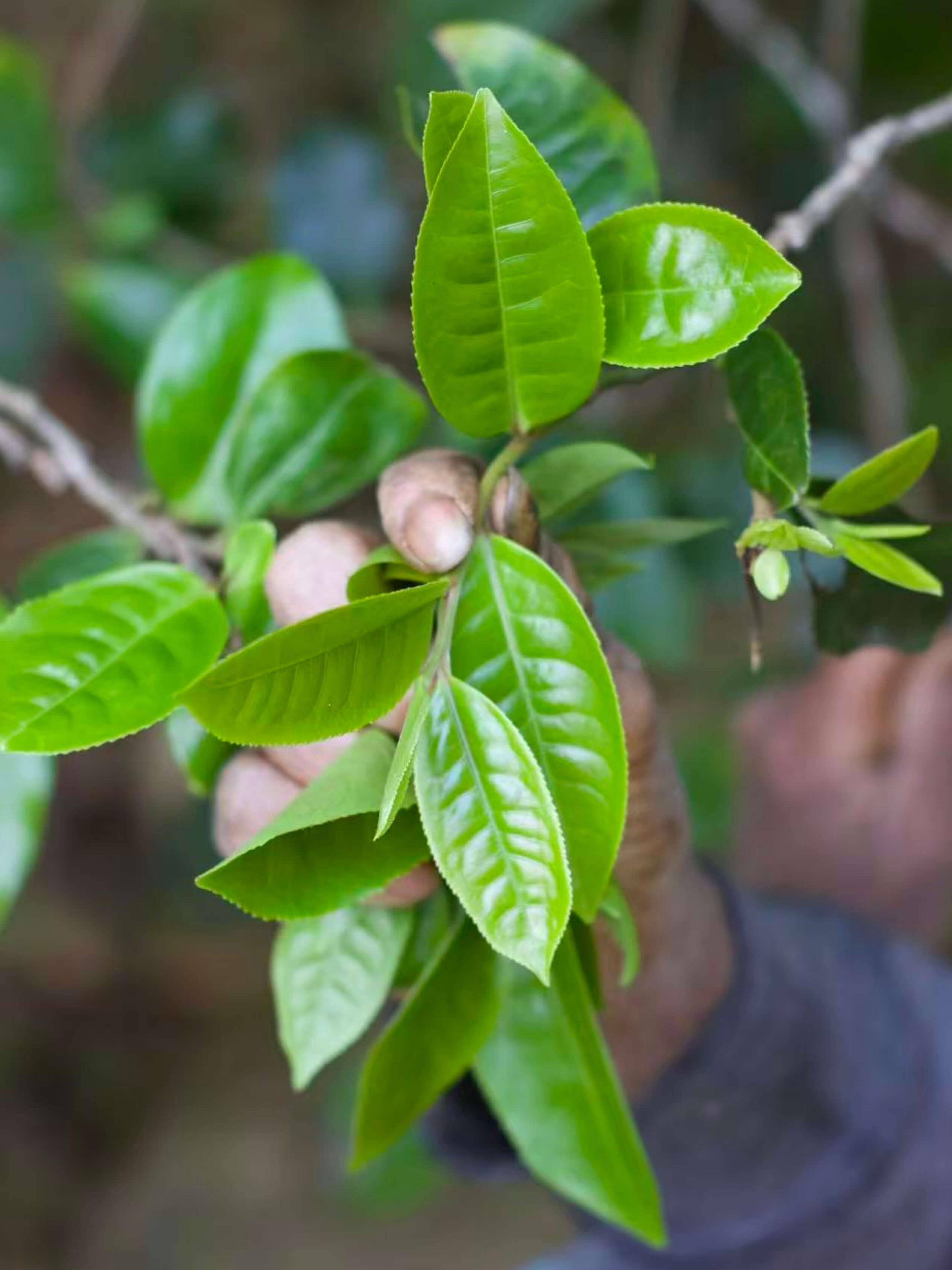
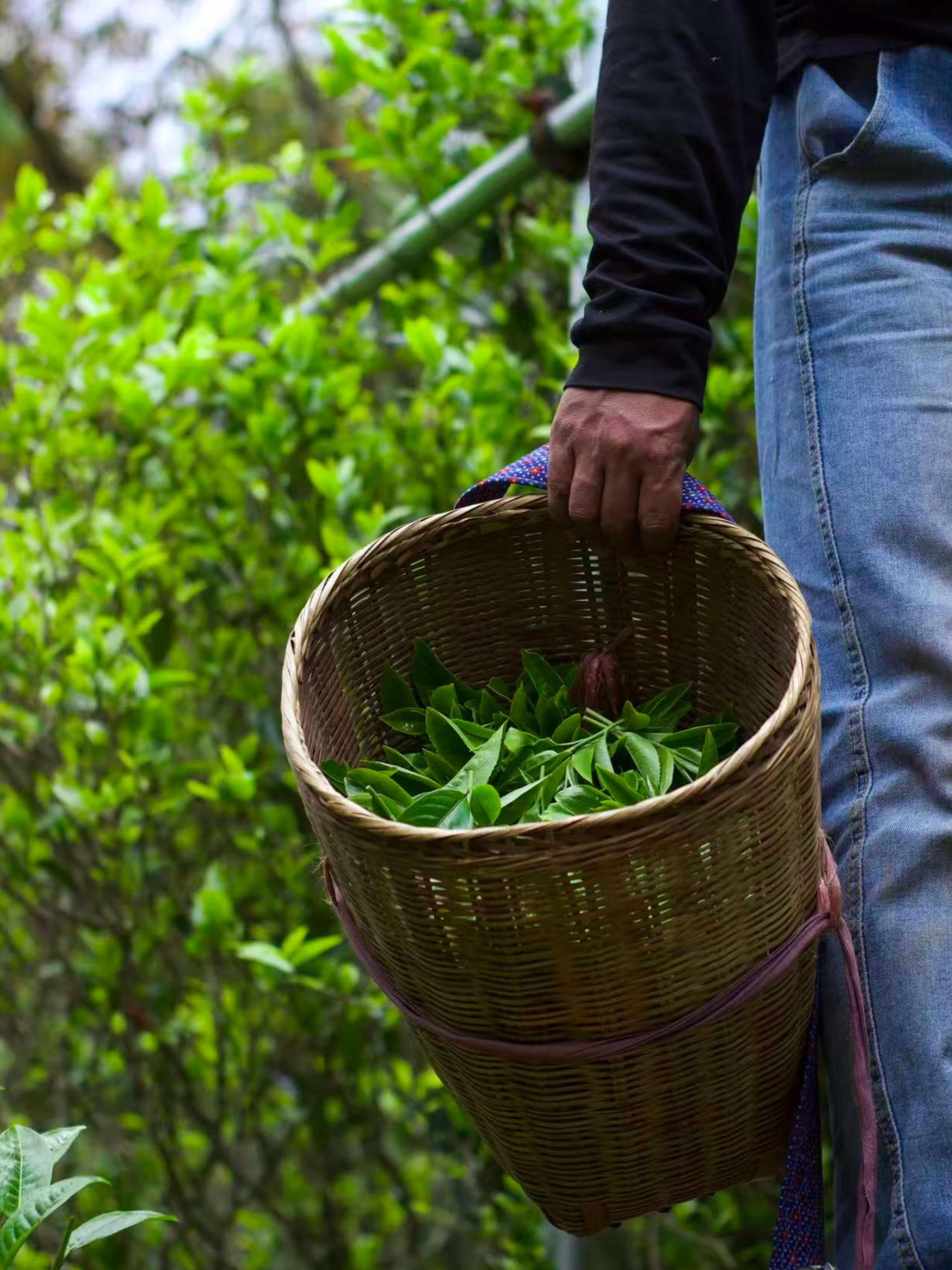
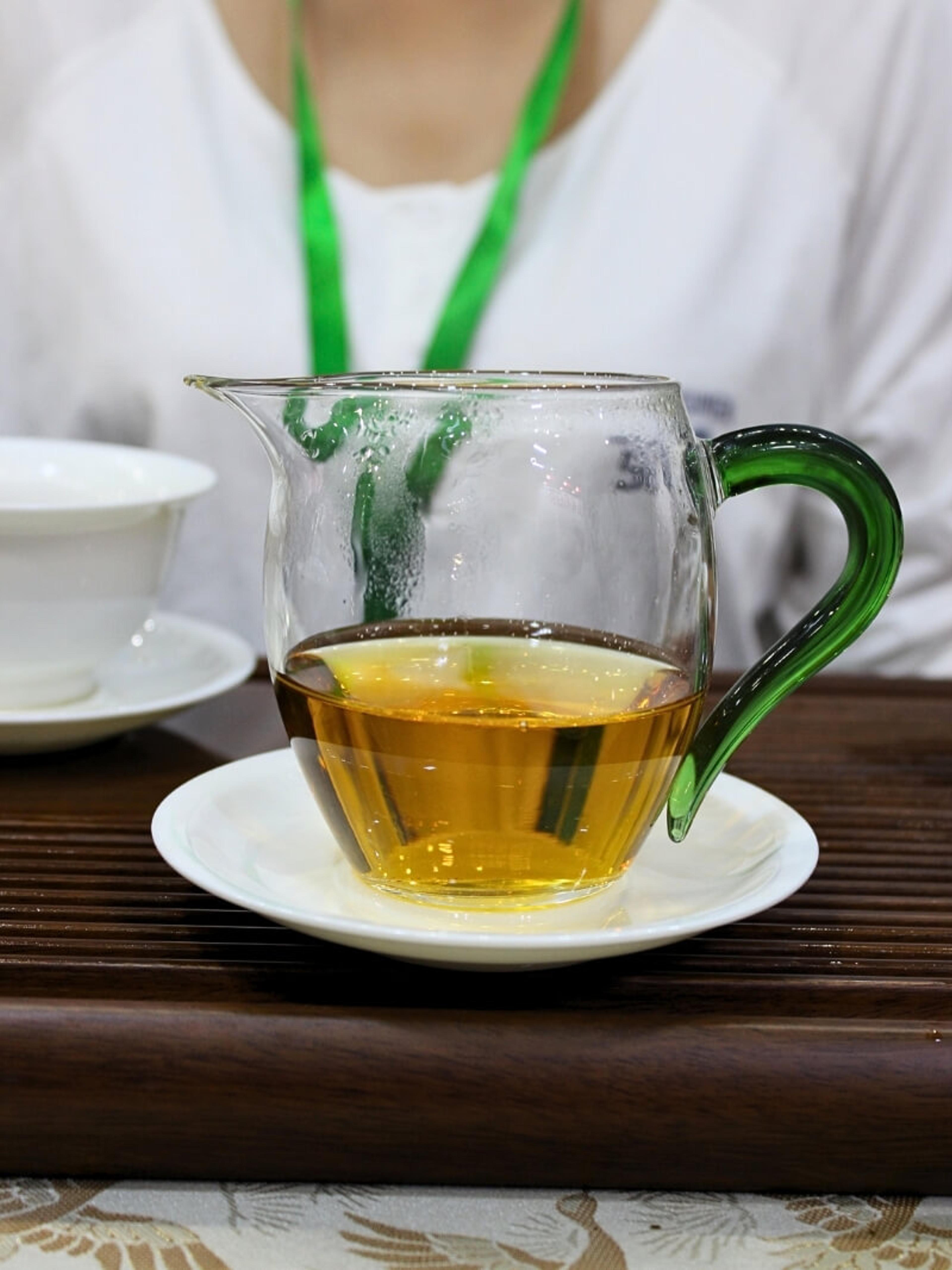
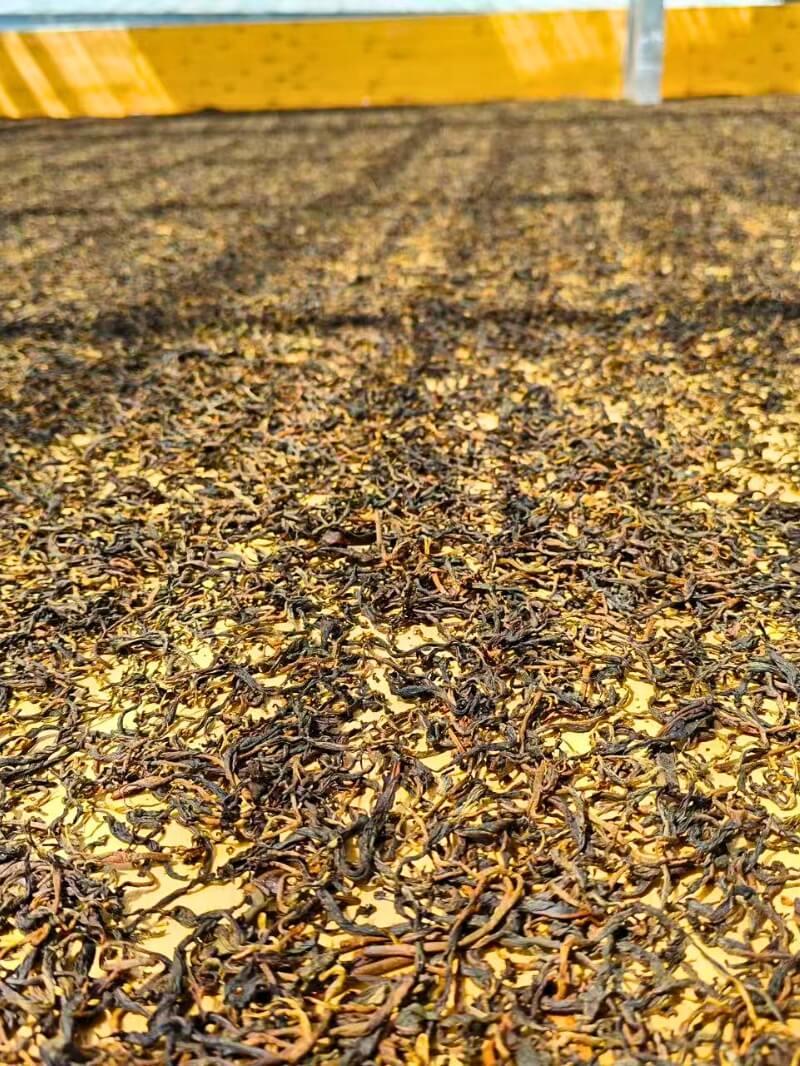
Once the leaf is harvested, it must be processed. They have their own processing facility, which they operate themselves. Between them they make around 800 kilograms a year: 500 kilograms of puer, 200 of red tea, hongcha (红茶), what English speakers call black tea, and 100 of white. Pan-firing is required for the puer, and she does it when she has time to help out. The red teas are sun-dried instead, which she explained preserves the natural fruit and flower aroma better. There are two reds: one from wild leaf, and one from old-tree leaf, which is the better seller. She showed us some of the wild leaf as an example, “no down on it at all, completely smooth.” Then she took the wild one out for us to try. The dry leaf was intensely fruity, lychee predominant, and sweet. Wet, it turned jammy and redcurrant, sweet, with honey behind it. The liquor was amber gold, and that fruity, jammy sweetness dominated, honey again, with some funky fermented notes that came out most as it lingered. The first brew was poured out straight away, the second slightly longer, going more gold and a touch red, less jammy, less funky, more malty. A very interesting tea, and pleasant to drink.
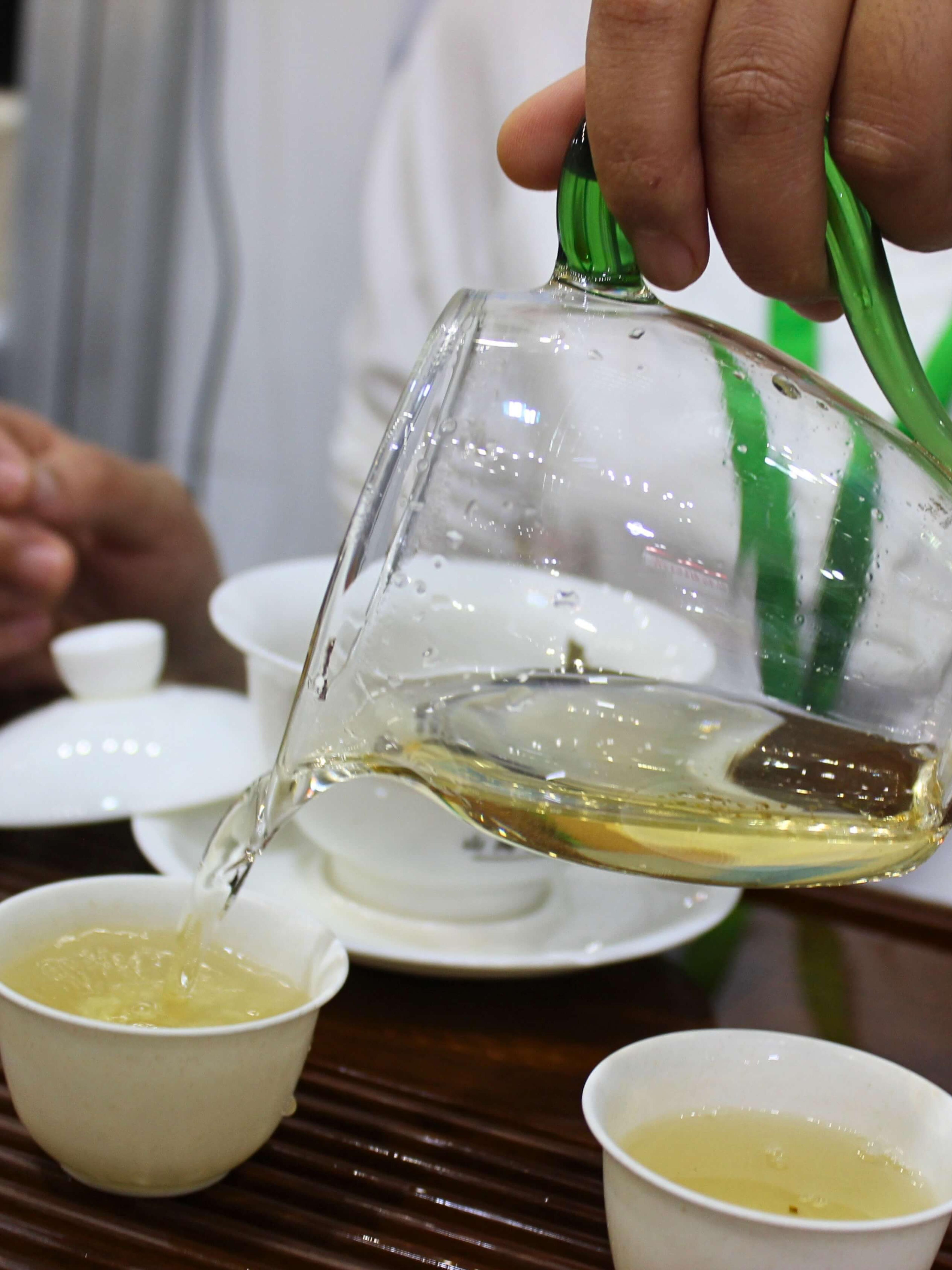
Puer is the bulk of what they make, and the most work. Her uncle taught them how to press the cakes using a stone mold. The tea gets steamed, then pressed by hand. She struggles with it because of the amount of strength needed, so she sometimes gets someone else to do it. They wrap some of the cakes themselves, but there are too many for that, so a factory wraps them in paper and each tong of seven gets a bamboo sheath. She took out an unopened one holding 200 gram puer cakes, stamped “2025.04.18.” It’s a puer they’ve made from their best leaf every year since 2022. This year they decided to skip it, however, because the price of the leaf went up too much. They named it Yun Ting (云渟), which means “a small pool of water up in the mountains.” The name came from a friend of her partner’s sister, who liked the tea enough to want to name it. It has a body feeling to it, she told us. You feel the heat come up in your palms, and drinking a session from start to finish leaves you feeling like you’ve had a bath. The dry leaf was very fragrant and quite sweet, fruity but faintly nutty. Brewed in a gaiwan, 7 grams to 100 milliliters for seven seconds, the liquor was yellow-green, thick and very clear. It was very smooth, barely any bitterness at all and no astringency, with good huigan (回甘), the sweetness that returns after you swallow, and a light grassiness, in a nice way. Behind that were very delicate fruity and floral notes, honeydew melon perhaps. A second brew at ten seconds came out stronger, with more huigan, and it really lingered. She was right about the body feeling. They also make a few other puers, dragon balls and some loose leaf.
“You feel the heat come up in your palms, and drinking a session from start to finish leaves you feeling like you've had a bath.”
At home, she mainly drinks puer. On the table between us there was a cake with a sicang (私藏) seal, meaning private collection. It’s made from leaf from big trees in their village, and the yield was too small to sell, so they keep it for themselves. Very sweet, she said, and that was all she said about it. She uses a gaiwan for her puer, but she tells us her father’s generation prefers loose leaf in mugs. She explained how people in Yunnan drink raw puer, whereas in Guangdong people prefer it aged or ripe. Personally she dislikes the storage taste of aged puer, and she has firm views on how to keep it out. In Yunnan they store the puer in cardboard boxes. The air there is dry enough, and the bamboo wrap around the tongs keeps the moisture out. Keep it ventilated, no other smells, she explains. In Hong Kong, use a bag and open it from time to time to give it air. Puer transforms through contact with air, and sealing it slows that down. Humidity is what gives it the storage taste, cangwei (仓味), and she says that cannot be reversed. Aging it gives it a thicker body and makes it redder in color.
“Seeing it up the mountain is a different feeling.”
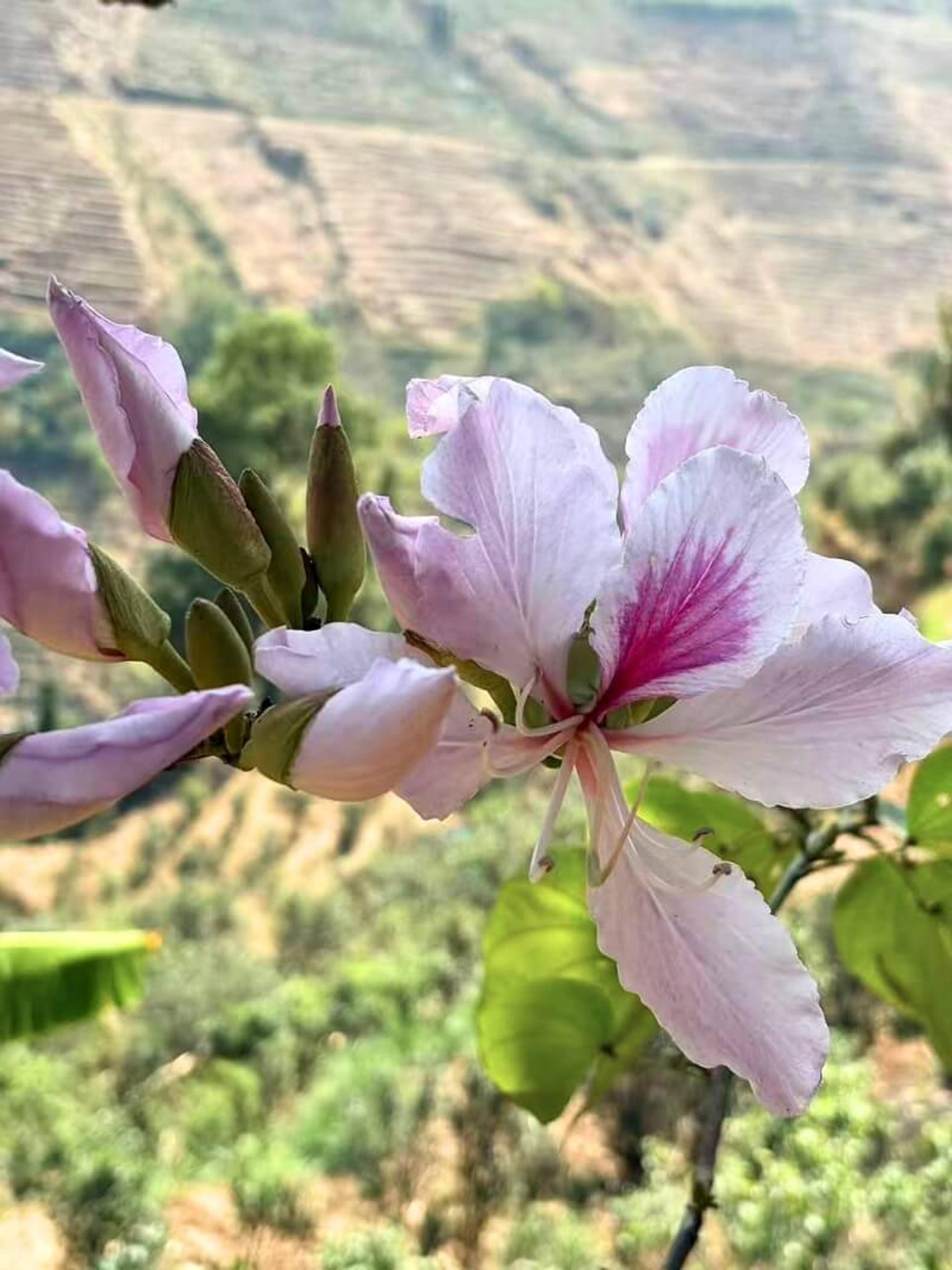
Winter is the quiet season in Potou. It doesn’t get very cold, no snow, just occasional rains. The sun can warm up the day, but the evenings get cold enough that they light a fire. During this time the mountains get shrouded in clouds and mist, so they use the time to do the occasional tea expo and manage the gardens. This was the inspiration for the name of their company, Shanjian Yuncha (山间云茶), cloud tea among the mountains in English, which she had chosen years before they started the business. The walls behind them had photos of their mountain plot, which is what drew us to speak to them. One photo was of a bird’s nest; when asked, she told us it’s usually a hwamei, they are common. The mountain is full of birdsong, especially once you get up to where the tea gardens are. There’s a lot of life, wild boars, snakes. They also harvest honey from beehives in the mountains, as well as forage for traditional foods, such as bauhinia flowers. Come up for a couple of days, she said, more than once. Look at the tea trees. Seeing it up the mountain is a different feeling. If you’re really interested in the birds, sit there quietly. A long way from the folding table and the air conditioning where we sat drinking their tea in Shenzhen.