Wild Tomatoes
A day at the Shenzhen tea expo, spring 2026.
Issue
01
Tea
- Written by
- Heidar Bernhardsson
- Interview by
- Clara Cheung
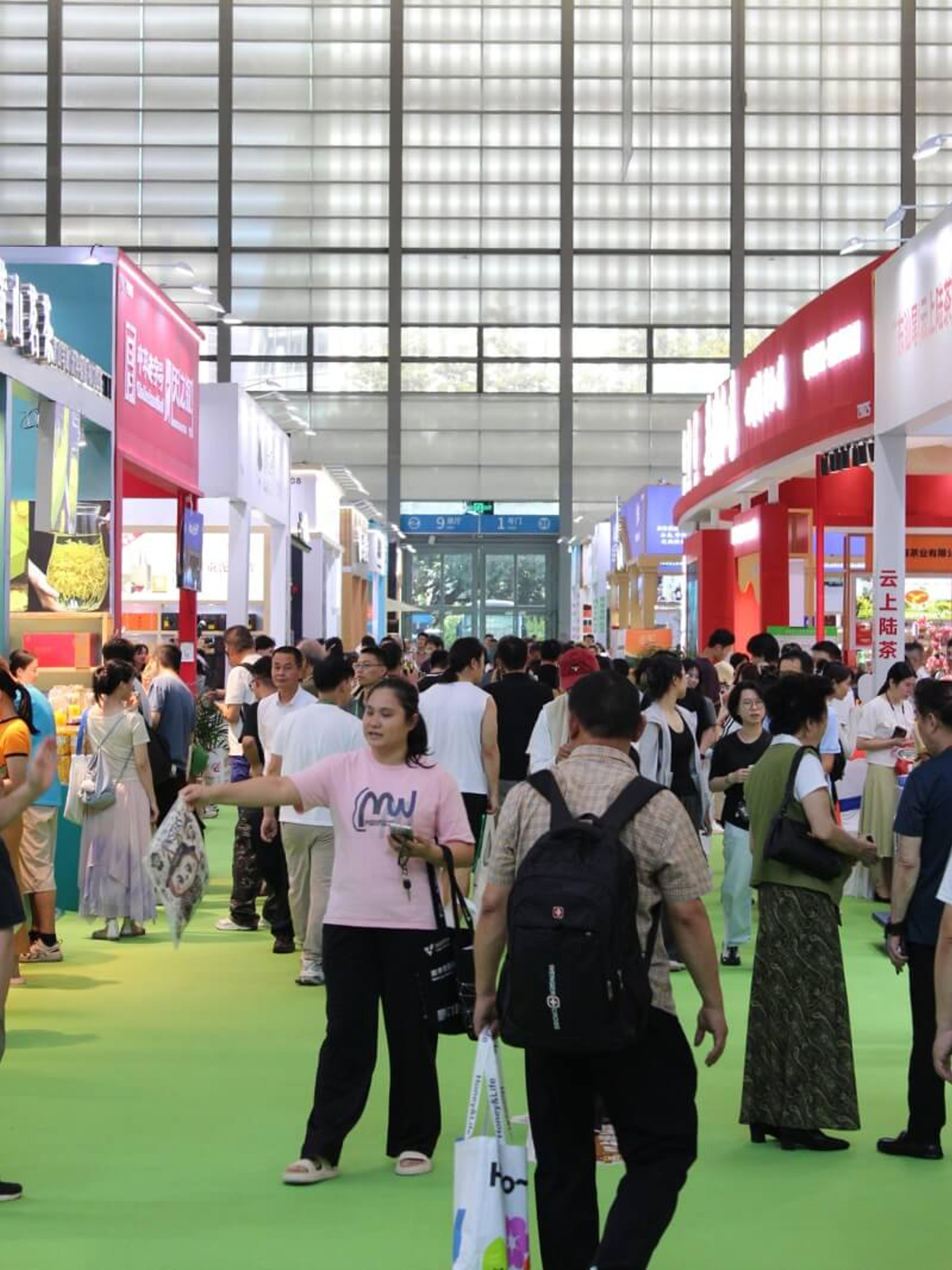
Twice a year Shenzhen hosts one of the biggest tea expos in the world. We went to the last one and had been waiting for this one ever since, watching the date sit on the calendar for months without getting any closer. Then it did. We left Hong Kong early on a hot, humid morning, took the train north, crossed the border into the mainland, and walked the short distance from the station to the Shenzhen Convention and Exhibition Center.
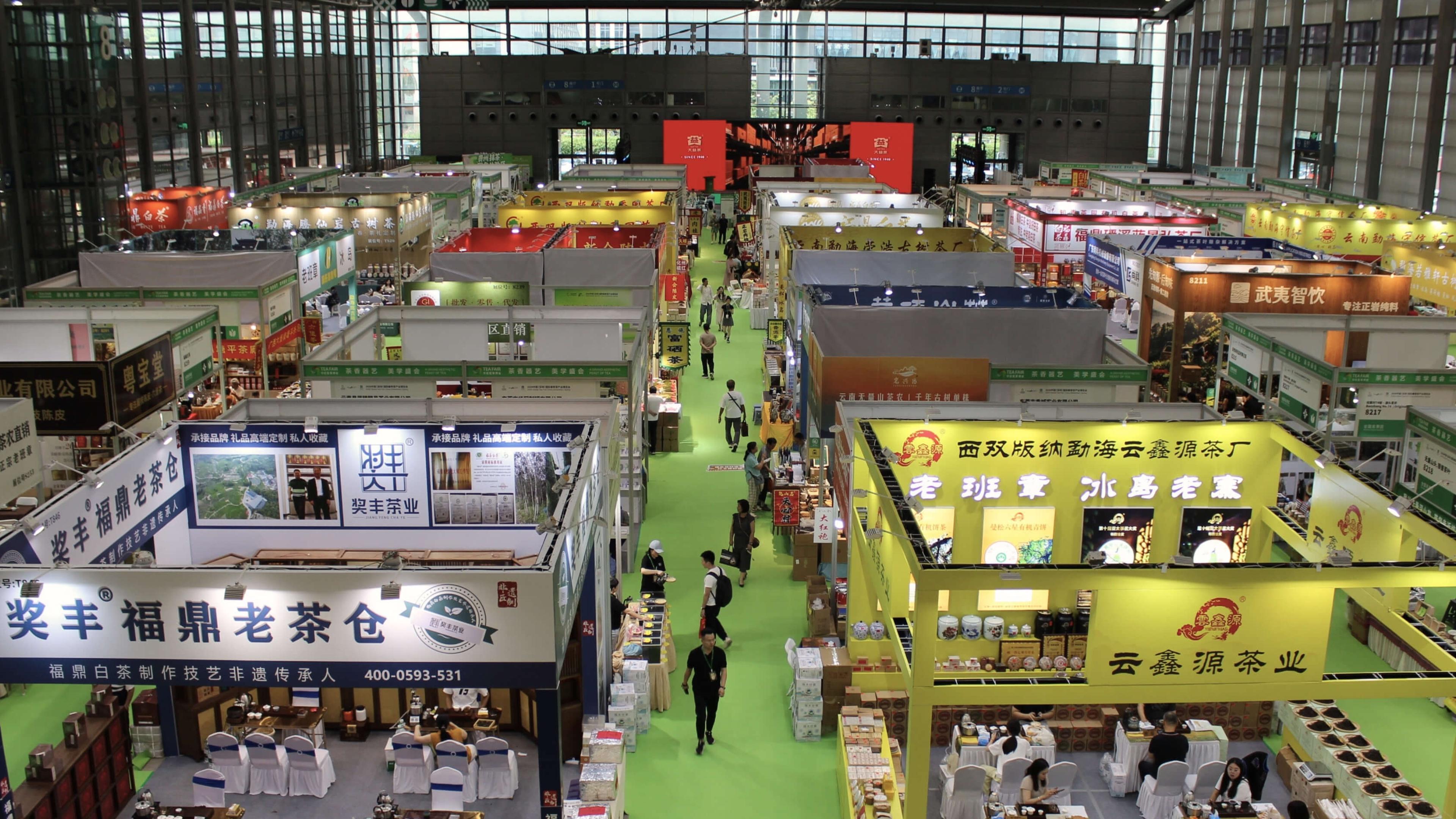
We used to dream of going to these. Now we go whenever we can. Inside was the familiar sea of booths, big and small, separated by lime-green lanes and lit much brighter than you would expect for a room full of tea. The smell was tea and incense, or tea and cigarettes. I still couldn’t tell you which. It was not loud in there. A hall that size flattens a few hundred quiet conversations into something like white noise, and every so often something cuts across it. The stress here is all about missing something. Last time we took mental notes as we went, meaning to come back, and forgot every one of them. So this time we had a plan, which was to not have one. Walk wherever, stop at whatever, accept that most of it goes unseen.
“I’ve never sat down with the wrong person.”
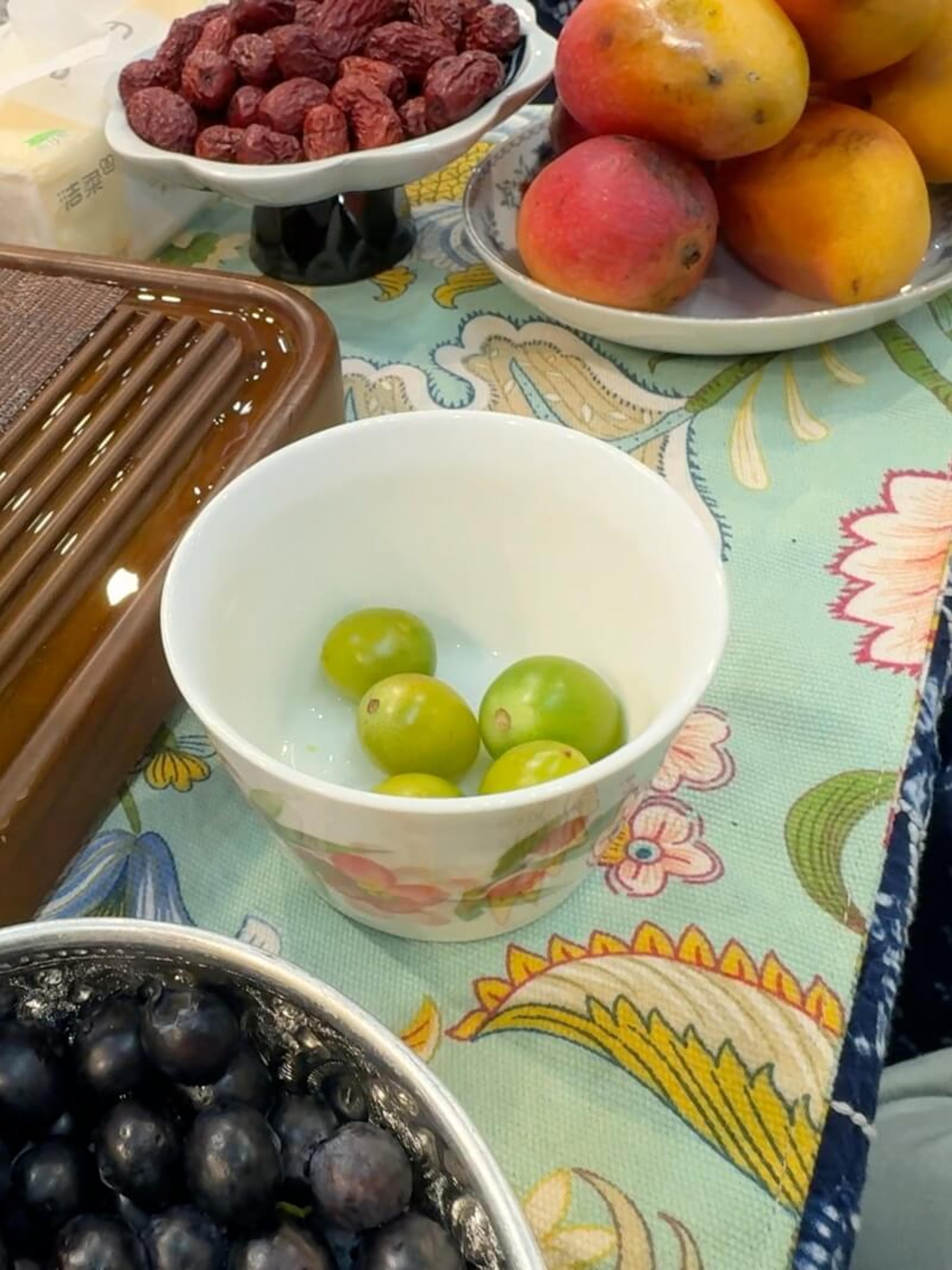
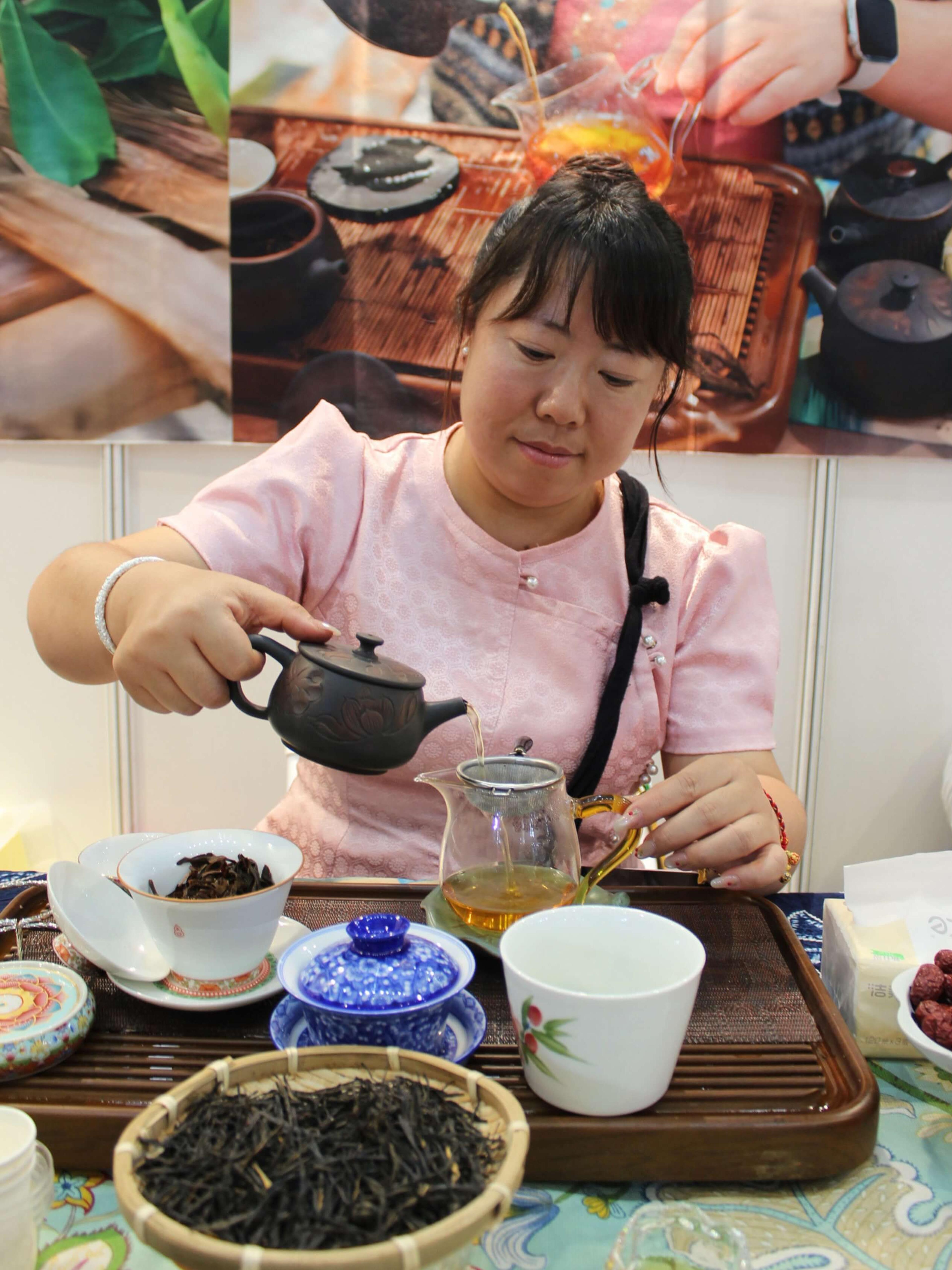
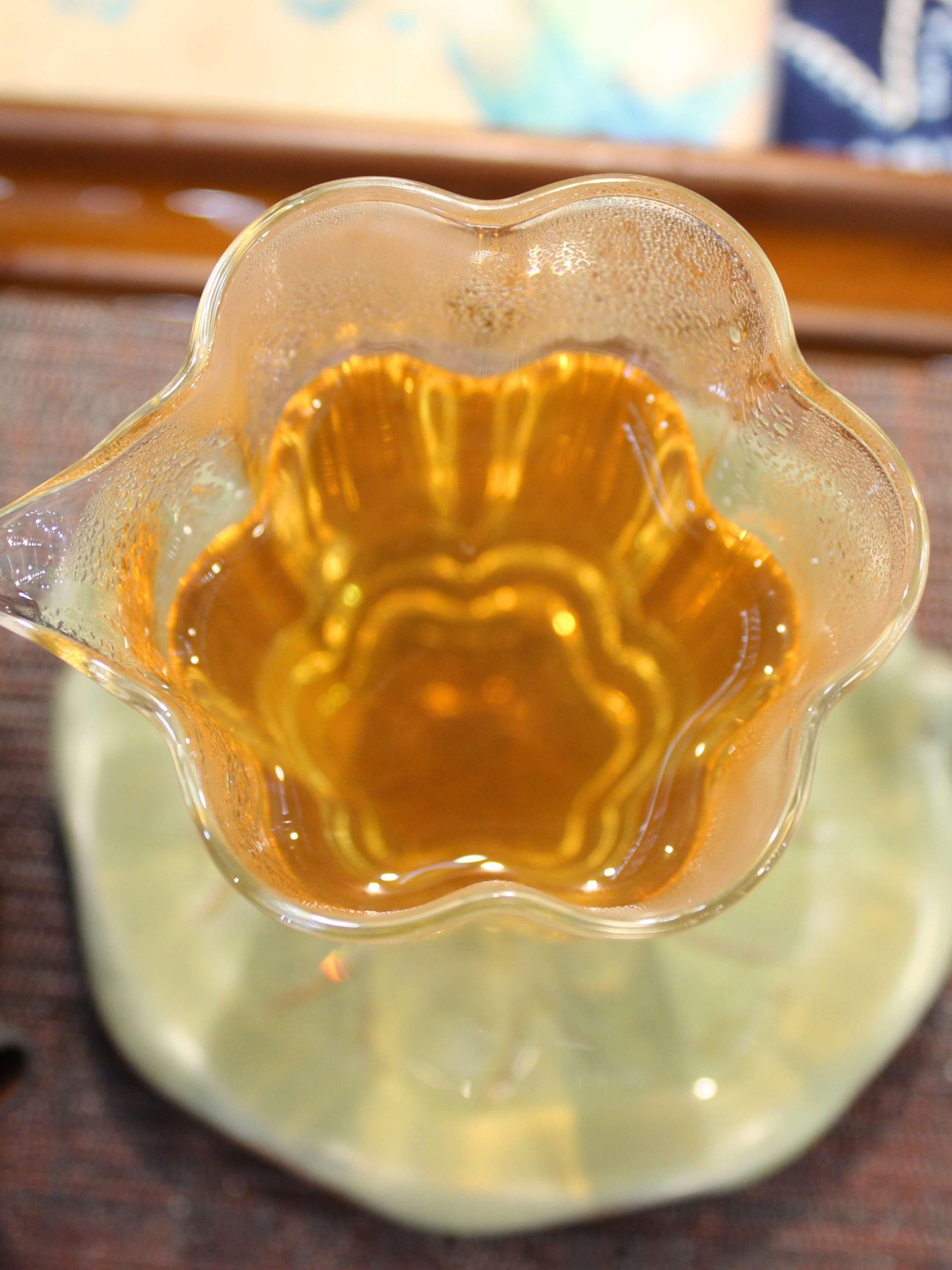
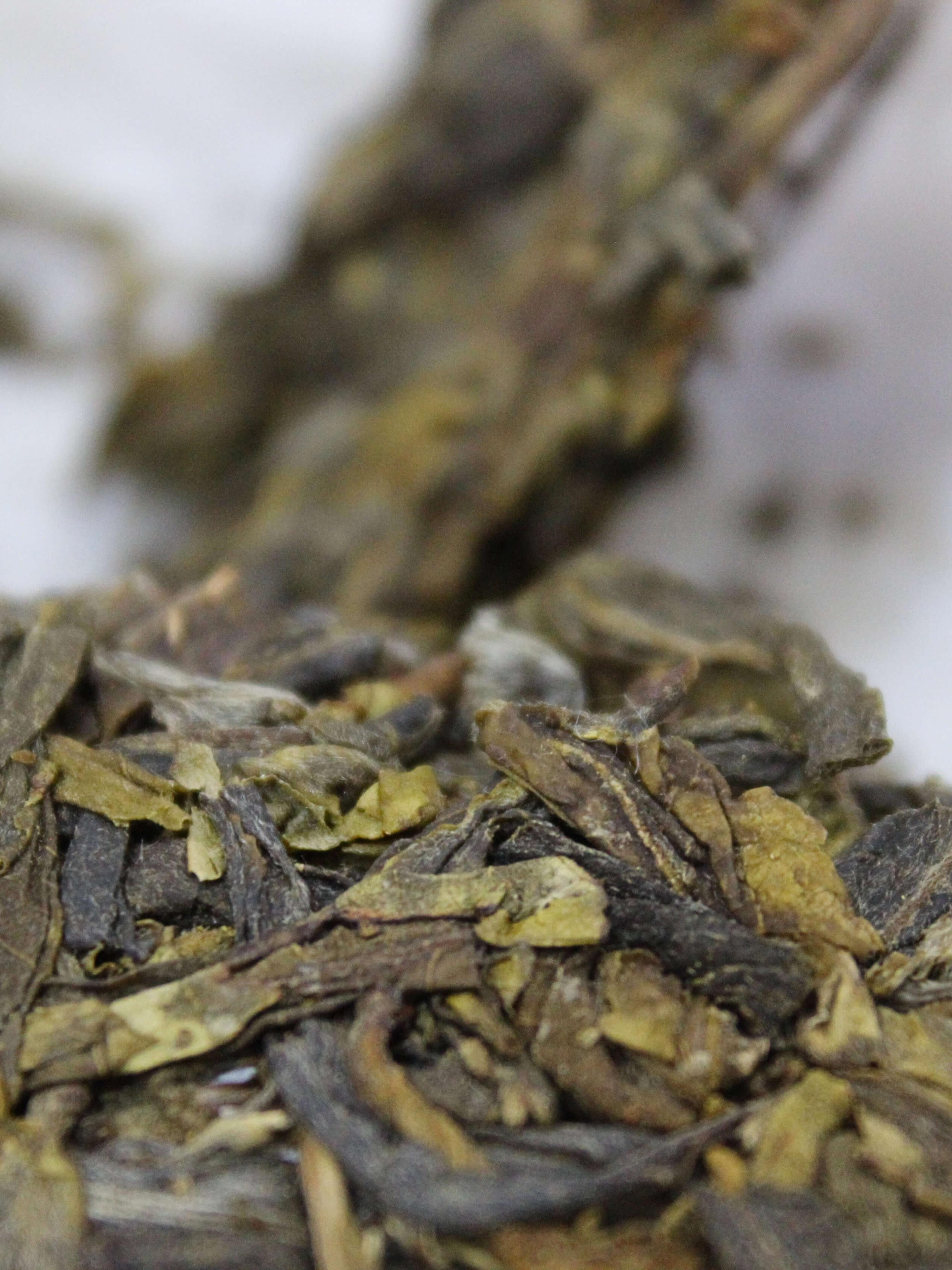
As we started exploring, we were caught off guard by a small cup of tea appearing at waist level. Behind the cup was a child who greeted us and offered us some raw puer to try. Her family grows tea in Yunnan. We did enjoy the creative use of child labor, but we wanted to see more of the hall first, so we kept going. Picking whose tea to try and who to talk to is not a very scientific exercise, it’s just a gut feeling. I’ve never sat down with the wrong person. After passing all kinds of stands, mainly with people from Yunnan and the Wuyi Mountains, we eventually stopped for tea with Fu Yuanyuan. She buys her leaf from relatives in Yunnan, from a garden with a mix of young cultivated bushes and ancient trees growing wild in woodland. Harvesting the old trees means putting up scaffolding and climbing. She gave us two of her dianhong to try. We drink a lot of black tea and had never had one like these. The liquor came out deep gold rather than red, which she told us is what you want from a good dianhong, and it was sweeter and lighter than we expected, with honey and orchid. She also put out tomatoes that grow wild on her family’s land. They were green, and intensely sweet, the kind you only get from homegrown, not the supermarket. We bought one of the teas. She gave us the other one anyway, along with an assortment of her puer, and we moved on, wondering how anything could beat wild tomatoes and a black tea that came out gold.
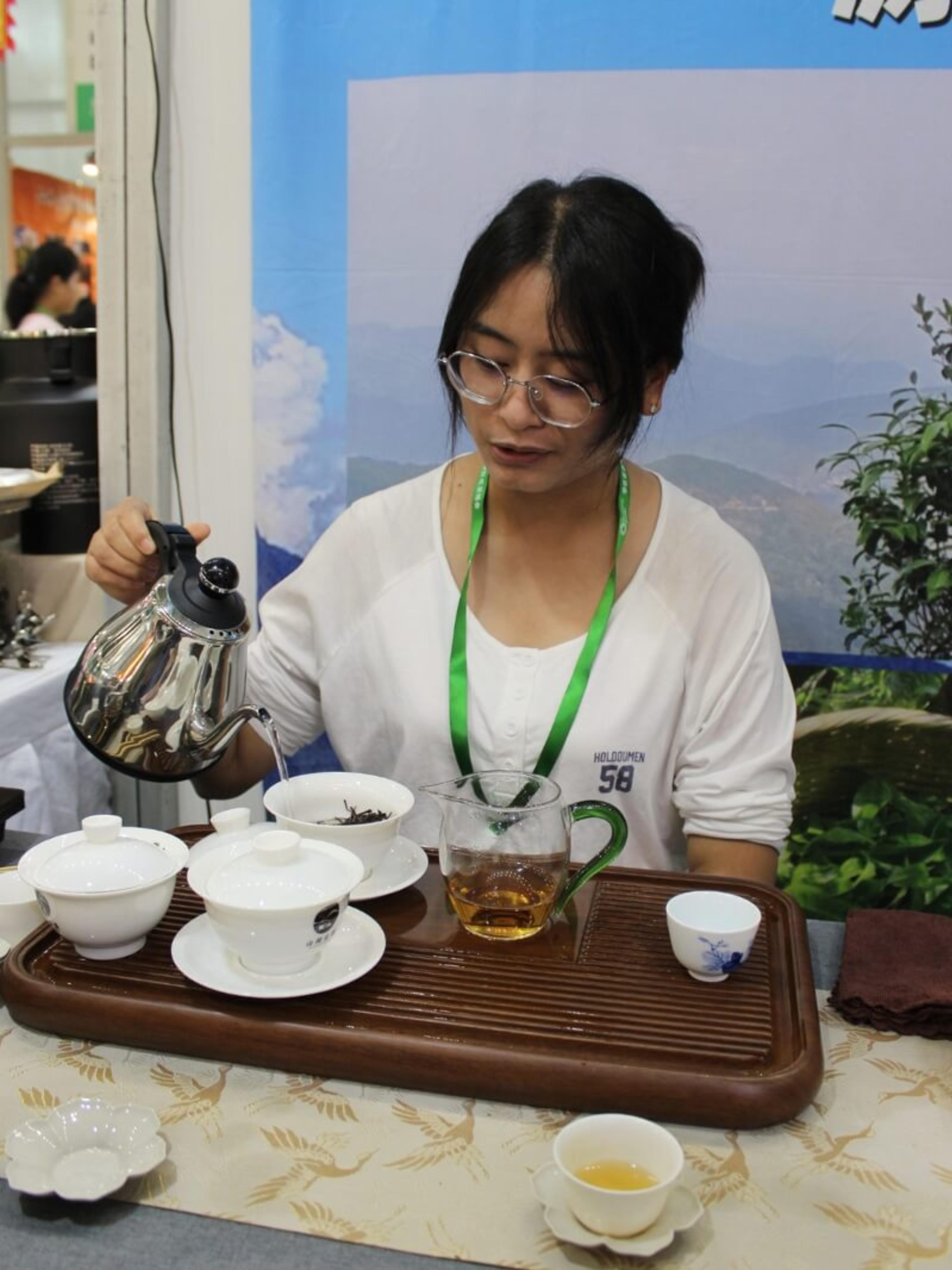
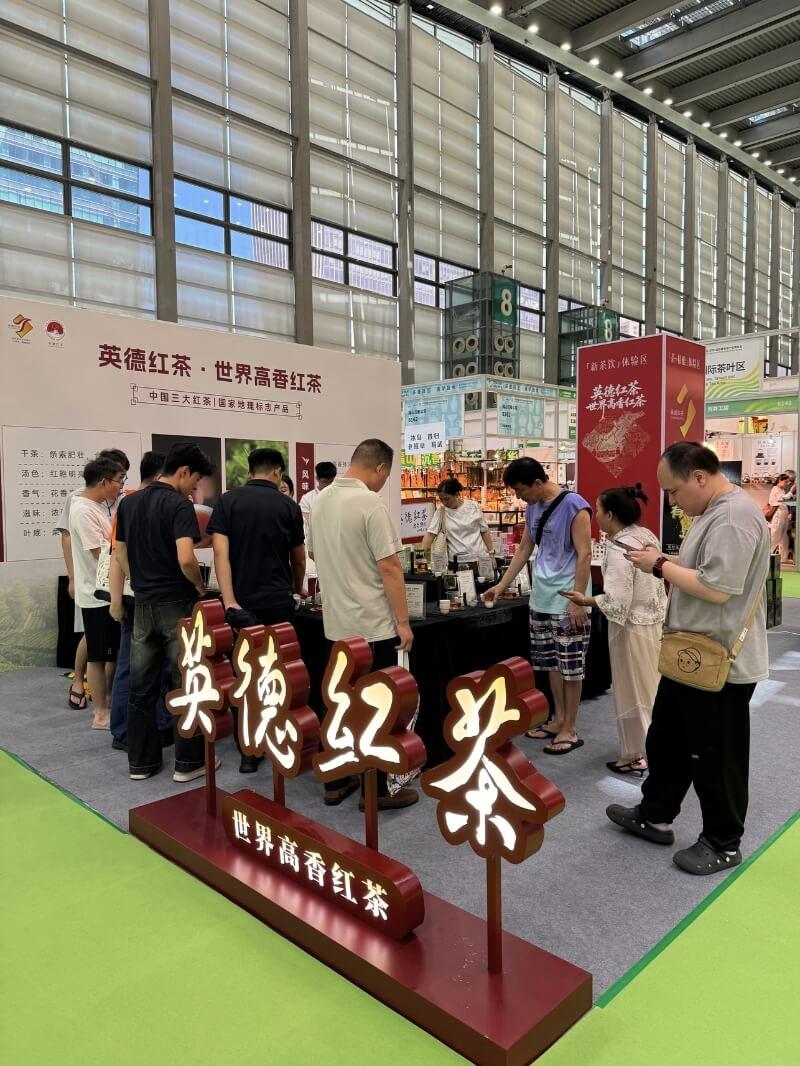
We passed booths selling more varieties of green tea than most people come across in a lifetime. Farther on, we visited one run by Guangdong province, promoting Yingde, one of China’s three great black teas1. Long tables under black cloth, a row of glass brewers each with a card telling you what it was and a small dish of dry leaf beside it, stacks of paper cups, staff in white coats working down the line with kettles. There were over a dozen teas to try. One tasted like gardenia and one like sweet potato. We try not to get too crazy about tasting notes, but the sweet potato was unmistakable. It was also right there in the name of the tea, so we may have been led. They also had everything else the tea gets put into. Black tea beer, poured fresh from a machine, and black tea laundry detergent.
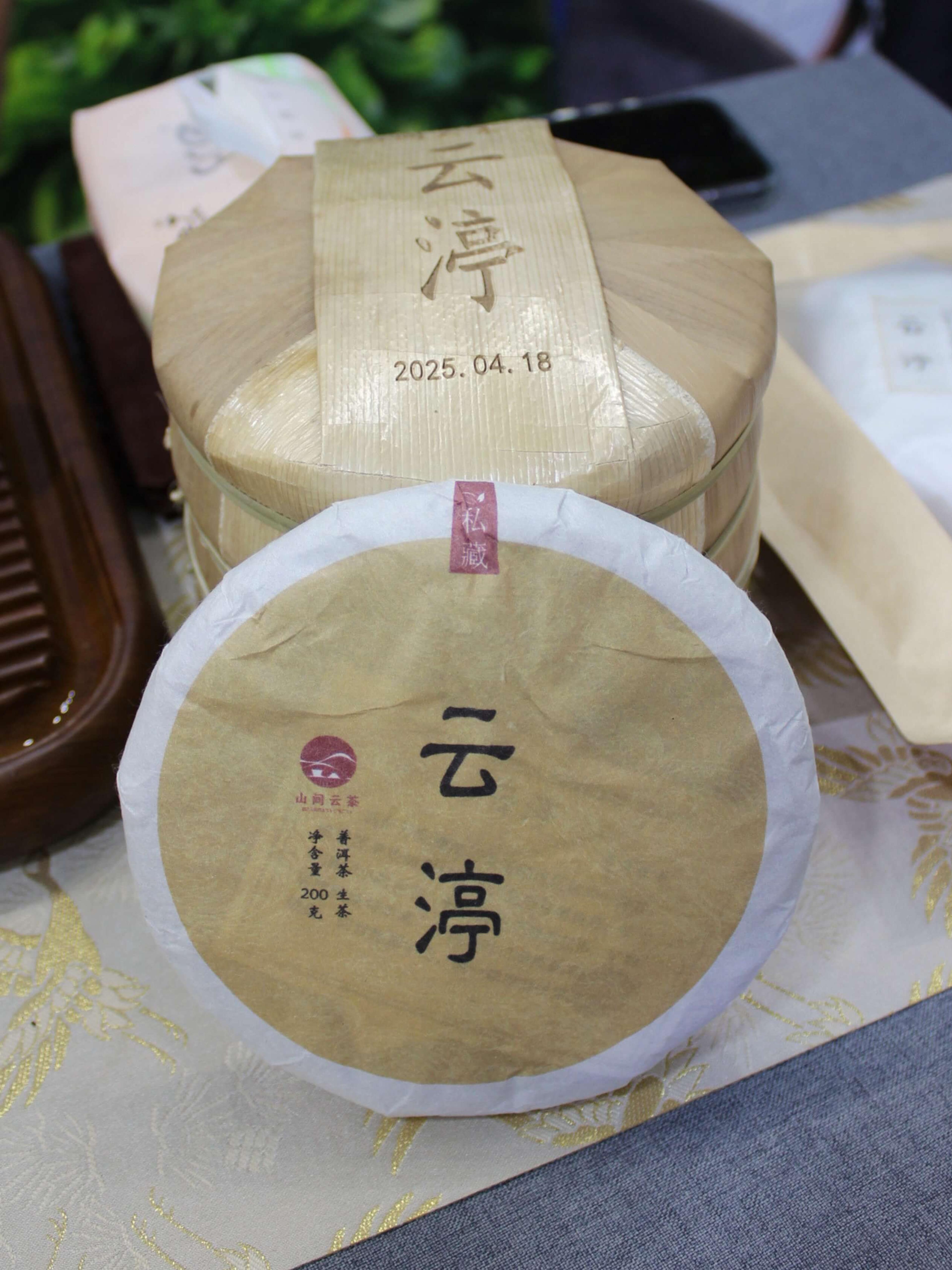
We came across a couple from Lincang, in Yunnan, selling black tea and puer. I wanted to stop because of their booth, which had photos of the mountains on it and a bird’s nest. They harvest and produce tea mainly from their family’s farm, but they also rent trees. We sat down with Li Furong, who told us she takes the photos. We tried one of their black teas but after chatting we were more interested in their puer, which they make themselves. They pressed the cakes by hand for a while, but it’s hard work, so now they let the factory do it. They’ve made this puer for a few years, though not this year, because the price of the fresh leaf went up too much. We tried the 2025 and it was clean and fragrant with a hint of good bitterness, so I have a feeling it will age well. Before we left I asked what bird made the nest. She said there are birds all over the mountain, calling constantly, and that if I was interested I should come up and hear it for myself.
- ( 1 )Yingde Black Tea — BaiduWiki https://baike.baidu.com/en/item/Yingde%20Black%20Tea/1509864 ↩
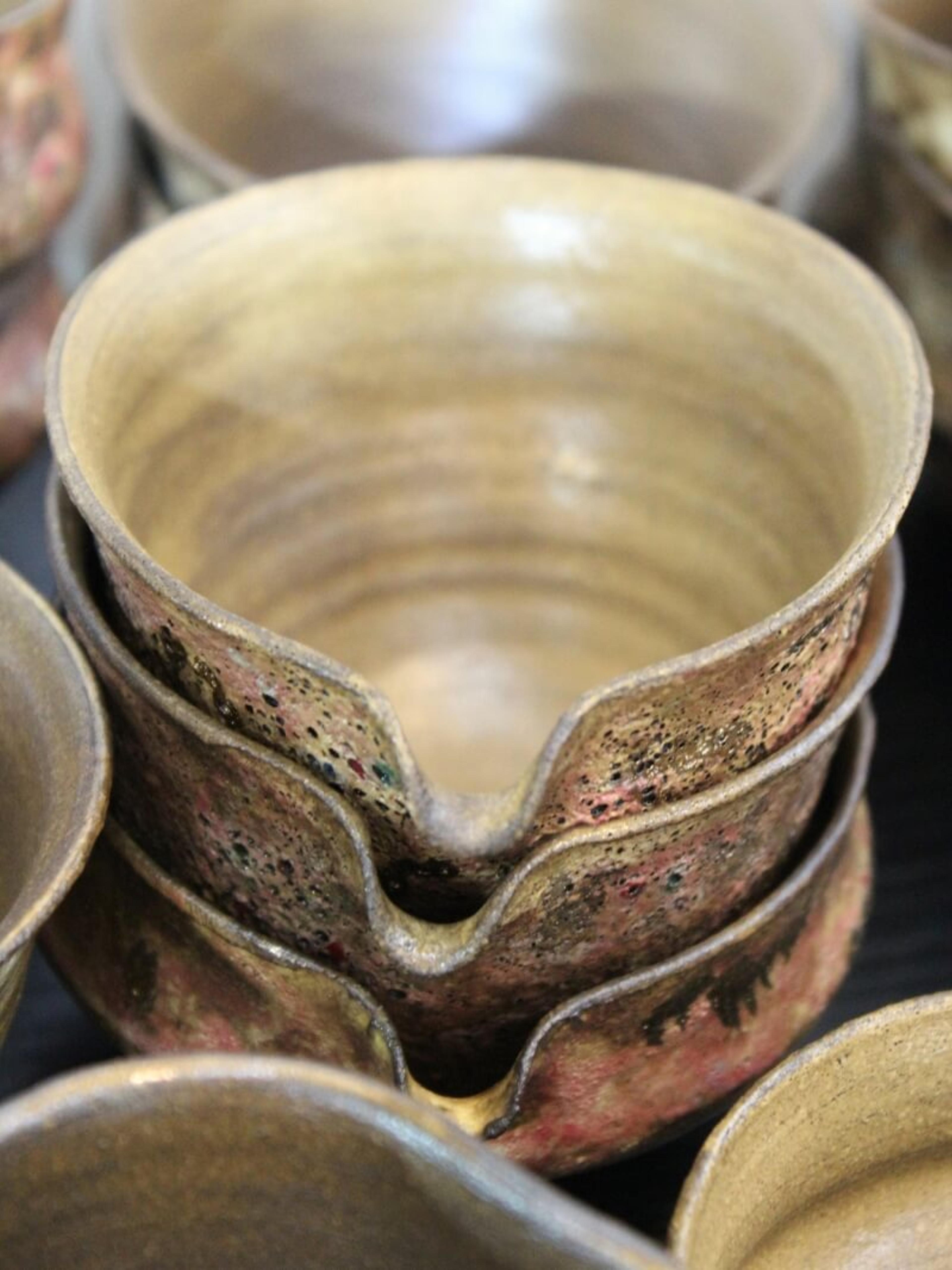
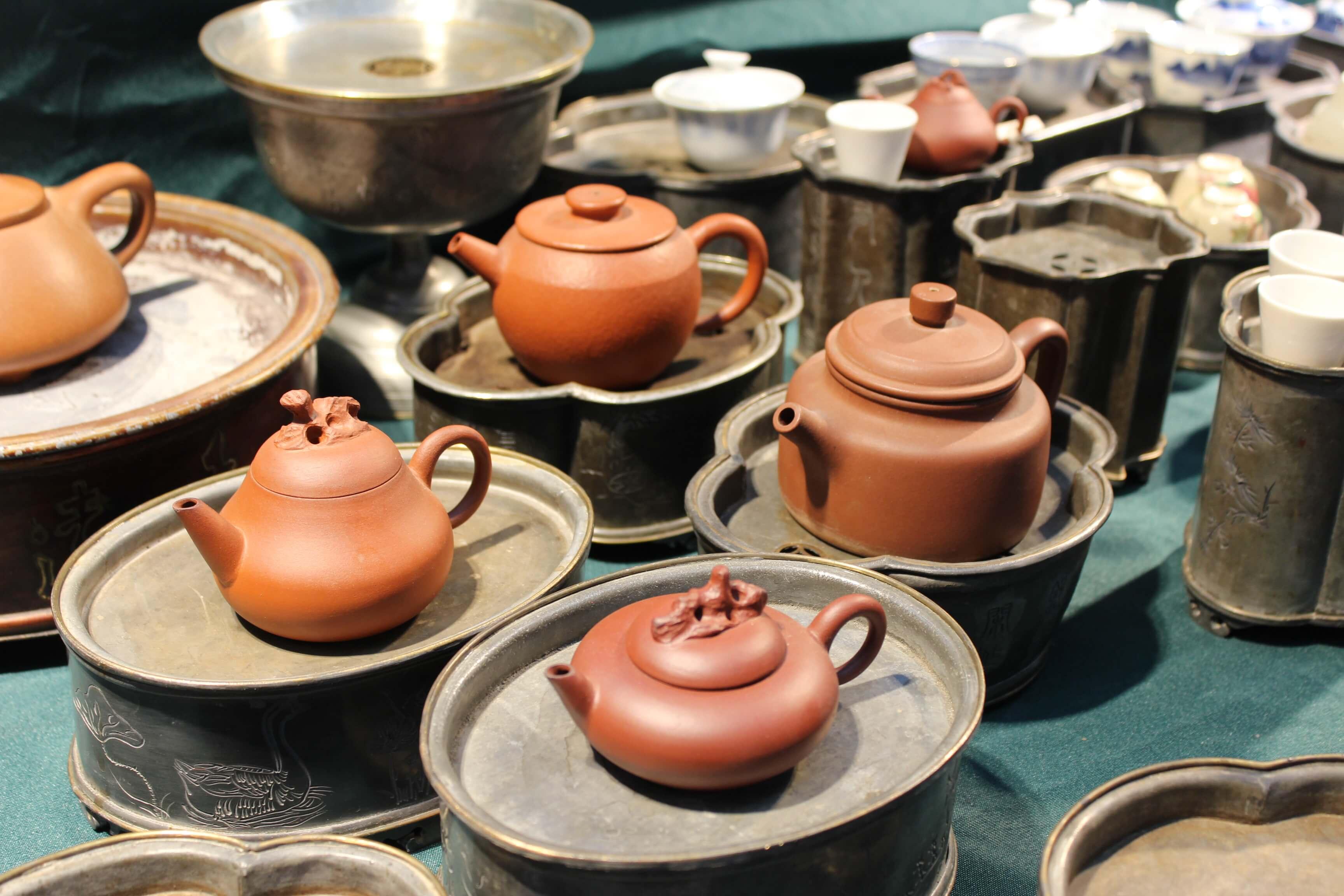
The next stand sold industrial-grade stone mills for matcha. Not at the level of the traditional Japanese ones, but the specs were impressive for the price. Purring Lotus doesn’t sell quite enough matcha to justify one yet. Maybe one day. After that, we looked at ceramics, where we were hoping to find someone to chat with but couldn’t, so we just looked. There were clay teapot masters, porcelain artisans from Jingdezhen, and everything in between. I’m a sucker for white porcelain painted with blue. Farther along, someone was selling lights made of wood and brass with frosted glass, and silk paper lanterns.
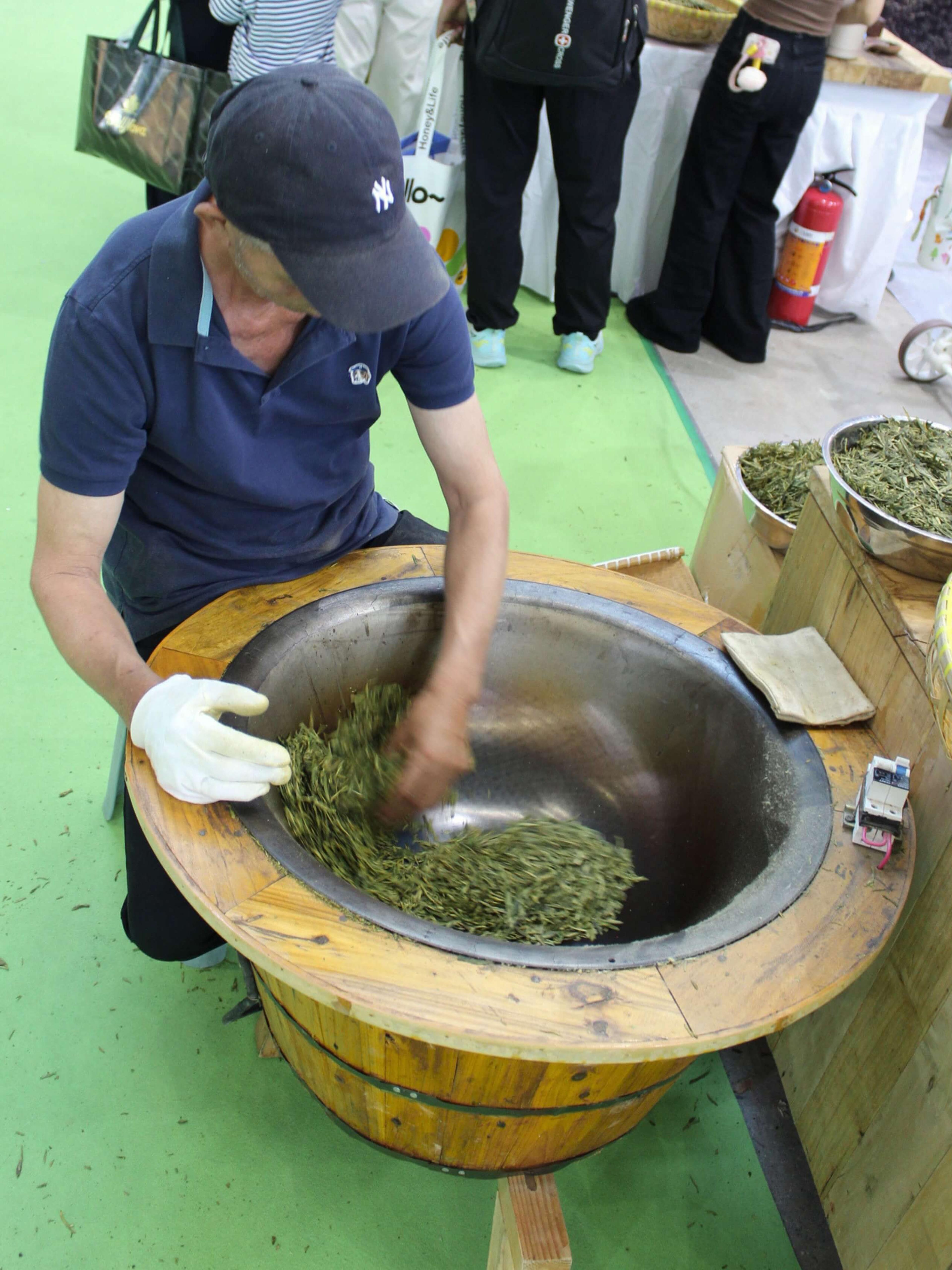
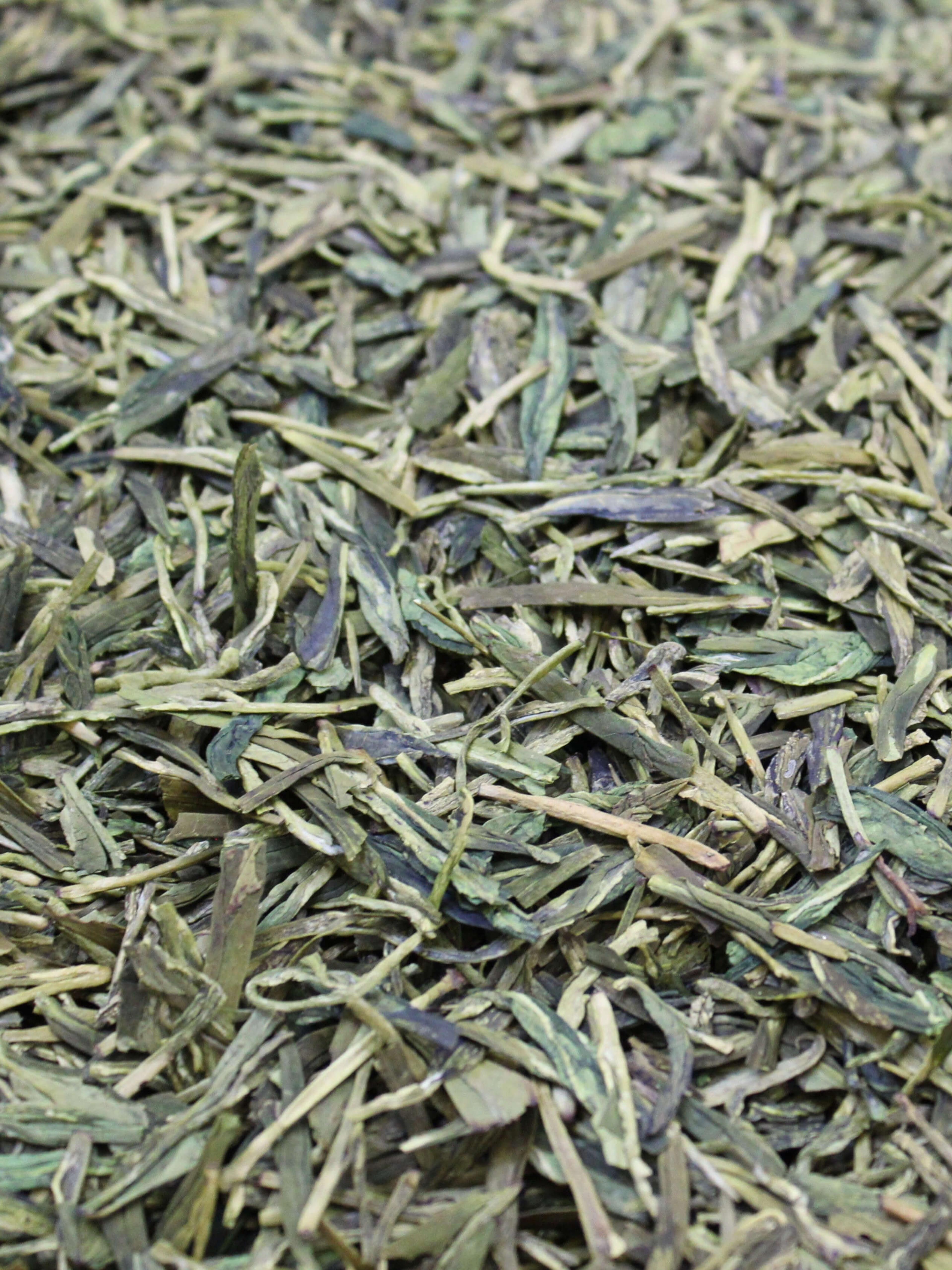
Then a green tea grandpa, pan-firing Longjing in a wok set into a wooden barrel. Pre-Qingming2, 150 yuan a jin3, going by the handwritten sign propped against the tray beside him. He sat on a low stool, bent over the barrel, one gloved hand steadying the rim and the other bare, pressing the leaf flat against the hot metal. That pressing is the whole technique. It’s why the finished leaves come out looking like little blades. A domestic circuit breaker was bolted to the wooden rim next to his hand. A small crowd had formed and we stood in it for a good while. He never looked up once.
- ( 2 )Qingming Festival – Wikipedia https://en.wikipedia.org/wiki/Qingming_Festival#Chinese_tea_culture ↩
- ( 3 )One jin (斤) is equal to 500g. https://en.wikipedia.org/wiki/Jin_(mass) ↩
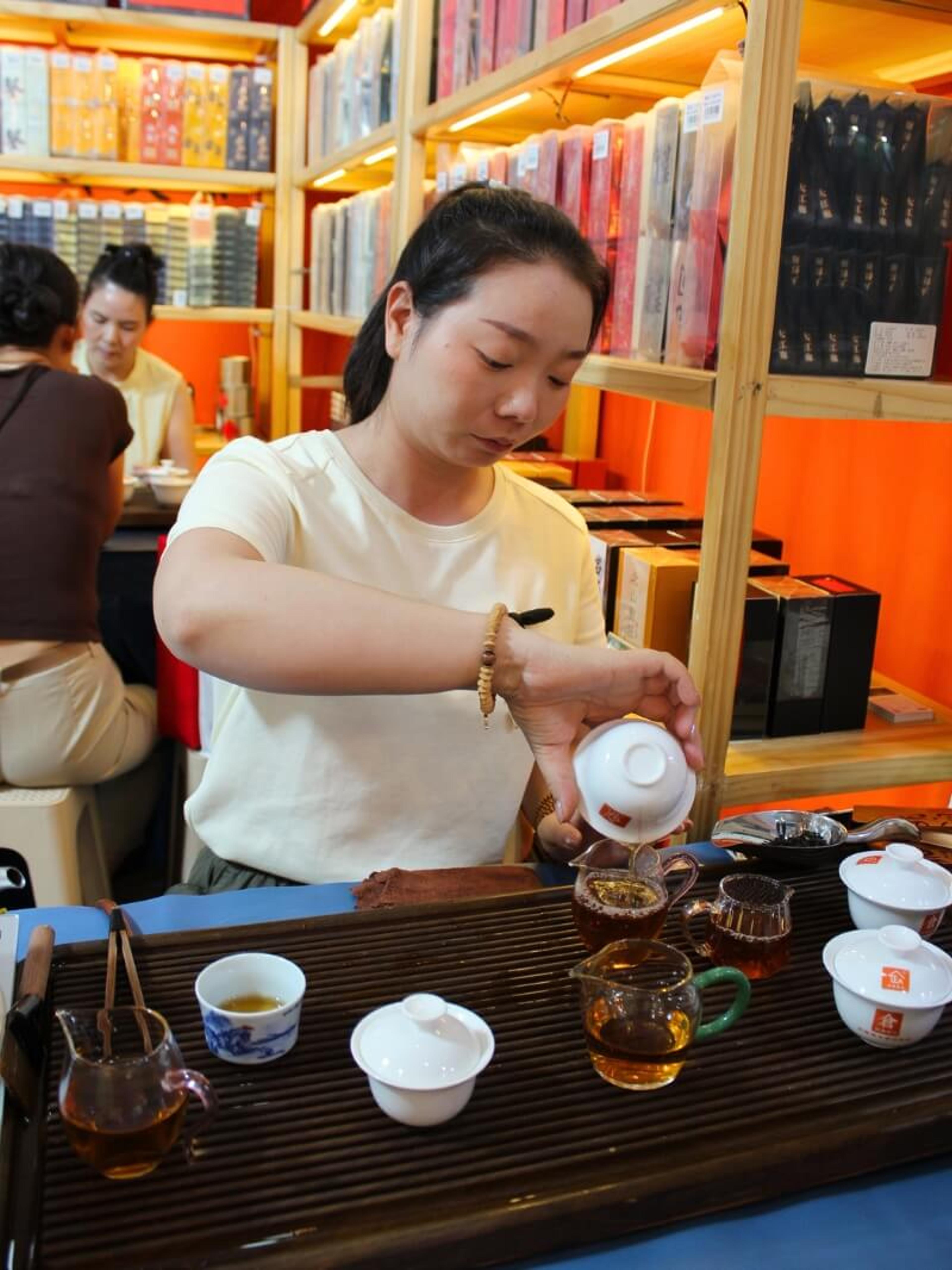
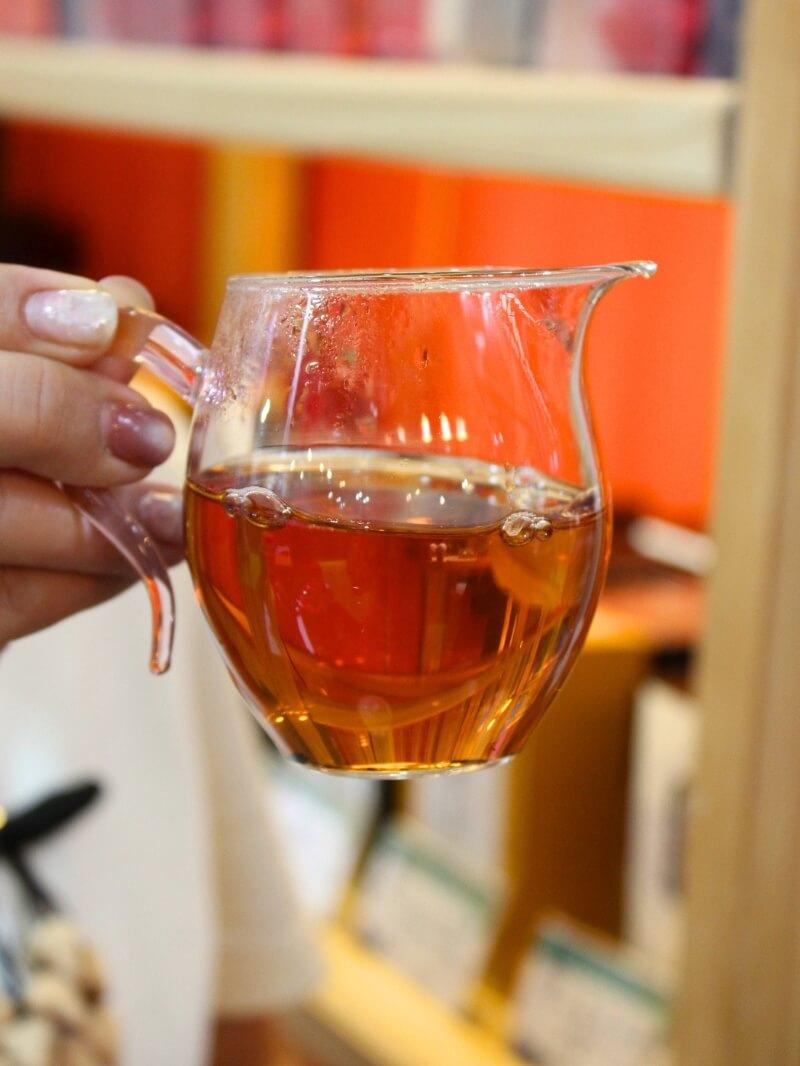
It was getting late, and we wanted to sit down with someone from a different part of China. The hall was busier now, so people had less time. We eventually found a company from the Wuyi Mountains selling rock oolongs, and we sat down with Xin Xin, whose family has been making tea there for generations. Her favorite is a medium-roasted rou gui. Da hong pao is nearly always a blend now, often rou gui and shui xian, since the original bushes aren’t picked anymore4, so rou gui sold as itself comes out purer. She poured the first brew into a separate cup and set it aside, and told us to drink it at the end, once it had cooled. The tea was deeply fragrant with a hint of cinnamon. It was roasted over lychee charcoal. She doesn’t do the roasting herself. It takes more than one person, and she said they’re still too young for it, that you need the old masters. She showed us a photo of her warehouse and I asked if it was hers. All of it, she said. We bought an assortment of rock oolongs in small packs to try at home. Rock oolongs are special to us, they were the first tea we sold, so we couldn’t leave without a few.
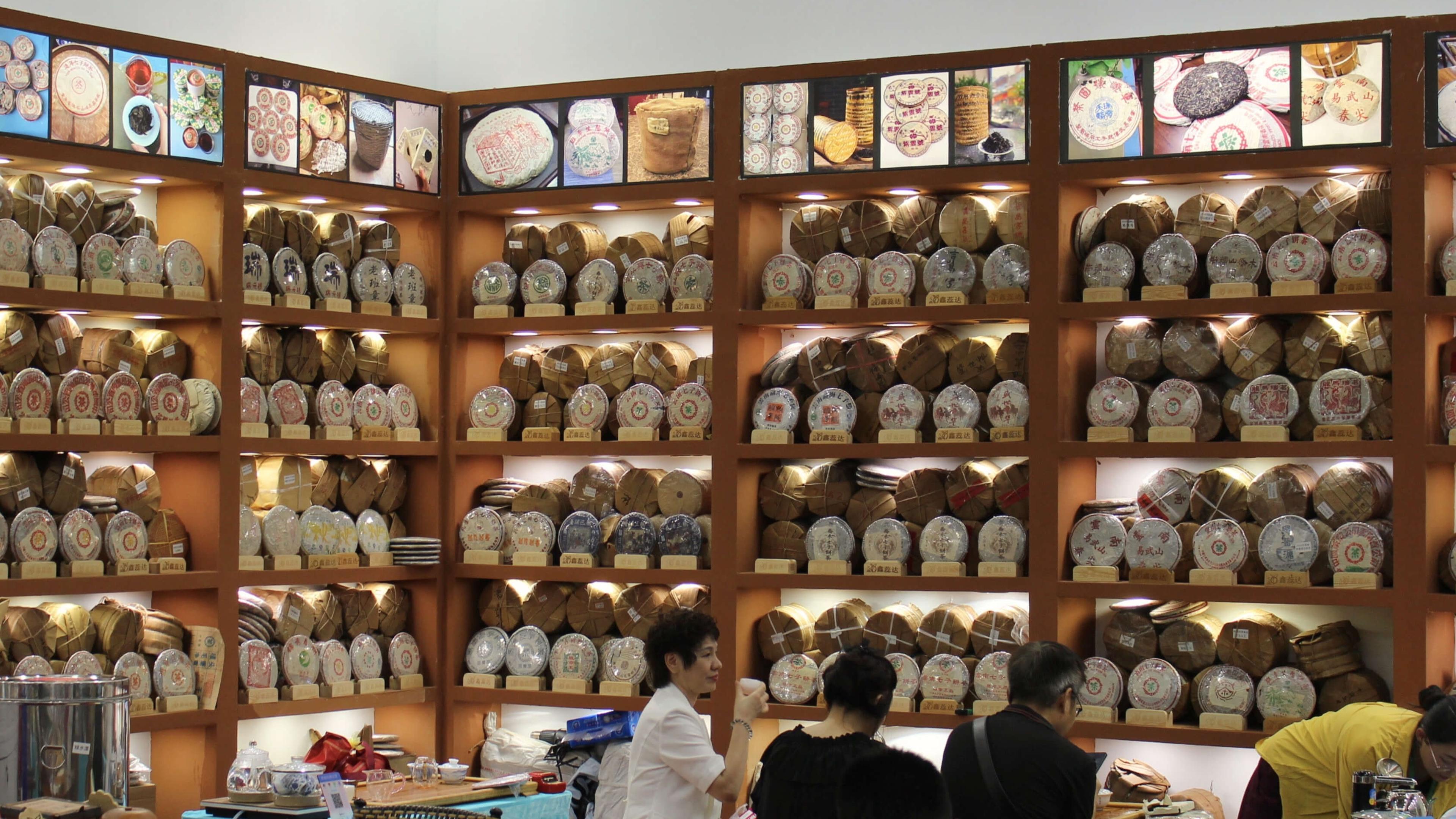
We did another lap of the hall without stopping, just looking. We weren’t keen on more tea by then. There’s only so much tea one person can drink, and it goes the way perfume does when you sample too many in a row, you stop noticing. Tea is also hot, and if you’re not careful you’ll burn your mouth. So we went and looked at the expensive puer instead. One booth was walls of it, collectibles and old tea, cakes and tuocha from the nineties stacked in their paper wrappers with green price tags tucked between them. The boss offered us a seat, but we were out of time, so she gave us a black tea to take home instead. Then we ran into another foreigner taking pictures of us, a Russian travel photographer who works with local media photographing foreigners at trade shows. We had a quick chat and then he followed me around, taking photos of me taking photos of random things. All day I’d been turning around to find a photographer from a stand or the expo pointing a camera at me, at which point I’d try to act normal and correct my prawn posture.
“Tea is also hot, and if you’re not careful you’ll burn your mouth.”
- ( 4 )Da Hong Pao – Wikipedia https://en.wikipedia.org/wiki/Da_Hong_Pao#Price_and_value ↩
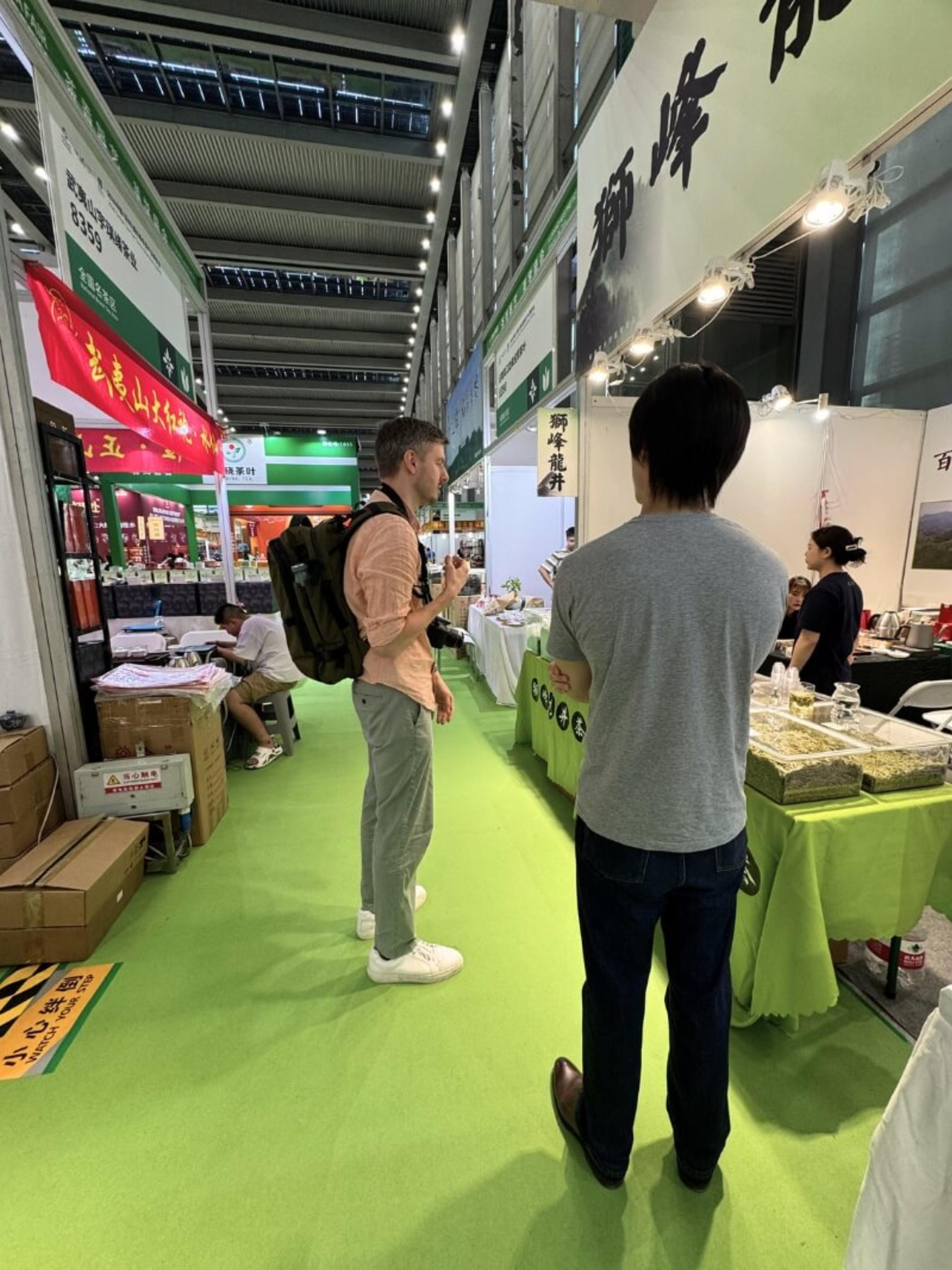
We learned late in the day that although the expo closed at five-thirty, nobody made you leave until six. So we went looking for green tea. Everyone was either busy or working a booth too big to sit at, so we drifted, sipping as we went, until we found a small one run by two women selling Shifeng Longjing. Trays of dry leaf on a green tablecloth, stalls being packed up around us. While we were trying their teas we got talking to someone else there, a young American named Brian. He lives in Guam, which I had thought was in the Caribbean until I worked out I was thinking of Guantánamo Bay. He runs a tea company there called Teabelly5. It was strange to meet someone from a smaller place than Iceland, where I’m from. Two tiny islands on opposite sides of the world, at the same booth, at closing time. We left with Brian and carried on chatting until we said goodbye outside the metro. Then dinner, gelato, and home to rescue the grandparents from our baby.
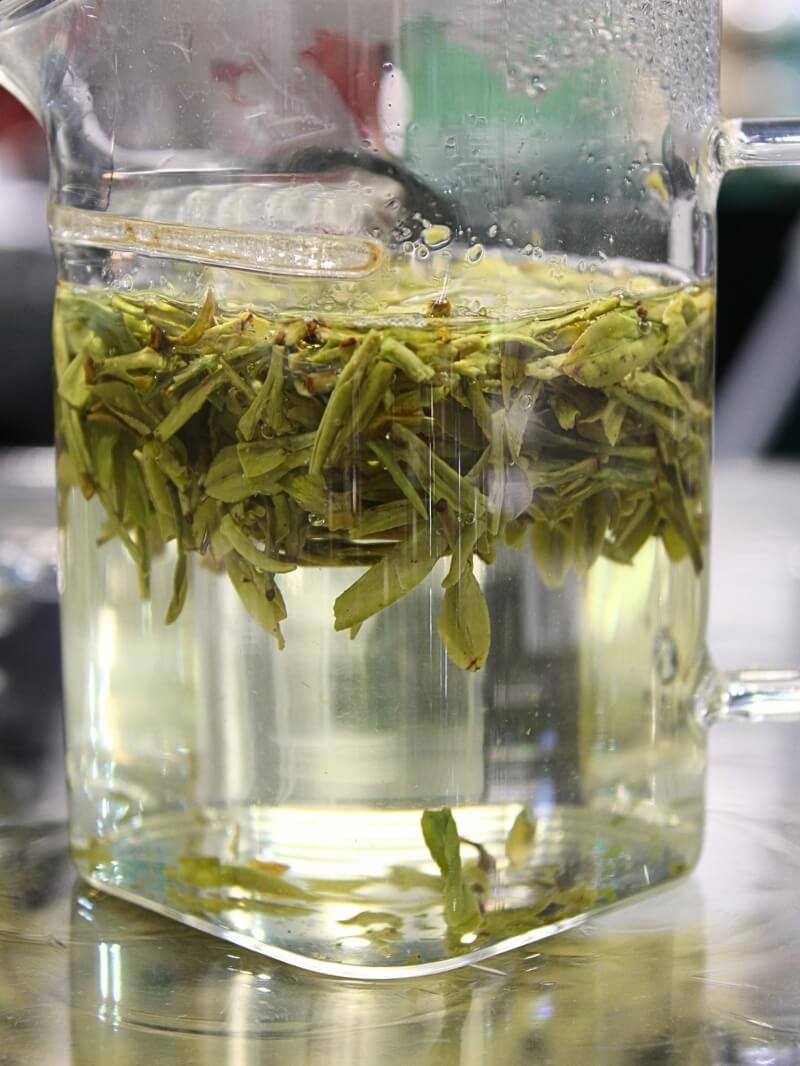
We came home with more tea than we needed, and no stone mill. We probably saw ten percent of the expo, and that’s fine. The thing that stays with me is that when I ask people if they’re the boss, they always say yes.
- ( 5 )Tealbelly website https://teabellyguam.com/ ↩