Twelve Trees
Fu Yuanyuan’s red tea, from Mengku in Yunnan.
Issue
01
Tea
- Written by
- Heidar Bernhardsson
- Interview by
- Clara Cheung
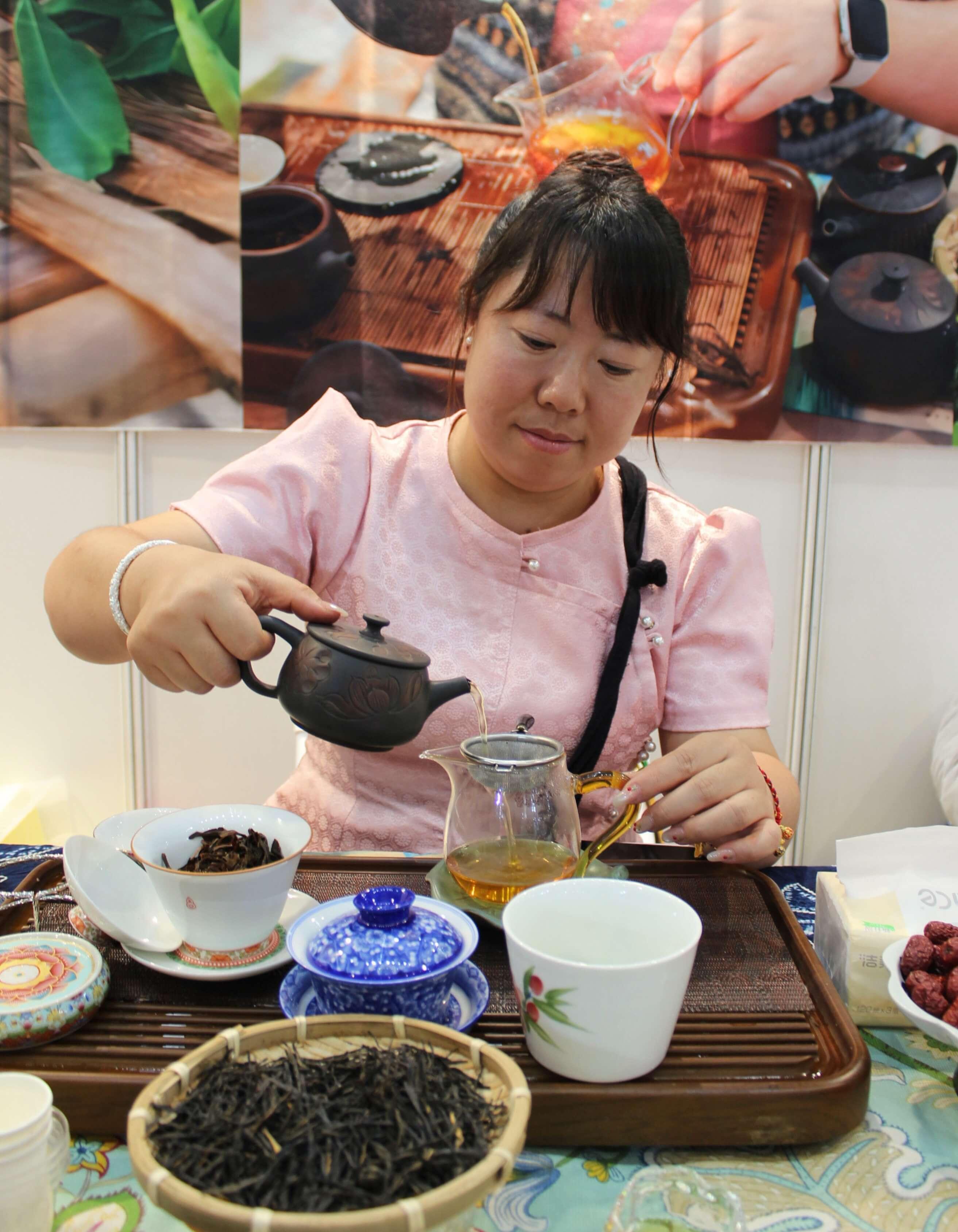
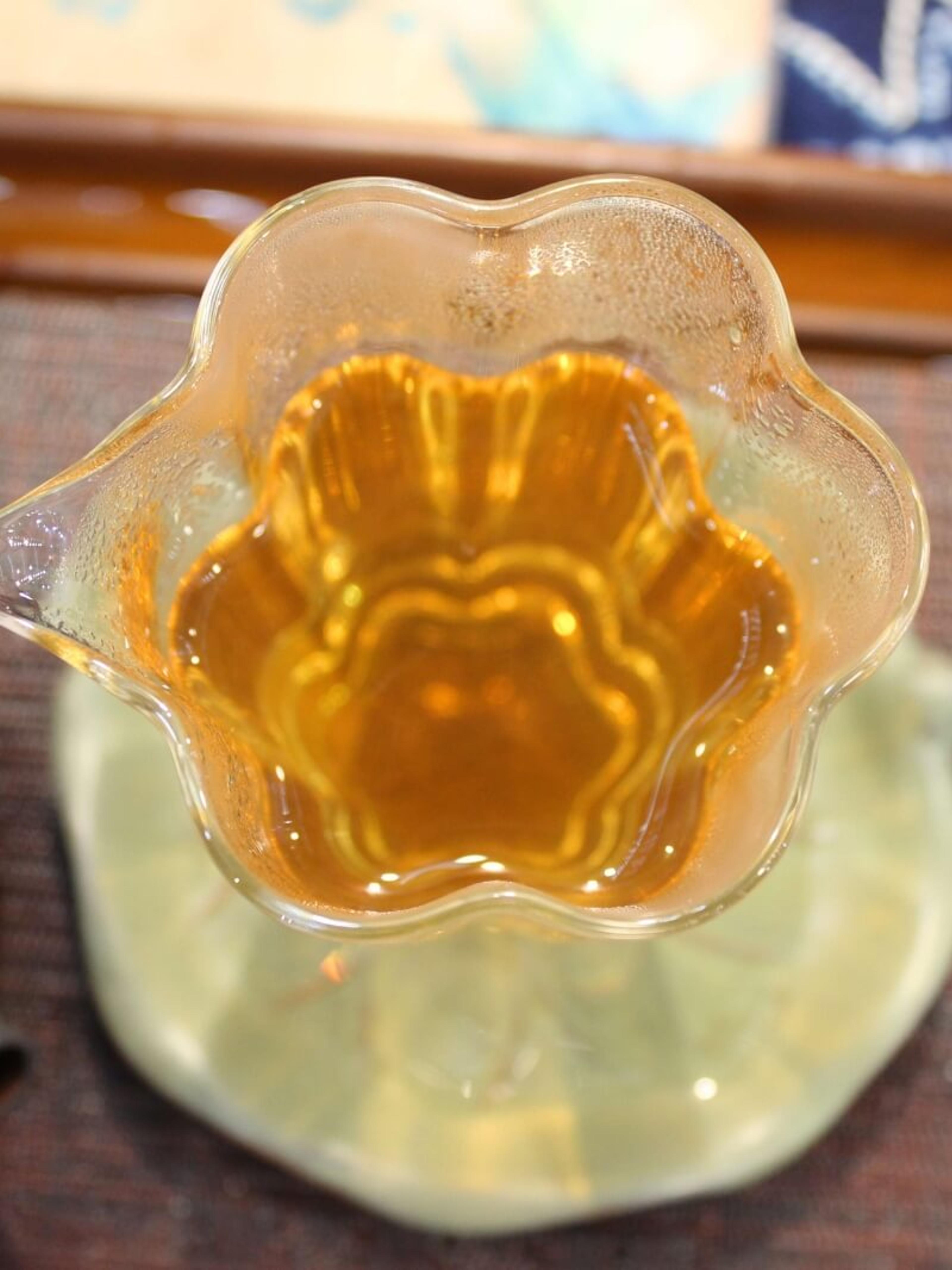
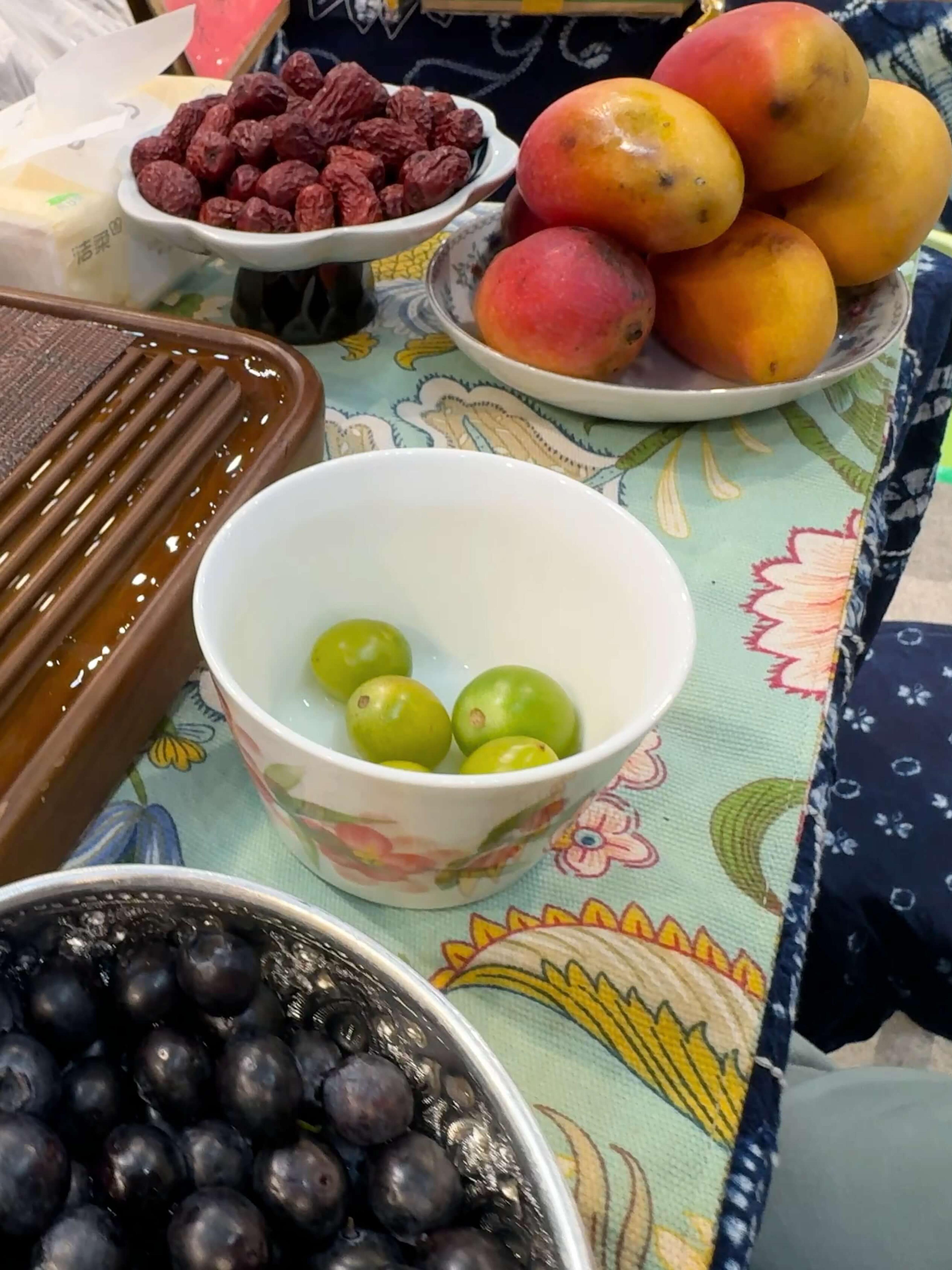
She fills the black clay teapot and pours it straight out through a steel mesh sieve into a glass pitcher. The liquor is amber gold, the same color as the pitcher’s handle. Despite being a red tea, there’s no red in sight. The table around her is covered in a seafoam cloth decorated with flowers, crowded with bowls of fruit, baskets of tea, and a tray big enough to prove she means business. Nothing on it matches. A white gaiwan painted with blue, and the teapot in her hand. She pours from the pitcher into small teacups made of thick, irregular glass resembling ice sculptures.
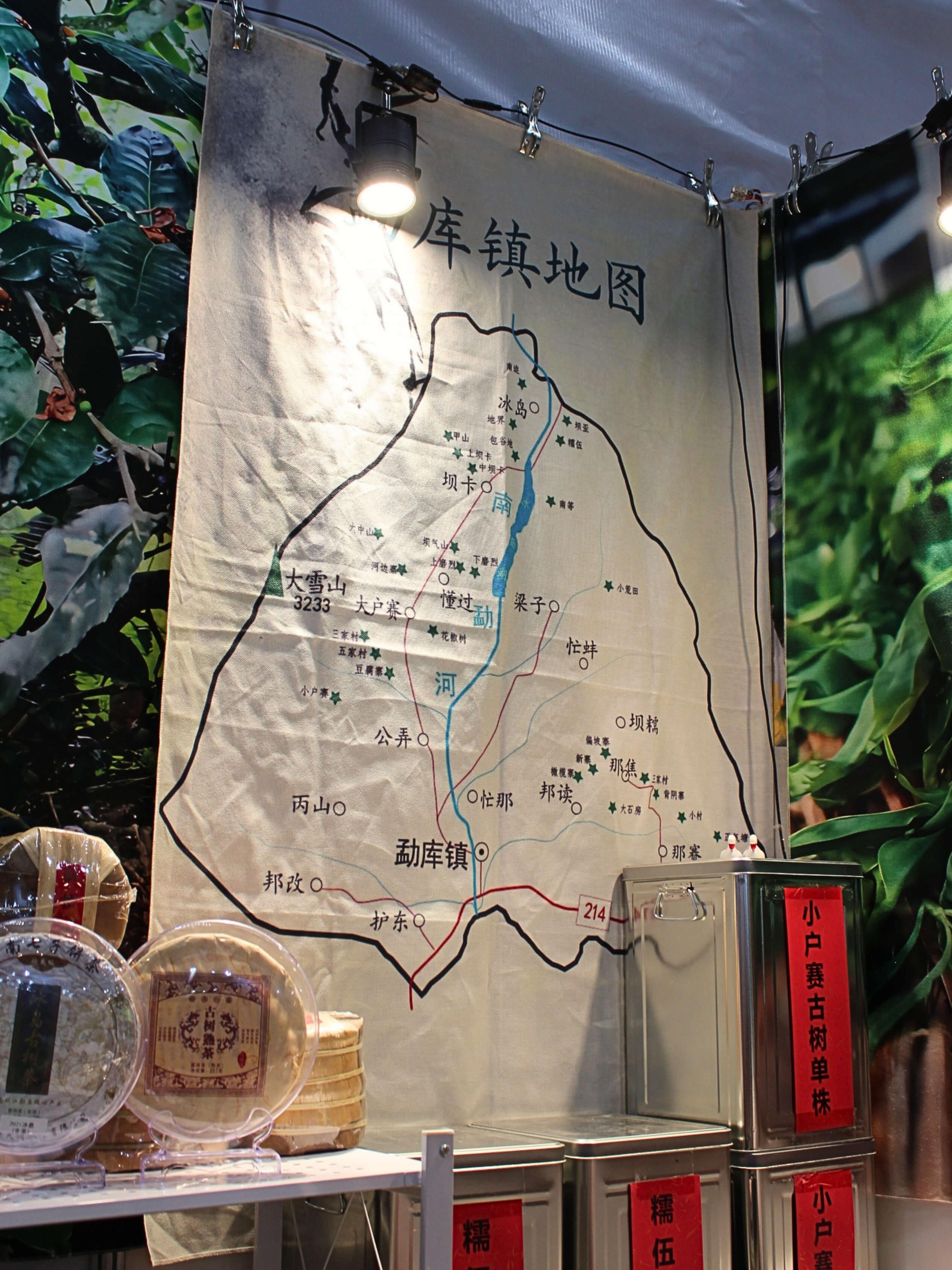
Her name is Fu Yuanyuan and she’s from Kunming, the capital of Yunnan, where she’s been selling tea for over fifteen years. Her company is Jin Yu Man Tang, which means “brocade and jade filling the hall”, a play on the Chinese idiom “gold and jade filling the hall”. In addition to tea, she likes jade, so her company sells both. Behind her hang large photos of her picking, processing, and brewing tea. In the corner there’s a map of Mengku, a tea town in Lincang in southwest Yunnan, showing the town and the villages north of it up to Bingdao, where she buys leaf for her puer. Her relatives farm at Baka, another of the villages on the map, and most of her leaf comes from them. She specializes in puer and dianhong, what the Chinese call red tea and the English call black. Between pours she offers us fruits from Yunnan, including tomatoes that grow wild on her family’s land.
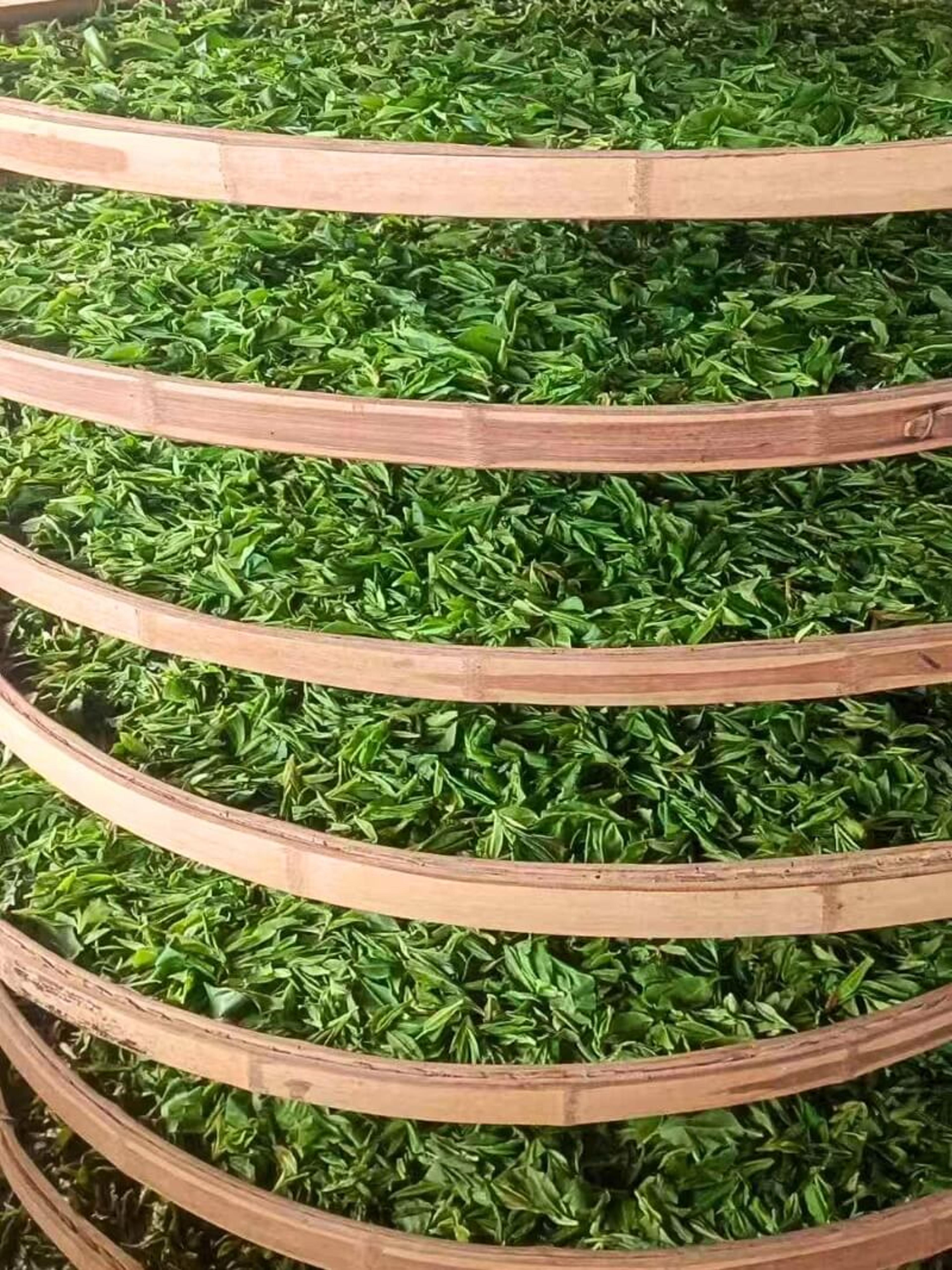
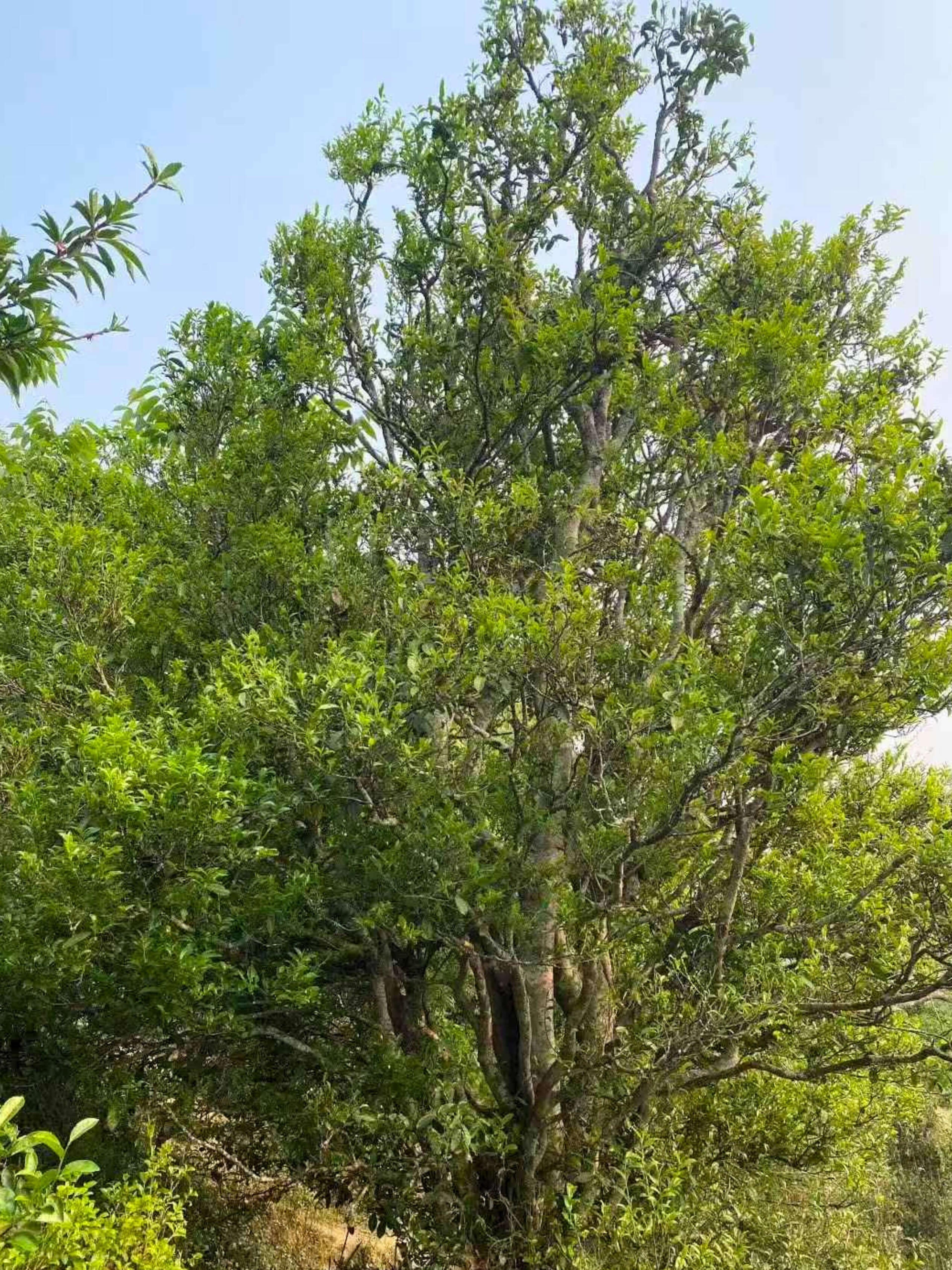
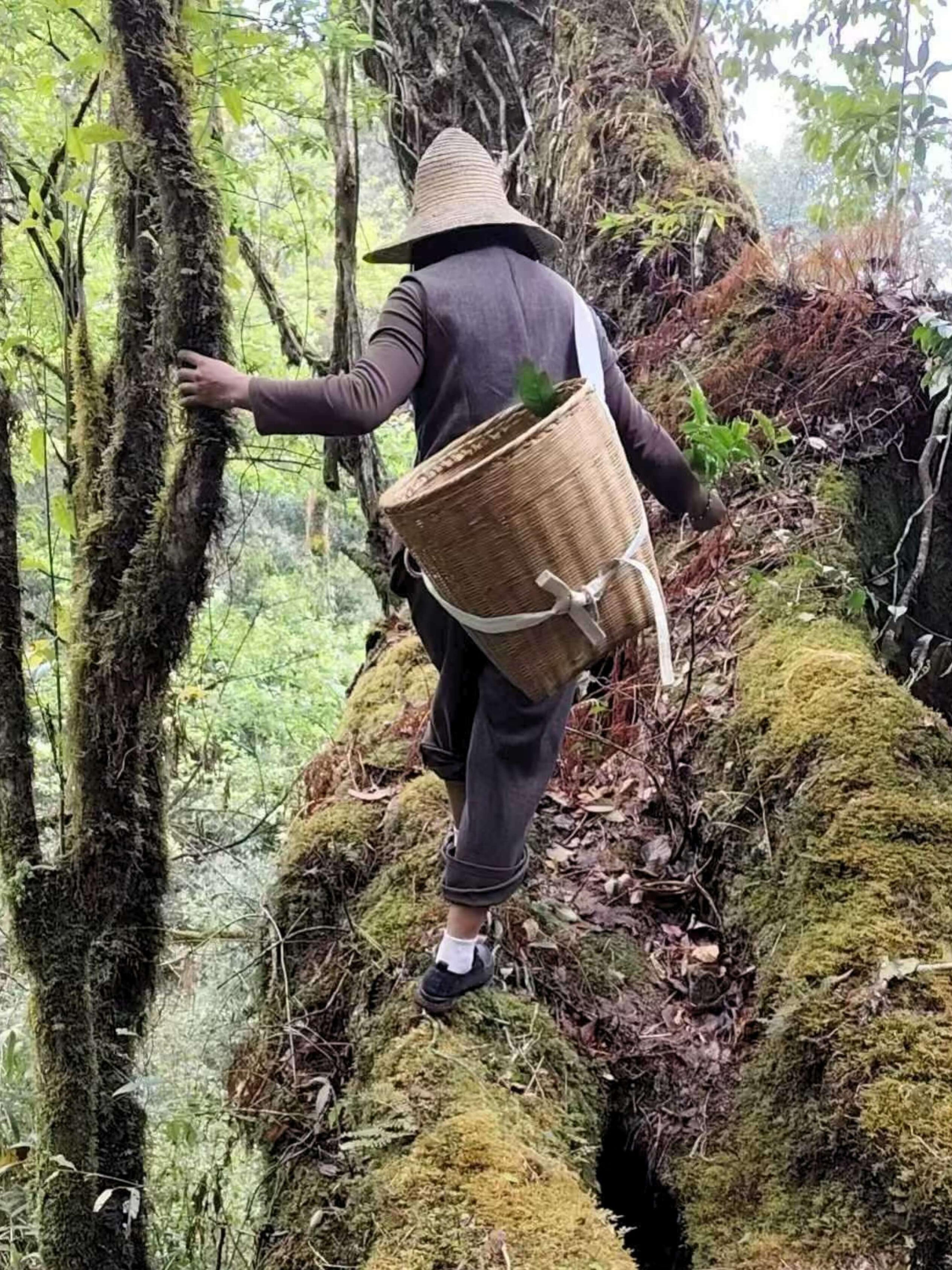
She shows us the season as it happened. The first flush comes as winter gives way to spring, and it makes the best tea of the year. Getting to it means hiking, and for the older trees, climbing. Her sister is among those going up the mountain to gather leaf. By the tenth of March there are bamboo baskets of it laid out to wither. On the twenty-first the first spring tea is ready. Then it doesn’t stop. Through late March and into April the photographs barely change: leaf, baskets, more leaf. It’s hard work, she tells us, and it gets very hot. “Don’t ask me what I’m doing lately,” she writes on the sixth of April. “Busy making tea.”
The first tea she pours is her favorite, and she’s been waiting to share it. It’s called China Red, a style of dianhong from Fengqing, made, she says, by blending leaf from twelve different varieties of ancient tea tree. The processing follows the traditional method, wither, roll, oxidize, dry, and she brings in experts to get it right because it’s nuanced work. The drying is done over a wood fire. The tea has a history in official gifts: Elizabeth II was given top-grade dianhong on a visit to Kunming in 1986, and Yunnan has been sending its red tea to the British royal family ever since, Prince William included in 2015.1
- ( 1 )滇红茶赠威廉王子 与英国王室再续前缘 — 中新网 https://www.chinanews.com.cn/cj/2015/03-04/7101825.shtml ↩
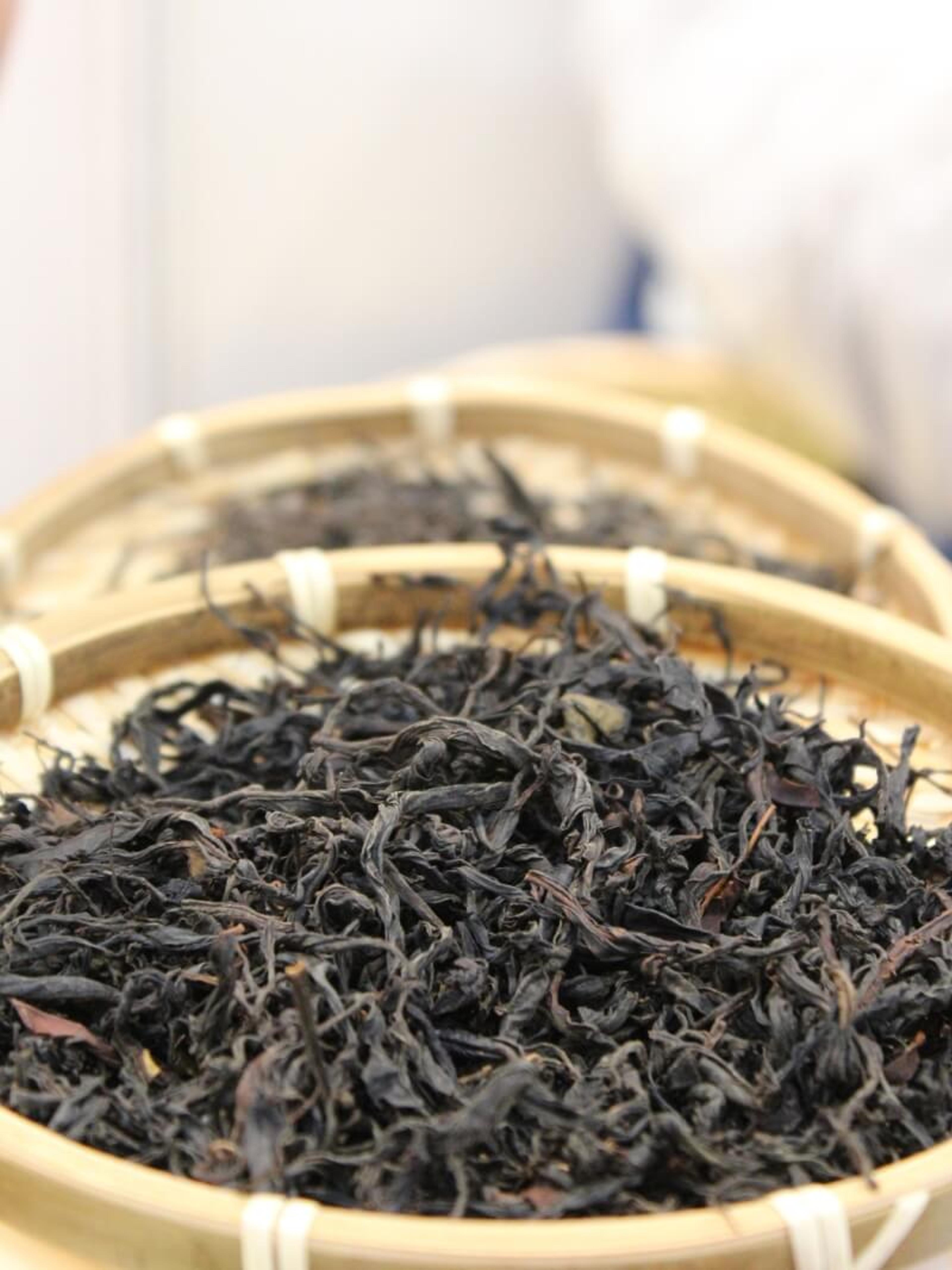
A small bamboo basket of the dry leaf comes onto the table for us to look at. Big Yunnan leaves rolled so tightly they look like twigs, black, with a faint floral smell. The leaf will take twenty brews, she says, maybe more. The first cup is honey, light, with an orchid sweetness behind it. Later brews go deeper gold and the honey gives way to stewed fruit, then settles into something quieter and more floral. She empties the pot and the wet leaf smells like nothing the dry leaf suggested: honey, thick, going into cooked plums. It’s one of the best red teas we’ve had.
The second tea is a gushu dianhong, made from the leaf of old trees rather than a blend, poured into a fluted glass. The dry leaf is intensely floral, somewhere between orchid and gardenia. The liquor is gold to amber, mild, clean honey. She says the trees aren’t truly wild. They’re managed and cultivated. They just happen to grow in woodland, and they’re old.
“Don't ask me what I'm doing lately, busy making tea.”
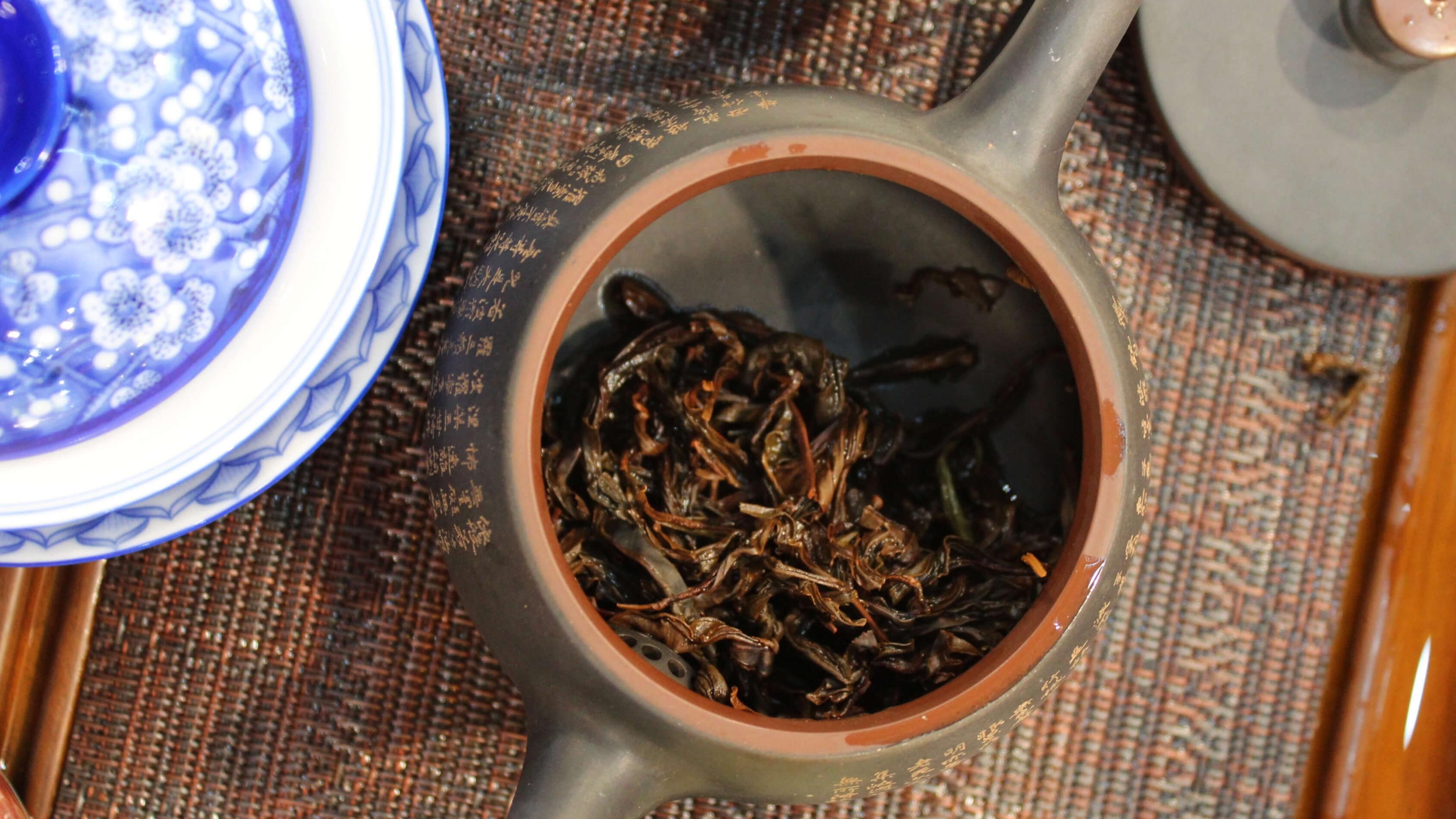
The teapots are Jianshui purple pottery2, made in a county south of Kunming, black on the outside and terracotta on the inside, carved with flowers and inscribed with characters down the side. The clay is fired without glaze and polished by hand. That polish is only for the outside. Inside, a new pot is raw and rough, and it takes many uses to wear smooth. She seasons hers before they go on sale, so nobody buys one rough. She keeps a pot for each of her teas.
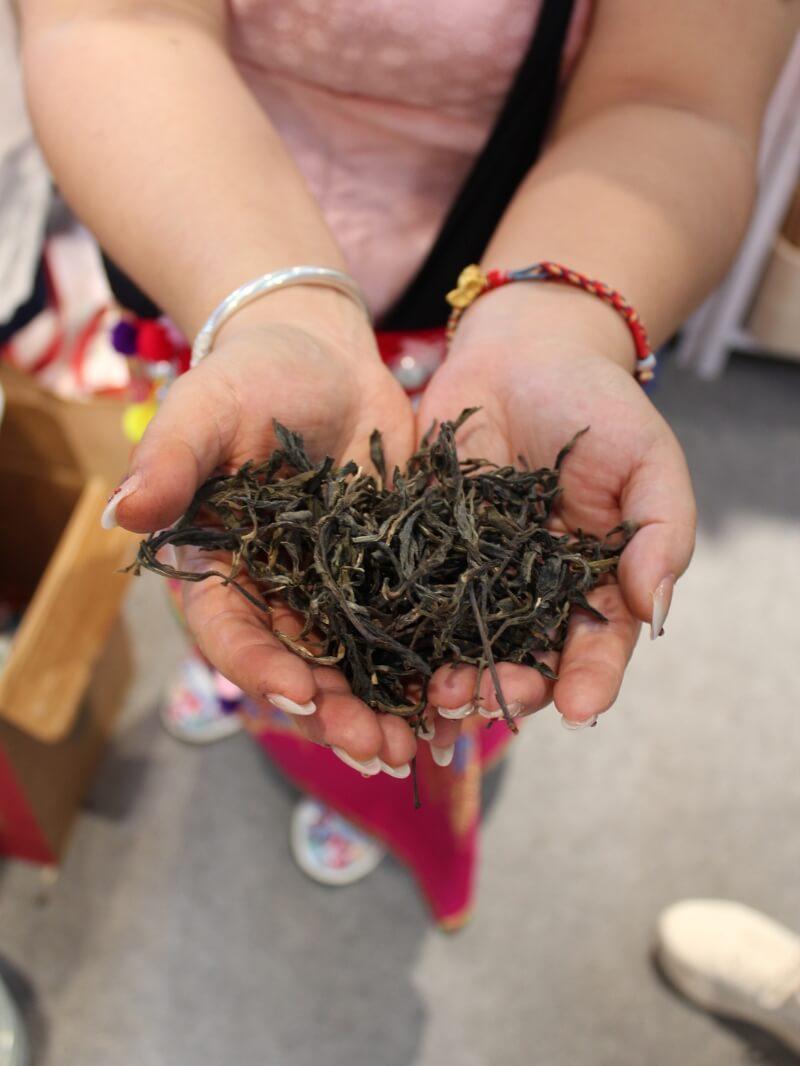
She kept showing us photos of Yunnan as we sampled her teas. Her relatives' gardens, the trees, herself out there processing leaf, the places she'd been. Come and visit, she said. Find her in Kunming, or come up to the mountains. We bought the China Red. She sent us home with the second tea, and with an assortment of her puers to try.
- ( 2 )建水紫陶 — 红河哈尼族彝族自治州人民政府 https://www.hh.gov.cn/info/9051/792582.htm ↩